Category: KevinsCorner

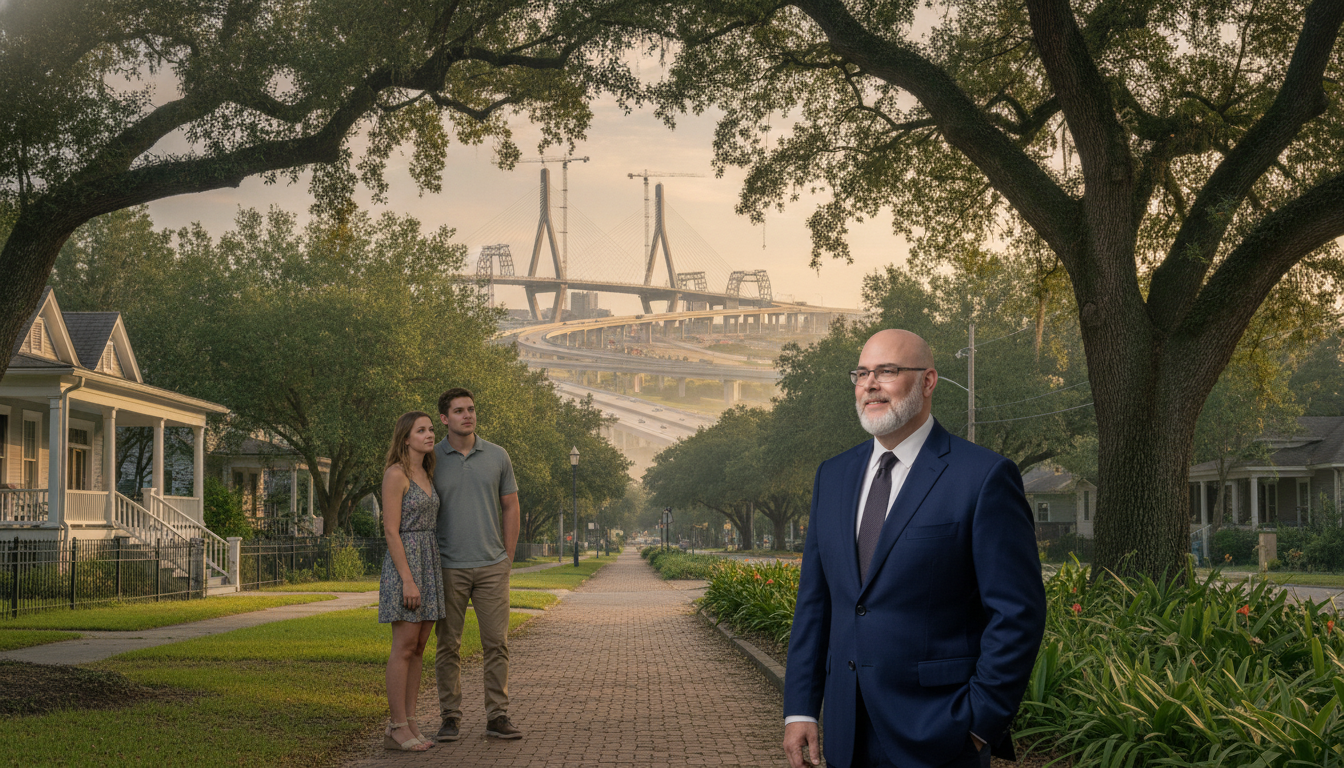
  • I-10 Reconstruction, New Mississippi River Bridge, and Perkins Road Overpass: What Baton Rouge’s Biggest Infrastructure Projects Mean for Your Commute and Home Value

    I-10 Reconstruction, New Mississippi River Bridge, and Perkins Road Overpass: What Baton Rouge’s Biggest Infrastructure Projects Mean for Your Commute and Home Value

    I-10 Reconstruction, New Mississippi River Bridge, and Perkins Road Overpass: What Baton Rouge's Biggest Infrastructure Projects Mean for Your Commute and Home Value

    TLDR: Executive Briefing

    Three major infrastructure projects are actively reshaping Greater Baton Rouge's transportation network and real estate landscape at different stages of development. The I-10 widening is under construction with completion anticipated by 2031, the new Mississippi River Bridge remains in environmental review with an earliest estimated opening of no sooner than 2033, and the Perkins Road Overpass broke ground in July 2026 as a localized walkability improvement. For relocation buyers, understanding each project's timeline and geographic reach is essential to evaluating commute realities and long-term property value potential.

    I-10 Reconstruction: What's Happening Now and What It Means for Commuters

    The I-10 widening project is actively under construction in central Baton Rouge, adding a lane in each direction to reach four total through-lanes from West Baton Rouge Parish eastward to near the I-10/I-12 split, with overall completion anticipated by 2031 according to project officials.

    If you're relocating to Greater Baton Rouge, the I-10 reconstruction is the infrastructure story with the most immediate impact on your daily life. The project spans the central corridor from LA 415 in West Baton Rouge Parish eastward through Baton Rouge to east of the I-10/I-12 split near Essen Lane. Its core purpose is to add a lane in each direction to reach four total through-lanes, modernize interchange ramps with longer acceleration and deceleration lanes, and reduce the dangerous weaving patterns that have made this stretch one of Louisiana's most congested roadways.

    The project's completion timeline has been pushed to 2031, later than earlier estimates, according to DOTD and reporting tracked through the project's official site at i10br.com. In the near term, drivers should expect nighttime lane reductions and full overnight closures on specific weekends. The most disruptive phase—Stage 2—is expected to involve closing all eastbound lanes and shifting traffic to two lanes in each direction on the westbound side for an extended period. Check i10br.com for the current construction schedule before planning your commute.

    Once complete, the project is projected to cut peak travel times between the Mississippi River Bridge and the I-10/I-12 split by somewhere between 2% and 18%, according to project documentation. That's a meaningful range, and actual results will depend on regional growth and travel demand at the time of completion. For buyers evaluating neighborhoods along or near the I-10 corridor in East Baton Rouge Parish, the short-term construction disruption is real—plan alternate routes and budget extra commute time—but the long-term accessibility improvement is the more durable factor for property value.

    Parish Spotlight: East Baton Rouge Parish bears the brunt of current construction disruption, particularly for commuters traveling the central I-10 corridor. Properties near planned noise barriers and improved interchange ramps may benefit from both reduced traffic noise and enhanced accessibility once construction wraps. Buyers considering neighborhoods adjacent to the widened corridor should ask their agent about the specific construction schedule for their target area and review the DOTD Context Sensitive Solutions commitments, which include noise mitigation measures for adjacent residential properties.

    New Mississippi River Bridge: A Long-Term Vision Already Moving Property Markets

    As of September 2026, the proposed new Mississippi River Bridge is in environmental review with no confirmed construction start date. DOTD has narrowed alignment options to three alternatives connecting LA 1 to LA 30 south of the current I-10 bridge, with an earliest estimated opening of no sooner than 2033 according to the official project site.

    The new Mississippi River Bridge is the most consequential—and most distant—of the three projects for relocation buyers to understand. As of the research date, DOTD has narrowed more than 30 initial alignment alternatives down to three options, all connecting Louisiana Highway 1 on the west bank to Louisiana Highway 30 on the east, south of the existing I-10 bridge, with all three corridors located in Iberville Parish. A draft environmental assessment is projected for December 2026, after which a preferred alternative would be identified and public hearings held. Financing options, including the potential for tolls or public-private partnerships, remain under active debate.

    The official project site at mrbsouth.com states that the soonest a new bridge could be completed and open to traffic is 2033, contingent on funding commitments and project delivery—meaning this bridge is a long-range planning factor, not an immediate commute solution. Construction cost estimates for the three alternatives range from approximately $1.78 billion to $2.04 billion in 2026 dollars, according to DOTD's own cost presentation, though those figures exclude certain categories of work such as final engineering design and utility relocation, so total project costs could be higher.

    That said, the project is already influencing buyer and investor behavior in West Baton Rouge, Iberville, and Ascension Parishes. Areas near proposed interchange corridors are drawing attention for their potential to see accelerated residential development and rising land values once cross-river access improves.

    For relocation buyers, the practical guidance is straightforward: do not base a near-term housing decision on a bridge that has no confirmed construction start date. But if you're evaluating a longer horizon in the west bank parishes, the bridge's eventual alignment is worth tracking through DOTD's official project page at mrbsouth.com.

    Perkins Road Overpass: A Neighborhood-Scale Win for Walkability and Local Desirability

    The Perkins Road Overpass project broke ground on July 13, 2026, with an estimated cost of $2.9 million and a projected approximately six-month construction timeline. It creates a pedestrian and bicycle pathway under the overpass connecting the Perkins Road commercial corridor to adjacent residential neighborhoods, with lighting, landscaping, and wayfinding improvements.

    While the I-10 and Mississippi River Bridge projects operate at a regional scale, the Perkins Road Overpass is a targeted quality-of-life improvement for one of Baton Rouge's most active commercial and residential corridors. The project was selected under the 2022 Call for Projects and approved by the Metro Council in 2023, according to MovEBR project documentation. Construction began on July 13, 2026, with an approximately six-month completion window.

    The project creates a dedicated pedestrian and bicycle connection under the overpass, crossing the railroad tracks that have long fragmented the Perkins Road area and separated the commercial district from neighborhoods including the Garden District. The project includes beautification elements, lighting, wayfinding signage, off-street parking, and landscaping—improvements that go beyond basic infrastructure to create a more inviting public space.

    For relocation buyers, this kind of investment signals something important: the city is committing resources to make the Perkins Road corridor more walkable, safer, and more connected. Research consistently shows that walkability improvements and enhanced public amenities contribute to neighborhood desirability and can support property value stability and appreciation over time. If you're considering neighborhoods within walking or cycling distance of the Perkins Road area—including parts of Mid City and the surrounding residential streets—this project is a meaningful positive factor in your evaluation. The relatively short construction timeline also means disruption should be limited compared to the multi-year I-10 project.

    What Relocation Buyers Should Ask, Track, and Verify Before Deciding

    Relocation buyers should verify current I-10 construction schedules directly with i10br.com, track the Mississippi River Bridge environmental assessment and preferred alternative announcement through mrbsouth.com, and consult a local REALTOR® familiar with how each project's geography intersects with specific neighborhoods under consideration.

    Infrastructure projects of this scale create real opportunities and real risks for relocation buyers, and the difference between a well-timed purchase and a frustrating one often comes down to asking the right questions before you commit.

    For the I-10 corridor, ask your agent which specific construction phases affect your target neighborhood and what the projected schedule looks like for the next 12 to 24 months. The i10br.com project site maintains a schedule and traffic update section that is worth bookmarking. Use real-time navigation tools—Louisiana 511, Waze, Google Maps—to test your actual commute during peak hours before signing a lease or purchase agreement.

    For the Mississippi River Bridge, the key question is whether a preferred alignment has been officially announced by DOTD and whether the draft environmental assessment has been released. Until those milestones are reached, land value speculation in the west bank parishes is exactly that—speculation. If you're seriously considering West Baton Rouge, Iberville, or Ascension Parish, ask your agent about current development activity and infrastructure investment in those areas independent of the bridge, since those parishes have their own growth dynamics worth evaluating on their own merits.

    For the Perkins Road area, the overpass project is straightforward enough that the main question is simply: how close is the property you're considering to the improved corridor, and does that walkability enhancement align with your lifestyle priorities?

    Finally, consult the appropriate licensed professionals for any decisions that go beyond real estate guidance. Tax implications of property appreciation, zoning questions, and financing structures for investment properties all require attorneys, CPAs, or lenders—not a blog post. A knowledgeable local REALTOR® can help you interpret how these projects intersect with specific addresses and neighborhoods, but the professional determinations belong with the licensed specialists in each field.
    2031I-10 Completion Target
    ~$1.8B–$2B+Bridge Cost Estimate Range
    $2.9MPerkins Overpass Budget
    2033 (Earliest)Earliest Bridge Opening

    Considering a home sale in Greater Baton Rouge?

    Request a Local Home Value Discussion

    Kevin Young, REALTOR business card

    Baton Rouge Home Seller FAQ

    Seller FAQ

    Is the I-10 widening project in Baton Rouge finished yet?

    No. As of September 2026, the I-10 widening project is actively under construction. Overall completion is anticipated by 2031, a timeline that has been pushed back from earlier estimates. The project adds a lane in each direction to reach four total through-lanes from West Baton Rouge Parish eastward to near the I-10/I-12 split. Drivers should expect ongoing nighttime lane reductions and periodic overnight closures. Check i10br.com for the current construction schedule and traffic advisories before planning your commute.

    Seller FAQ

    When will the new Mississippi River Bridge in Baton Rouge be built?

    As of September 2026, the new Mississippi River Bridge has no confirmed construction start date. DOTD has narrowed alignment options to three alternatives in Iberville Parish and is working toward a draft environmental assessment projected for December 2026. The official project site at mrbsouth.com states the earliest the bridge could be completed and open to traffic is 2033, contingent on funding and project delivery. Construction cost estimates for the three alternatives range from approximately $1.78 billion to $2.04 billion in 2026 dollars, though those figures exclude certain work categories. Track official updates at mrbsouth.com.

    Seller FAQ

    How does the Perkins Road Overpass project affect nearby property values?

    The Perkins Road Overpass project, which broke ground on July 13, 2026, with an approximately six-month construction timeline, creates a dedicated pedestrian and bicycle connection under the overpass that has long divided the Perkins Road corridor. Walkability improvements and enhanced public amenities generally support neighborhood desirability and can contribute to property value stability over time. The project also includes lighting, landscaping, and beautification elements that signal ongoing community investment in the area.

    Seller FAQ

    Which Baton Rouge parishes will benefit most from the new Mississippi River Bridge?

    West Baton Rouge, Iberville, and Ascension Parishes are expected to see the most direct impact from the new bridge, given that all three alignment alternatives connect the west bank to the east bank south of the current I-10 crossing, with corridors located in Iberville Parish. Even in the planning stage, the project is influencing buyer and investor interest in those parishes, particularly near potential interchange corridors. However, because no final alignment has been selected and no construction start date is confirmed, any property value effects in those areas remain speculative at this stage.

    Seller FAQ

    How should a relocation buyer factor Baton Rouge infrastructure projects into a home purchase decision?

    Relocation buyers should distinguish clearly between projects under active construction—like the I-10 widening and Perkins Road Overpass—and long-range plans like the new Mississippi River Bridge. For near-term decisions, test your actual commute using real-time navigation tools and review the current I-10 construction schedule at i10br.com. Avoid basing a purchase decision on a project with no confirmed construction start date. A local REALTOR® familiar with Greater Baton Rouge can help you evaluate how each project's geography intersects with specific neighborhoods and price points.

    Market Intelligence Note: This article draws from the sources listed below and explains general real estate considerations for Greater Baton Rouge consumers.


  • New Louisiana Homeowners Insurance Laws Effective July–August 2026: What Greater Baton Rouge Buyers and Homeowners Need to Know

    New Louisiana Homeowners Insurance Laws Effective July–August 2026: What Greater Baton Rouge Buyers and Homeowners Need to Know

    New Louisiana Homeowners Insurance Laws Effective July–August 2026: What Greater Baton Rouge Buyers and Homeowners Need to Know

    TLDR: Executive Briefing

    Several Louisiana insurance laws took effect in July and August 2026, including a new 60-day cancellation notice requirement and higher contractor liability minimums, both of which directly affect buyers and homeowners across Greater Baton Rouge. Separately, the Louisiana Fortify Homes Program received $80 million in 2026 funding, offering grants of up to $10,000 for fortified roof upgrades, with mandatory insurer discounts on hurricane premiums set to begin for policies issued or renewed on or after January 1, 2027. Understanding these changes can help buyers evaluate coverage stability and help current homeowners reduce costs—but every individual situation should be reviewed with a licensed insurance professional.

    The 60-Day Cancellation Notice Rule and What It Means for Baton Rouge Buyers

    Act 182 of 2025 (HB 345), effective July 1, 2026, requires Louisiana insurers to give at least 60 days' written notice—up from 30 days—before canceling or non-renewing a homeowners, residential property, commercial property, or auto policy, and must state the specific reason. Note that the 60-day requirement does not apply to cancellations for nonpayment of premium, which still trigger a 10-day notice under existing law.

    For buyers shopping in Greater Baton Rouge, this change is more meaningful than it might first appear. Louisiana's insurance market has been under significant stress following recent hurricane seasons, and non-renewals have been a real concern for homeowners in Ascension, Livingston, East Baton Rouge, and West Baton Rouge Parishes. Under the prior rule, a policyholder could receive as little as 30 days' notice before losing coverage—a tight window in a market where replacement policies can be difficult to secure quickly.

    The new 60-day minimum, along with the requirement that the insurer state a specific reason for the action, gives policyholders meaningfully more time to shop, compare alternatives, and avoid a lapse in coverage. For buyers under contract, this matters at the transaction level: a lender will require proof of active homeowners insurance at closing, and a non-renewal notice arriving mid-transaction can create real complications.

    It is worth noting that the research indicates this extended notice applies to cancellations and non-renewals. Whether it also applies to rate increases, deductible changes, or reductions in coverage was not confirmed in the available research—your insurance agent or a licensed attorney can clarify how the law applies to your specific policy situation. Buyers should ask their agent about the current policy's renewal history and whether any non-renewal notices have been issued on a property they are considering.

    Parish Spotlight: In Livingston and Ascension Parishes—areas that experienced significant flood and wind losses in recent years—insurance availability has been a recurring transaction obstacle. The 60-day notice rule does not guarantee a replacement policy will be easy to find, but it does give buyers and homeowners more runway to act. If you are purchasing in these parishes, ask your REALTOR® and insurance agent early in the process about current carrier availability and whether the existing policy on the home is subject to any pending non-renewal.

    Higher Contractor Insurance Requirements and the Adjuster Transparency Rule (August 1, 2026)

    Act 757 of 2026 (SB 326), effective August 1, 2026, raised the minimum general liability insurance for residential contractors, mold remediators, and home improvement contractors from $100,000 to $500,000. A separate law (Act 372 / SB 241) also requires adjusters, appraisers, and certain other licensed insurance professionals to include their Louisiana license number or National Producer Number in all marketing and other communications—other than text messages—sent as part of their business or employment.

    Two additional changes took effect August 1, 2026, and both have practical implications for Greater Baton Rouge buyers and homeowners.

    The contractor liability increase is the more immediately tangible of the two. Any residential contractor, mold remediation company, or home improvement contractor working in Louisiana must now carry at least $500,000 in general liability coverage—a fivefold increase from the prior $100,000 minimum. Contractors must also provide proof of coverage for a minimum of six months, covering all licensed scopes of work. For homeowners hiring contractors for repairs, renovations, or post-storm remediation, this change provides a higher floor of financial protection if something goes wrong. The practical tradeoff is that higher insurance costs for contractors may be reflected in bids. Buyers negotiating repair credits or sellers completing pre-listing work should verify that any contractor they hire meets the new requirement. The Louisiana State Licensing Board for Contractors is the appropriate resource for verifying a contractor's license and insurance status.

    The adjuster transparency rule (Act 372 / SB 241) requires that insurance adjusters, public adjusters, appraisers, and certain other licensed insurance professionals include their Louisiana license number or National Producer Number in all marketing and other communications—other than text messages—sent as part of their business or employment. This is a consumer protection measure designed to make it easier to verify that the person handling your claim is properly licensed. If you receive written or electronic communications from an adjuster during a claim, you can cross-reference the license number with the Louisiana Department of Insurance.

    Fortified Roofs, Stated Value Policies, and the Three-Year Rule Repeal: What Buyers Should Factor In

    The Louisiana Fortify Homes Program received $80 million in 2026 funding and offers grants of up to $10,000 for qualifying fortified roof upgrades through a lottery process. Mandatory insurer discounts on the hurricane portion of premiums for IBHS FORTIFIED-designated homes are set to begin for policies issued or renewed on or after January 1, 2027, with benchmark discount ranges of 16% to 49% depending on geographic zone and designation level.

    Three additional developments—some predating July 2026 but directly shaping the 2026 buying environment—deserve attention from Greater Baton Rouge buyers.

    First, the Fortify Homes Program. According to the research, the program received $80 million in 2026 funding—combining $50 million in additional Katrina bond assessment funds transferred through Louisiana Citizens Property Insurance Corporation and $30 million from taxes and fees on insurance entities. The program offers grants of up to $10,000 for fortified roof upgrades through a lottery process. The 2026 lottery round opened June 1 and closed June 19, 2026, with winners notified beginning June 22; as of the time of this writing, that round is closed and future rounds are to be announced by the Louisiana Department of Insurance. Importantly for Greater Baton Rouge buyers: East Baton Rouge Parish is not currently listed as an eligible parish for the Fortify Homes grant lottery, though the Regulation 136 insurance discount and the state income tax credit for FORTIFIED roofs are available statewide. Verify current eligibility and parish lists directly with the Louisiana Department of Insurance at ldi.la.gov before making any plans based on grant availability.

    Louisiana's Regulation 136 mandates that every property insurer in the state offer discounts on the hurricane portion of the premium for homes with IBHS FORTIFIED roof designations, with those discounts required for policies issued or renewed on or after January 1, 2027. The benchmark discount ranges from 16% to 49% of the hurricane premium component, depending on geographic zone (North, Central, or South Louisiana) and designation level (Roof, Silver, or Gold). For example, the benchmark for a FORTIFIED Roof designation in South Louisiana is 29%, while Gold-level designations in South Louisiana carry a 49% benchmark. East Baton Rouge Parish falls in the Central zone, where the benchmark for a base FORTIFIED Roof designation is 27%, according to Regulation 136. Buyers considering homes with existing fortified roofs should ask their insurance agent about the discount they can expect under their specific policy and carrier—actual savings depend on the carrier, policy form, and how much of the premium is hurricane-rated.

    Second, the Stated Value Policy Act (Act 480 / HB 356, effective June 30, 2025) allows—but does not require—insurers to offer policies where the dwelling coverage is set at a declared value rather than full replacement cost. For buyers with mortgages, the stated value cannot be less than the verified outstanding loan balance or the assessed fair market value. This option may reduce premiums but also means the policy may not cover a total loss in full. Discuss this option carefully with a licensed insurance agent before choosing it.

    Third, the repeal of the 'Three-Year Rule' (Act 9 / HB 611 of 2024) means that for policies issued after August 1, 2024, insurers are no longer prohibited from non-renewing or raising deductibles after three years. Buyers purchasing homes with newer policies should understand this shift in the long-term stability of their coverage.

    Questions to Ask, Documents to Gather, and Professionals to Consult

    Buyers in Greater Baton Rouge should ask their insurance agent about the current policy's renewal status, available fortified roof discounts, and whether a stated value policy is appropriate for their situation. Verify contractor insurance before authorizing any repair work, and consult a licensed insurance professional for coverage decisions.

    Navigating Louisiana's evolving insurance landscape is not something buyers or homeowners should do alone. Here is a practical framework for the questions and steps worth taking before or during a transaction in Greater Baton Rouge.

    **For buyers under contract or shopping actively:**
    – Ask your insurance agent early—before you are under contract if possible—about carrier availability in the specific parish and zip code you are targeting. Availability varies.
    – Request information about whether the home has an IBHS FORTIFIED roof designation and, if so, what discount your carrier will apply for policies issued or renewed on or after January 1, 2027.
    – Ask whether the seller has received any cancellation or non-renewal notices on the current policy.
    – Discuss whether a stated value policy makes sense for your loan balance and risk tolerance—this is a conversation for your licensed insurance agent, not your REALTOR®.

    **For current homeowners:**
    – Review your policy's renewal date and ask your agent whether your carrier has issued non-renewals in your area recently.
    – If you are hiring a contractor for repairs or improvements, ask for a current certificate of insurance showing at least $500,000 in general liability coverage and verify it with the Louisiana State Licensing Board for Contractors.
    – If your home has a fortified roof, confirm with your insurer that the mandated discount will be applied at your next renewal on or after January 1, 2027.
    – Contact the Louisiana Department of Insurance directly at ldi.la.gov for current grant availability, eligible parishes, and eligibility requirements for the Fortify Homes Program, as funding windows and parish lists can change.

    For questions about what a specific law requires, how it applies to your policy, or your rights in a claim dispute, consult a licensed Louisiana attorney or the Louisiana Department of Insurance.

    $80MFortify Homes 2026 Funding
    Up to $10KFortified Roof Grant (Lottery)
    60 DaysNew Cancellation Notice
    $500KContractor Liability Minimum

    Considering a home sale in Greater Baton Rouge?

    Request a Local Home Value Discussion

    Kevin Young, REALTOR business card

    Baton Rouge Home Seller FAQ

    Seller FAQ

    What is the new 60-day insurance cancellation notice law in Louisiana, and when did it take effect?

    Act 182 of 2025 (HB 345) took effect July 1, 2026, and requires Louisiana insurers to provide at least 60 days' written notice before canceling or non-renewing a homeowners, residential property, commercial property, or auto policy—up from the prior 30-day requirement. The notice must also state the specific reason for the action. This gives policyholders more time to find replacement coverage, which is especially important in Greater Baton Rouge's competitive insurance market. Note that the 60-day rule does not apply to cancellations for nonpayment of premium, which still trigger a 10-day notice under existing law. Whether the rule also covers rate increases or coverage reductions was not confirmed in the available research; consult a licensed insurance professional or the Louisiana Department of Insurance for clarification.

    Seller FAQ

    How does the new contractor insurance requirement affect homeowners hiring contractors in Greater Baton Rouge?

    Act 757 of 2026 (SB 326), effective August 1, 2026, raised the minimum general liability insurance for residential contractors, mold remediators, and home improvement contractors from $100,000 to $500,000. Contractors must also show proof of coverage for at least six months across all licensed scopes of work. This provides homeowners with a higher level of financial protection if a contractor causes damage or injury. Before hiring any contractor for repairs or renovations, ask for a current certificate of insurance and verify their license status with the Louisiana State Licensing Board for Contractors.

    Seller FAQ

    What is the Louisiana Fortify Homes Program, and can Baton Rouge homeowners apply for grants?

    The Louisiana Fortify Homes Program offers grants of up to $10,000 to help homeowners upgrade to IBHS FORTIFIED-designated roofs, which are built to higher wind-resistance standards. The program uses a lottery, not first-come-first-served. The 2026 lottery round closed June 19, 2026, and future rounds are to be announced by the Louisiana Department of Insurance. Importantly, East Baton Rouge Parish is not currently listed as an eligible parish for the grant lottery—though the Regulation 136 insurance discount and the state income tax credit for FORTIFIED roofs are available statewide. Separately, Louisiana's Regulation 136 requires insurers to offer discounts on the hurricane portion of premiums for FORTIFIED homes, with those discounts required for policies issued or renewed on or after January 1, 2027. Contact the Louisiana Department of Insurance directly at ldi.la.gov for current grant status, eligible parishes, and eligibility requirements before assuming funds or eligibility are available.

    Seller FAQ

    What is a 'stated value' homeowners insurance policy, and is it a good option for buyers in Louisiana?

    The Stated Value Policy Act (Act 480 / HB 356, effective June 30, 2025) allows—but does not require—Louisiana insurers to offer policies where dwelling coverage is set at a declared value rather than full replacement cost. For mortgaged properties, the stated value cannot be less than the verified outstanding loan balance or the assessed fair market value. This option may reduce premiums, but it also means the policy may not fully cover a total loss. Whether it is appropriate depends on your financial situation, equity position, and risk tolerance. This is a decision to make with a licensed insurance agent, not a real estate licensee.

    Seller FAQ

    What happened to the Louisiana 'Three-Year Rule,' and how does its repeal affect buyers purchasing homes today?

    The 'Three-Year Rule' previously prohibited insurers from non-renewing a homeowners policy or raising its deductible after the policy had been in place for three years. Act 9 (HB 611) of 2024 repealed this protection for new policies issued after August 1, 2024. Policies in place before that date retain some legacy protection, though insurers may non-renew up to 5% of those older policies annually with commissioner approval. For buyers today, this means that a new policy obtained at closing does not carry the same long-term non-renewal protection that older policies once had. Discuss this with your insurance agent when evaluating coverage options.

    Market Intelligence Note: This article draws from the sources listed below and explains general real estate considerations for Greater Baton Rouge consumers.


  • What Defines a Luxury Home in Greater Baton Rouge in 2026 — And Which Neighborhoods Deliver the Best High-End Lifestyle?

    What Defines a Luxury Home in Greater Baton Rouge in 2026 — And Which Neighborhoods Deliver the Best High-End Lifestyle?

    What Defines a Luxury Home in Greater Baton Rouge in 2026 — And Which Neighborhoods Deliver the Best High-End Lifestyle?

    TLDR: Executive Briefing

    In Greater Baton Rouge, luxury homes are generally defined by custom construction, premium finishes, resort-style amenities, and price points that place them in the top tier of the local market. Neighborhoods such as the Country Club of Louisiana and Bocage consistently attract high-end buyers seeking privacy, architectural distinction, and lifestyle-driven community features. Understanding what separates a true luxury property from a simply expensive one helps buyers focus their search and negotiate with confidence.

    How Is a Luxury Home Defined in Greater Baton Rouge in 2026?

    In Greater Baton Rouge, luxury homes are broadly defined as properties in the top 10–15% of the local market by price, characterized by custom construction, premium finishes, larger lots, resort-style outdoor living, smart-home technology, and architecturally distinctive design rather than price alone.

    The word 'luxury' gets used loosely in real estate marketing, but in Greater Baton Rouge the term carries a more specific meaning when applied carefully. Industry sources and local market observers generally place luxury homes in the upper tier of the market — roughly the top 10 to 15 percent by price — though the exact threshold shifts as overall market values change. Buyers should ask a local agent familiar with the high-end segment for current price benchmarks at the time of their search rather than relying on a fixed number.

    What separates a luxury home from a simply expensive one is the combination of price, quality, and lifestyle. On the construction and finish side, buyers in this segment expect custom-built or extensively customized designs, premium materials throughout, gourmet kitchens with professional-grade appliances, spa-caliber primary bathrooms, and thoughtful architectural detail. Outdoor living is a defining feature in Louisiana's climate: resort-style pools, outdoor kitchens, covered entertaining areas, and landscaped grounds are standard expectations rather than upgrades. Smart-home integration — automated lighting, climate, security, and audio-visual systems — has moved from novelty to baseline expectation in this price range.

    Architecturally, Greater Baton Rouge's luxury market reflects the region's cultural identity. French Chateau, Southern Colonial, Greek Revival, Southern Traditional, and European-inspired designs are common, and buyers at this level often prioritize timeless curb appeal alongside interior livability. Increasingly, the definition of luxury also encompasses privacy, wellness-oriented design, and how a home supports a specific lifestyle — not just square footage or a feature checklist. A knowledgeable buyer's agent can help you evaluate whether a listed property genuinely delivers on these dimensions or simply carries a luxury price tag.

    Parish Spotlight: East Baton Rouge Parish contains the majority of the metro's recognized luxury neighborhoods, with established enclaves concentrated in the south and central corridors of the parish. Ascension Parish has also seen growth in higher-end residential development, particularly in master-planned communities, as buyers seek newer construction with larger lots at competitive price points relative to the city's most established luxury addresses.

    Which Greater Baton Rouge Neighborhoods Are Known for High-End Amenities and Lifestyle?

    The Country Club of Louisiana, Bocage, and a handful of other established enclaves are consistently recognized as Greater Baton Rouge's premier luxury addresses, offering gated security, golf and country club access, architectural standards, mature landscaping, and proximity to top-rated schools and dining.

    Greater Baton Rouge has a defined set of neighborhoods that the local luxury market consistently recognizes as its most prestigious addresses. Each offers a distinct lifestyle profile, so the right fit depends on what a buyer values most.

    The Country Club of Louisiana is one of the metro's most recognized luxury communities. Located in south Baton Rouge, it is a gated, golf-course community built around a Jack Nicklaus–designed championship golf course, with residents enjoying access to tennis and pickleball courts, a resort-style pool, a fitness center, and clubhouse dining within the neighborhood itself. Homes here are known for their architectural variety, mature landscaping, and the privacy that comes with 24/7 guarded gate access. It is worth noting that homeownership in the community does not automatically confer club membership — buyers should clarify membership terms and associated fees with their agent and review HOA documents carefully.

    Bocage is another long-established luxury address, known for its mature tree canopy of live oaks, a mix of generously sized estate properties, and proximity to some of the city's most sought-after private schools and the Baton Rouge Country Club. The neighborhood carries a sense of established prestige and attracts buyers who prioritize a quieter, more private setting with easy access to the city's amenities, including Bocage Village shopping and top dining.

    Beyond these anchors, the Highland Road corridor offers estate properties beneath heritage oaks with a distinctly established character, while Lexington Estates — located along Nicholson Drive south of Bluebonnet Boulevard — provides a gated, master-planned option with scenic lakes, luxury custom homes, and convenient access to LSU and major corridors. Newer master-planned developments in the southeastern suburbs and Ascension Parish round out the high-end options for buyers whose priorities include newer construction, larger lots, or specific school district access. The luxury lifestyle in Greater Baton Rouge is also shaped by proximity to the city's dining, arts, and cultural scene — factors that vary meaningfully by neighborhood location. Consulting a local agent who specializes in this segment is the most reliable way to match your lifestyle priorities to the right community.

    What Should Luxury Buyers Do Before Entering the Greater Baton Rouge High-End Market?

    Luxury buyers should secure financing or proof-of-funds documentation before touring, engage a buyer's agent experienced in the high-end segment, research HOA covenants and architectural controls, and plan for longer due-diligence timelines given the complexity of custom-built properties.

    Buying a luxury home in Greater Baton Rouge involves a different set of preparation steps than a typical residential purchase, and buyers who treat it like a standard transaction often encounter avoidable friction.

    Financing is the first practical consideration. Many luxury properties are purchased with cash or jumbo loan financing, and sellers in this segment routinely expect proof of funds or a pre-approval letter from a lender experienced with jumbo products before agreeing to showings or accepting offers. If you plan to finance, connect with a lender who handles jumbo mortgages early — underwriting requirements, reserve documentation, and appraisal processes differ meaningfully from conforming loan transactions. Your lender can advise you on current qualification standards; that determination is outside the scope of a real estate agent's role.

    Due diligence on a luxury property is also more involved. Custom construction means more systems, more specialty materials, and more potential for deferred maintenance that isn't visible on a showing. Budget for a thorough inspection by a licensed home inspector, and consider specialty inspections for pools, generators, smart-home systems, roofing, and any structural or drainage features specific to the property. Louisiana's climate makes moisture intrusion, foundation performance, and storm-readiness particularly important areas of scrutiny.

    If the property is in a gated or HOA-governed community, review the covenants, conditions, and restrictions carefully with your attorney before going under contract. Architectural controls, rental restrictions, and fee structures vary significantly between communities and can affect how you use and eventually resell the property.

    Which Professionals and Questions Matter Most When Buying Luxury Real Estate in Baton Rouge?

    Luxury buyers in Greater Baton Rouge should work with a buyer's agent experienced in the high-end segment, a jumbo-qualified lender, a real estate attorney for contract and title review, a licensed inspector with custom-home experience, and a CPA or tax advisor for any ownership-structure or property-tax questions.

    The professional team around a luxury transaction is larger and more specialized than in a standard purchase, and assembling it before you make an offer — not after — puts you in a stronger position.

    Your buyer's agent is the coordinator of this process, but the agent's role is informational and transactional, not legal or financial. For contract review, title examination, and any questions about ownership structure (individual, LLC, trust, or other entity), a Louisiana real estate attorney is the appropriate professional. Do not rely on a real estate agent or a title company alone to advise you on how to take title or what entity structure best serves your goals — those are legal and tax questions.

    A CPA or tax advisor familiar with Louisiana property tax law should be consulted regarding homestead exemption eligibility, any special assessment considerations, and the tax treatment of the purchase in your specific circumstances. Property tax rates and assessment practices are set at the parish level and are subject to change; your tax advisor and the relevant parish assessor's office are the right sources for current, property-specific information.

    Questions worth raising with your agent and professional team before making an offer include: What is the property's flood zone designation, and what does that mean for insurance costs? Are there any pending special assessments or HOA fee changes? What is the history of the property's listing price and days on market? Are there any known material defects disclosed by the seller? What comparable sales support the asking price? A well-prepared buyer who asks these questions early is better positioned to negotiate effectively and avoid surprises at closing.

    Top 10–15%Luxury Market Tier
    CustomConstruction Standard
    GatedCC of LA Access
    Multi-SystemDue Diligence Scope

    Considering a home sale in Greater Baton Rouge?

    Request a Local Home Value Discussion

    Kevin Young, REALTOR business card

    Baton Rouge Home Seller FAQ

    Seller FAQ

    What price range qualifies as luxury in Greater Baton Rouge in 2026?

    Luxury homes in Greater Baton Rouge are generally understood to occupy the top 10 to 15 percent of the local market by price, placing them in the upper six figures and extending into the multi-million dollar range. Because the specific threshold shifts as overall market values change, buyers should ask a local agent familiar with the high-end segment for current price benchmarks at the time of their search rather than relying on a fixed number.

    Seller FAQ

    What features are standard in a Greater Baton Rouge luxury home?

    Standard expectations in this segment include custom or extensively customized construction, premium interior finishes, gourmet kitchens with professional-grade appliances, spa-caliber primary bathrooms, resort-style outdoor living with pools and outdoor kitchens, smart-home integration, and architecturally distinctive design. In Greater Baton Rouge, French Chateau, Southern Colonial, Greek Revival, and European-inspired styles are common. Privacy, generously sized lots, and wellness-oriented design are increasingly important to luxury buyers as well.

    Seller FAQ

    Is the Country Club of Louisiana a good fit for luxury buyers?

    The Country Club of Louisiana is one of Greater Baton Rouge's most recognized luxury communities, offering 24/7 guarded gate access, a Jack Nicklaus–designed championship golf course, and on-site amenities including tennis and pickleball courts, a resort-style pool, a fitness center, and clubhouse dining. It appeals to buyers who prioritize a self-contained lifestyle, architectural variety, and mature landscaping. Note that homeownership in the community does not automatically include club membership — buyers should clarify membership terms and fees directly. Whether it is the right fit depends on your specific lifestyle priorities, budget, and how you weigh HOA covenants and fees — factors best evaluated with a local buyer's agent and reviewed by your attorney.

    Seller FAQ

    Do I need a jumbo loan to buy a luxury home in Baton Rouge, and how is that different from a conventional mortgage?

    Many luxury purchases in Greater Baton Rouge involve either cash or jumbo loan financing, since purchase prices often exceed conforming loan limits set by federal agencies. Jumbo loans typically carry different underwriting requirements, including stricter reserve and documentation standards, and may involve a more complex appraisal process. A lender experienced with jumbo products can explain current qualification requirements for your specific situation — that determination is outside the scope of a real estate agent's role.

    Seller FAQ

    What should I inspect or investigate beyond a standard home inspection when buying a luxury property?

    Beyond a standard licensed home inspection, luxury buyers in Greater Baton Rouge should consider specialty inspections for pools and outdoor systems, generators, smart-home and AV infrastructure, roofing, and any structural or drainage features specific to the property. Louisiana's climate makes moisture intrusion, foundation performance, and storm-readiness especially important areas of scrutiny. Reviewing HOA covenants, flood zone designation, insurance implications, and the seller's disclosure statement with your attorney and inspector before the inspection period closes is also advisable.

    Market Intelligence Note: This article draws from the sources listed below and explains general real estate considerations for Greater Baton Rouge consumers.


  • Real Estate Scams in Greater Baton Rouge: What Buyers and Sellers Need to Know in 2026

    Real Estate Scams in Greater Baton Rouge: What Buyers and Sellers Need to Know in 2026

    Real Estate Scams in Greater Baton Rouge: What Buyers and Sellers Need to Know in 2026

    TLDR: Executive Briefing

    Wire fraud, title theft, and fraudulent rental listings are among the most active real estate scams affecting Greater Baton Rouge buyers and sellers, with local incidents reported as recently as 2025 and 2026. Consumers can reduce their exposure by verifying wiring instructions over the phone, monitoring property records through free state alert services, and confirming the credentials of every professional involved in a transaction. A licensed REALTOR® can help you recognize red flags and connect you with the right professionals—but stopping fraud ultimately requires vigilance from every party at the closing table.

    Wire Fraud: The Costliest Scam Hitting Baton Rouge Closings

    Wire fraud occurs when criminals intercept real estate email communications and send fake wiring instructions to divert closing funds. A Baton Rouge title company reportedly wired nearly $1 million to scammers in August 2025 after receiving a fraudulent email with a spoofed sender address.

    Of all the scams circulating in Greater Baton Rouge real estate, wire fraud consistently produces the largest single-transaction losses—and it can happen to buyers, sellers, and even title companies. The mechanics are straightforward but devastating: a criminal gains access to an email account belonging to a buyer, agent, or title professional, monitors the conversation, and then sends a message—appearing to come from a trusted party—with revised wiring instructions just before closing. By the time anyone realizes the funds went to the wrong account, the money is often gone.

    A local example underscores how real this threat is. According to reporting by WAFB, the East Baton Rouge Parish Sheriff's Office opened an investigation after a local title company wired nearly $1 million to what is believed to be a scammer in August 2025. According to the warrant, the title company first received a legitimate email from a bank it had done business with, then six days later received a second email from a nearly identical address—with only one letter changed—containing revised instructions.

    The FBI has reported significant national losses tied to real estate wire fraud in recent years—figures that have grown year over year—though precise, current totals should be verified directly with the FBI's Internet Crime Complaint Center (IC3.gov), as these numbers are updated annually. What is clear is that no transaction is too small or too routine to be targeted. The single most effective defense is simple: before wiring any money, call your title agent or closing attorney using a phone number you obtained independently—not from any email—and verbally confirm the instructions. Treat any last-minute change to wiring details as a red flag requiring immediate verification.

    Parish Spotlight: East Baton Rouge Parish residents and those transacting in surrounding parishes should be aware that the East Baton Rouge Parish Sheriff's Office has investigated wire fraud incidents tied to local title companies. If you suspect wire fraud during a transaction, contact your financial institution immediately to attempt a recall, then report to local law enforcement and the FBI's IC3 at ic3.gov. Time is critical—funds moved internationally can become unrecoverable within hours.

    Title Theft and Deed Fraud: When Scammers Claim Your Property

    Title theft involves criminals forging documents to transfer property ownership without the legal owner's knowledge, often targeting vacant land or unmortgaged homes. A Louisiana family reportedly lost a long-held Lake Charles property to fraudsters using a phony ID in early 2025, according to reporting cited in the research.

    Title theft—sometimes called deed fraud—is a slower-moving but equally damaging scam. A criminal forges a deed or uses a fake ID to impersonate a property owner, records the fraudulent transfer at the parish clerk's office, and then either sells the property to an unsuspecting buyer or takes out loans against it. Vacant lots, rural parcels, and properties free of mortgages are especially attractive targets because there is no lender monitoring the title.

    Louisiana has seen this play out in real cases. According to reporting cited in the research, a Louisiana woman reportedly spent months fighting to reclaim a family property in Lake Charles after fraudsters used a phony ID to impersonate her and sold the land for cash in early 2025. Jefferson Parish launched a free online notification service called Jeff Watch in March 2023 in response to a pattern of vacant-lot title theft, alerting property owners when documents are recorded in their name.

    For Greater Baton Rouge homeowners, the Louisiana Clerks Remote Access Authority (LCRAA) operates a statewide service at eclerksla.com that allows property owners to sign up for free email or text alerts when documents are recorded in their name in participating parishes. Signing up takes only a few minutes and provides an early warning that something may be wrong. Owner's title insurance is another layer of protection—it covers legal defense costs and potential losses if a title defect or fraudulent prior transfer surfaces after closing. Buyers should discuss both options with their title professional before closing.

    Rental Listing Scams, Office Fraud, and Mortgage Fraud: Other Threats to Watch

    Scammers copy photos from legitimate 'for sale' listings and post them as fake rentals to collect deposits. Separately, criminal activity by individuals working in or around real estate offices has also been reported. Both types of fraud have been documented in the Greater Baton Rouge area in 2025 and 2026.

    Wire fraud and title theft get the most attention, but Greater Baton Rouge consumers face several other active threats worth understanding.

    **Fraudulent Rental Listings** affect sellers as well as renters. Scammers scrape photos and descriptions from legitimate for-sale listings and repost them on rental platforms with their own contact information, then collect application fees or deposits before disappearing. The East Baton Rouge Parish Sheriff's Office has reported an increase in this pattern. Separately, the St. Bernard Parish Sheriff's Office issued a warning in April 2026 about fake rental listings spreading through social media platforms, noting that scammers use deals that seem too good to be true to lure victims. If you have a home listed for sale, periodically search your address on major rental platforms to confirm your listing photos are not being misused. Watermarking listing photos can make them harder to repurpose.

    **Criminal Activity in Real Estate Offices** is another concern. In February 2026, Baton Rouge police sought a woman accused of embezzling more than $32,000 by stealing and altering checks from the real estate office where she worked, according to WBRZ reporting. This case is a reminder that fraud can originate from within an organization, not only from outside imposters. Always verify that any agent or broker you work with holds a current Louisiana license through the Louisiana Real Estate Commission (LREC) at lrec.gov before signing anything or transferring funds, and review any financial documents or transaction records carefully.

    **Mortgage and Loan Fraud** can also intersect with real estate transactions. A Baton Rouge man, Oscar Hills IV, was convicted in September 2025 of wire fraud and unlawful monetary transactions after submitting fraudulent loan applications for a supposed business and nonprofit, securing more than $800,000 in pandemic relief funds, according to the U.S. Department of Justice. Separately, two Baton Rouge residents were arrested in Assumption Parish in February 2026 in connection with a financial crimes investigation involving identity theft, bank fraud, forgery, and computer fraud tied to a fraudulent automobile loan application, per reporting from KQKI News and the Assumption Parish Sheriff's Office. Work only with licensed lenders, review all loan documents carefully, and report suspected fraud to the FTC or IC3.gov.

    How to Protect Yourself: Questions to Ask and Professionals to Contact

    Consumers should verify wiring instructions by phone using independently obtained numbers, sign up for property record alerts at eclerksla.com, confirm agent licenses at lrec.gov, and report suspected fraud to local law enforcement and the FBI's IC3 at ic3.gov.

    Protecting yourself from real estate fraud in Greater Baton Rouge comes down to a handful of consistent habits applied at every stage of a transaction.

    **Before you wire any money:** Call your title agent or closing attorney using a phone number you found independently—from their official website or a business card obtained in person—not from any email. Confirm the account number and routing number verbally. Treat any last-minute change to wiring instructions as a potential fraud attempt until you can verify it through a second, independent channel.

    **As a property owner:** Sign up for free document-recording alerts at eclerksla.com through the Louisiana Clerks Remote Access Authority. This service notifies you when anything is recorded in your name in participating parishes, giving you an early warning of potential deed fraud. Check the site directly to confirm which parishes currently participate and to register.

    **When hiring professionals:** Verify every real estate licensee's credentials at lrec.gov before signing a listing agreement, buyer representation agreement, or any other document. The LREC also provides a complaint process at lrec.gov/enforcement/how-to-file-a-complaint for reporting suspected violations by licensees or unlicensed individuals.

    **If you suspect fraud has occurred:** Contact your bank or wire transfer provider immediately to attempt a recall. Then report to local law enforcement, the FBI's Internet Crime Complaint Center at ic3.gov, and the FTC at reportfraud.ftc.gov. For title or deed fraud specifically, contact your title insurance company and consult a Louisiana-licensed real estate attorney about your options—clearing a fraudulent title can be a legal process that requires professional guidance well beyond what a real estate licensee can provide.

    **Questions worth asking your REALTOR® and title professional:** Does your title company use a wire-fraud verification platform? What is your process for confirming wiring instructions with clients? Is owner's title insurance available for this transaction, and what does it cover? A knowledgeable agent can help you navigate these conversations and flag unusual requests before they become costly mistakes.

    ~$1MBaton Rouge Wire Fraud (Aug. 2025)
    $800K+Hills IV Fraud Conviction
    $32K+BR Office Embezzlement
    FreeeClerksLA Alert Service

    Considering a home sale in Greater Baton Rouge?

    Request a Local Home Value Discussion

    Kevin Young, REALTOR business card

    Baton Rouge Home Seller FAQ

    Seller FAQ

    How can I verify that a real estate agent in Louisiana is properly licensed?

    You can confirm any Louisiana real estate licensee's current license status through the Louisiana Real Estate Commission (LREC) website at lrec.gov. The LREC maintains a public license lookup tool. If you encounter someone acting as an agent or broker who cannot be verified there, do not sign documents or transfer funds, and consider filing a complaint through the LREC's enforcement page at lrec.gov/enforcement/how-to-file-a-complaint.

    Seller FAQ

    What is the eClerksLA alert service, and how does it protect Greater Baton Rouge property owners?

    The Louisiana Clerks Remote Access Authority (LCRAA) operates a free property-monitoring service at eclerksla.com that sends email or text alerts when a document is recorded in a property owner's name in participating parishes. This early-warning system is particularly valuable for owners of vacant land or unmortgaged properties, which are common targets for deed fraud. Check the site directly to confirm which parishes currently participate and to register.

    Seller FAQ

    What should I do immediately if I suspect wire fraud during a real estate closing?

    Contact your bank or wire transfer provider immediately and ask them to attempt a recall or freeze on the transfer—speed is critical, as funds moved internationally can become unrecoverable within hours. Then notify your title company, real estate agent, and local law enforcement. File a report with the FBI's Internet Crime Complaint Center at ic3.gov and the FTC at reportfraud.ftc.gov. Document all communications related to the suspicious instructions.

    Seller FAQ

    Does owner's title insurance protect against deed fraud and title theft in Louisiana?

    Owner's title insurance generally provides coverage and legal defense if a title defect—including certain types of forgery, impersonation, or unrecorded prior claims—surfaces after closing. Coverage specifics vary by policy and insurer, so buyers should review the policy terms carefully and ask their title professional what is and is not covered before closing. An owner's policy is separate from the lender's policy and must be purchased specifically to protect the buyer's interest.

    Seller FAQ

    How do rental listing scams affect home sellers, and what can they do about it?

    Scammers copy photos and descriptions from legitimate for-sale listings and repost them on rental platforms with fraudulent contact information to collect deposits from unsuspecting renters. This can create confusion around your property and attract unwanted visitors. Sellers should periodically search their property address on major rental sites, consider watermarking listing photos, and report any fraudulent postings to the platform, local law enforcement, and the FTC at reportfraud.ftc.gov.

    Market Intelligence Note: This article draws from the sources listed below and explains general real estate considerations for Greater Baton Rouge consumers.


  • New Construction vs. Resale Homes in Baton Rouge: A Buyer’s Comparison Guide

    New Construction vs. Resale Homes in Baton Rouge: A Buyer’s Comparison Guide

    New Construction vs. Resale Homes in Baton Rouge: A Buyer's Comparison Guide

    TLDR: Executive Briefing

    Greater Baton Rouge buyers face a market where new construction and resale homes each carry distinct tradeoffs in price, energy efficiency, warranties, and location. Parish-level differences—Ascension, East Baton Rouge, and Livingston—shape which option delivers more value depending on your priorities and timeline. Understanding what to compare before you shop can help you ask better questions and make a more confident decision.

    Price, Value, and What You're Actually Paying For

    New construction in Greater Baton Rouge typically carries a price premium over comparable resale homes, while resale homes may offer more negotiating room and faster equity entry. The right choice depends on your budget, timeline, and long-term cost expectations.

    Price is usually the first number buyers look at, but it's rarely the whole story. Research compiled for this market indicates new construction homes in Greater Baton Rouge often run higher per square foot than resale homes of similar size in the same general area—a gap that reflects new systems, finishes, and community amenities. Builders sometimes offset that premium with incentives such as interest rate buydowns or closing cost credits, though the availability and terms of those incentives vary by builder and development and should be confirmed directly with the builder at the time of your offer.

    Resale homes, by contrast, may offer a lower entry price and more room to negotiate on price, contingencies, and closing costs—particularly in a balanced market. Parish-level median sale prices shift month to month and vary by data source and geographic scope; the figures in the stats card below reflect a February 2026 snapshot and should be verified against current listings and your agent's market analysis at the time you shop.

    Buyers should also think beyond the purchase price. A resale home priced lower today may require near-term capital for repairs, system replacements, or energy upgrades. A new construction home priced higher may cost less to operate and maintain in the early years. Running a realistic five-year cost comparison—purchase price, estimated utilities, anticipated maintenance, and financing costs—gives you a more complete picture than the list price alone.

    Parish Spotlight: Livingston Parish stands out for affordability, with many areas qualifying for USDA Rural Development financing, which can offer 100% financing with no down payment for eligible buyers and properties. Buyers considering Livingston should confirm current USDA property eligibility maps and income limits with a licensed lender, as those boundaries and thresholds are subject to change. Ascension Parish commands higher prices, driven in part by newer construction, school district ratings, and generally lower flood risk in many areas—factors worth weighing against the higher entry cost.

    Energy Efficiency, Warranties, and Long-Term Maintenance

    New construction homes in Baton Rouge are built to current energy codes with modern HVAC, insulation, and roofing systems, and are covered by mandatory Louisiana builder warranties. Resale homes may carry higher utility costs and no builder warranty, making a thorough inspection essential.

    One of the clearest advantages of new construction is what you don't have to worry about—at least initially. Homes built to current Louisiana codes typically include modern insulation packages, energy-efficient windows, tankless water heaters, and HVAC systems designed for the region's heat and humidity. Some builders incorporate radiant barrier roof decking and storm-resilient construction features. These elements can translate to meaningfully lower monthly utility costs compared to an older home with original systems, though actual savings vary by home size, occupant habits, and utility rates.

    Louisiana law provides an additional layer of protection for new construction buyers through the Louisiana New Home Warranty Act, which mandates minimum warranty coverage that builders cannot waive or reduce for owner-occupied homes. That coverage includes one year for general defects in workmanship and materials, two years for plumbing, electrical, heating, cooling, and ventilating systems, and five years for major structural defects. Buyers should review the specific warranty documents provided by their builder and consult a real estate attorney if questions arise about coverage, claims, or dispute resolution—warranty interpretation is a legal matter, not a real estate one.

    Resale homes are typically sold without builder warranties. A comprehensive home inspection is standard practice and essential for understanding the condition of the roof, HVAC, plumbing, electrical, and foundation before you commit. According to Census-based data, the median construction year for Baton Rouge homes is reported as 1976, meaning a significant share of the resale inventory is 40 to 50 years old. Buyers of older homes should budget for the possibility of near-term system replacements and factor that into their offer and overall budget.

    Location, Neighborhood Character, and Timeline

    New construction is concentrated in developing suburban communities in Ascension, Livingston, and outer East Baton Rouge Parish, offering modern amenities but less established surroundings. Resale homes provide access to mature, walkable neighborhoods closer to Baton Rouge's urban core, with faster move-in timelines.

    Where a home sits matters as much as what it's made of. New construction in Greater Baton Rouge is largely concentrated in newer subdivisions in Ascension Parish, Livingston Parish, and the southeastern portions of East Baton Rouge Parish. Communities active at the time this article was researched include Cane Mill Crossing, Brook Hollow, Legacy Oaks, Arbor Grove, Juban Gardens, Whispering Springs, Materra, and Woodstock Park, among others—though buyers should confirm current availability and community status directly with builders or their agent, as new development phases open and close. These developments often feature planned amenities—pools, walking paths, community green space—and are designed around modern suburban living. The tradeoff is that surrounding retail, dining, and infrastructure may still be developing, and the neighborhood character is newer and less defined.

    Resale homes open the door to Baton Rouge's established neighborhoods, including the Garden District, Spanish Town (one of the city's oldest neighborhoods, established in 1805), and areas near LSU and the medical corridor. These areas offer mature tree canopies, architectural variety, walkability, and proximity to downtown amenities that newer subdivisions simply cannot replicate. Homes in these corridors also attract consistent rental demand, which matters to buyers who may eventually convert the property to an investment.

    Timeline is another practical factor. Building a new home from scratch can take four to twelve months depending on the builder, materials, and permitting. Quick-move spec homes—already under construction or complete—can shorten that window considerably. Resale transactions, by contrast, typically close in 30 to 45 days from an accepted offer, making them the faster path for buyers with a firm move-in deadline. If your lease is ending or you're relocating on a set schedule, timeline alone may narrow your options significantly.

    Questions to Ask, Documents to Review, and Professionals to Involve

    Before choosing between new construction and resale in Baton Rouge, buyers should review builder warranty documents, flood zone status, inspection reports, and financing options—and consult a lender, real estate attorney, and licensed inspector before committing to either path.

    The due diligence process looks different depending on which path you choose, and knowing what to ask in advance can save you from costly surprises.

    For new construction, ask the builder for the full warranty documentation and have a real estate attorney review it before you sign a purchase agreement. Builder contracts are typically drafted to favor the builder, and the terms—including what triggers a warranty claim, how disputes are handled, and what remedies are available—deserve careful legal review. Ask specifically what is and is not covered, how to submit a claim, and what the process looks like if a dispute arises. Also ask whether the community or specific lots qualify for any special financing programs, such as USDA Rural Development loans, and confirm current property and income eligibility with a licensed lender.

    For resale homes, hire a licensed home inspector and review the seller's property disclosure carefully. Request copies of any permits pulled for renovations or additions, and ask about the age and service history of major systems—roof, HVAC, water heater, and electrical panel. Utility records from the past 12 months can give you a realistic picture of operating costs.

    For both property types, flood zone status deserves serious attention in Greater Baton Rouge. Obtain the flood zone designation for any property you're considering, request an elevation certificate if one exists, and get an insurance quote from a licensed insurer before you're under contract—not after. Flood insurance costs vary significantly by zone, elevation, and structure type and can materially affect your monthly housing cost. Your lender, insurer, and a licensed insurance agent are the right professionals for that conversation. Property tax implications, including the Louisiana Homestead Exemption available on primary residences, are worth discussing with a tax professional or the relevant parish assessor's office to understand how they apply to your specific situation.

    $330KAscension Median (Feb 2026)
    $280KEBR Median (Feb 2026)
    5 YearsStructural Warranty
    1976BR Median Build Year

    Considering a home sale in Greater Baton Rouge?

    Request a Local Home Value Discussion

    Kevin Young, REALTOR business card

    Baton Rouge Home Seller FAQ

    Seller FAQ

    Are new construction homes in Baton Rouge more expensive than resale homes?

    Generally, yes. Research for this market indicates new construction typically carries a price premium over comparable resale homes in the same area, reflecting new systems, finishes, and community amenities. Builders sometimes offer incentives—such as rate buydowns or closing credits—to offset that gap, but availability varies by builder and development. Buyers should compare total cost of ownership, not just list price, since new homes may carry lower near-term maintenance and utility costs.

    Seller FAQ

    What warranties are required on new construction homes in Louisiana?

    The Louisiana New Home Warranty Act mandates minimum coverage that builders cannot waive or reduce for owner-occupied homes. Required coverage includes one year for general defects in workmanship and materials, two years for plumbing, electrical, heating, cooling, and ventilating systems, and five years for major structural defects. Buyers should review the specific warranty documents provided by their builder and consult a real estate attorney with any questions about coverage, claims, or dispute resolution—warranty interpretation is a legal matter.

    Seller FAQ

    Which Baton Rouge parishes offer the most affordable home prices for buyers?

    Based on research compiled through early 2026, Livingston Parish reported the lowest median sale prices among the three primary Greater Baton Rouge parishes, with many areas qualifying for USDA Rural Development financing. East Baton Rouge Parish and Ascension Parish have generally commanded higher medians, with Ascension typically the highest. These figures shift with market conditions and should be verified against current data and your agent's market analysis at the time you shop.

    Seller FAQ

    How long does it take to close on a new construction home versus a resale home in Baton Rouge?

    Timelines differ significantly. Building a new home from scratch in Greater Baton Rouge can take roughly four to twelve months depending on the builder, permitting, and materials. Quick-move spec homes already under construction can shorten that window. Resale transactions typically close within 30 to 45 days of an accepted offer. If you have a firm move-in deadline—such as a lease expiration or job relocation—timeline alone may be a deciding factor in which path makes sense.

    Seller FAQ

    What should Baton Rouge buyers check about flood risk before buying any home?

    Flood zone status is a critical due diligence item for any Greater Baton Rouge property, regardless of whether it's new construction or resale. Buyers should obtain the flood zone designation for any property under consideration, request an elevation certificate if one exists, and get an insurance quote from a licensed insurer before going under contract. Flood insurance costs vary significantly by zone, elevation, and structure type and can materially affect monthly housing costs. New construction in some communities is built on elevated foundations, which may reduce risk, but individual property assessment is still required.

    Market Intelligence Note: This article draws from the sources listed below and explains general real estate considerations for Greater Baton Rouge consumers.


  • Baton Rouge’s Most Walkable Neighborhoods for Young Professionals and Urban Lifestyles in 2026

    Baton Rouge’s Most Walkable Neighborhoods for Young Professionals and Urban Lifestyles in 2026

    Baton Rouge's Most Walkable Neighborhoods for Young Professionals and Urban Lifestyles in 2026

    TLDR: Executive Briefing

    Downtown Baton Rouge, Mid City, and the Perkins Road Overpass District are the Greater Baton Rouge areas best suited for young professionals seeking walkable, urban living in 2026. Each neighborhood offers a distinct mix of dining, culture, and community within a city that is otherwise largely car-dependent. Significant public and private investment in these corridors—including a major downtown redevelopment vision and an active infrastructure project near Perkins Road—suggests the pedestrian experience in these areas is continuing to improve.

    Which Baton Rouge Neighborhoods Are Most Walkable for Young Professionals?

    Downtown Baton Rouge, Mid City (including Capital Heights, Garden District, and Spanish Town), and the Perkins Road Overpass District are consistently identified as Greater Baton Rouge's most walkable areas for young professionals seeking an urban lifestyle, offering concentrated dining, culture, and community within walking distance.

    Baton Rouge is, by most measures, a car-centric city—Walk Score data places the city's overall walkability score at 39, meaning most errands still require a vehicle. But within that broader landscape, a handful of neighborhoods stand out as genuine exceptions worth knowing before you relocate.

    Downtown Baton Rouge leads the list. Its compact, flat layout, consistent sidewalks, and density of destinations—restaurants, museums, the Mississippi River levee trail, the Shaw Center for the Arts, and the Manship Theatre—make it the closest thing to a traditional urban core that Greater Baton Rouge offers. Events like Live After Five and weekend markets add to the street-level energy that young professionals often look for when choosing where to live.

    Mid City is the other anchor. Recognized locally as the heart of Baton Rouge's creative resurgence, it encompasses several distinct sub-neighborhoods—Capital Heights, Garden District, Spanish Town, and others—each with its own character. The Government Street corridor runs through the heart of it, lined with indie boutiques, brewpubs, chef-owned restaurants, and improved bike infrastructure. The Electric Depot, a mixed-use development on Government Street in Mid City, has transformed a former utility site into a hub for restaurants, entertainment, retail, and apartments.

    The Perkins Road Overpass District rounds out the top three, offering a blend of suburban ease and walkable amenities that appeals to professionals who want proximity to groceries, bakeries, and neighborhood restaurants without a fully urban setting.

    Parish Spotlight: All three of these neighborhoods fall within East Baton Rouge Parish, which is the urban core of the Greater Baton Rouge metro. Relocating buyers and renters focused on walkability should concentrate their search within EBR Parish—and specifically within the zip codes and corridors covering Downtown, Mid City, and the Perkins Road Overpass area—rather than looking broadly across the metro, where suburban and rural character dominates.

    What Makes Each Walkable Neighborhood Distinct?

    Downtown offers pure urban convenience with condos above businesses and proximity to state government employers. Mid City provides historic residential character with a strong creative and community identity. The Perkins Road Overpass District blends neighborhood amenities with ongoing infrastructure improvements targeting safer pedestrian and bicycle connections.

    Understanding the personality of each area helps you match the right neighborhood to your lifestyle priorities—not just your commute.

    **Downtown Baton Rouge** is the right fit if you want to live as close as possible to your office, cultural venues, or the riverfront. Housing here skews toward apartments and condos, often in historic buildings or newer mixed-use developments. The Louisiana State Capitol and state office buildings are major nearby employers, making Downtown particularly practical for professionals in government, law, or policy. CATS bus service connects Downtown to Mid City and the LSU area, though driving remains common for longer commutes.

    **Mid City's sub-neighborhoods** each have a slightly different feel. Capital Heights is popular with young professionals for its central location, community feel, and walkable streets lined with coffee shops and small businesses. The Garden District offers mature oaks, historic bungalows, and a genuine culture of walking—residents regularly walk to City Park and the Zeeland Street Market on Perkins Road. The Red Stick Farmers Market, held on Saturday mornings downtown at 5th and Main Streets, is also accessible from the Garden District for those willing to make the short trip. Spanish Town, Baton Rouge's most colorful neighborhood, is known for its Mardi Gras parade and easy walking access to galleries, restaurants, and Downtown. One practical note: some parts of the Garden District have uneven sidewalks caused by mature tree roots, so the walking experience can vary block by block.

    **The Perkins Road Overpass District and Southdowns** appeal to professionals who want neighborhood-scale walkability—think a Saturday morning walk to a bakery or a short stroll to dinner—without the density of Downtown. The research notes that crossing the overpass on foot has historically been challenging, but a $2.9 million infrastructure project that broke ground in July 2026 is specifically designed to address that, adding a multi-use pathway, improved lighting, signage, and bike racks. Completion was estimated at approximately six months from groundbreaking, so the full benefit of those improvements may still be in progress depending on when you read this—verify current status directly with the MovEBR program or the City-Parish.

    Practical Steps for Relocating to a Walkable Baton Rouge Neighborhood

    Relocating young professionals should verify walkability at the specific address level using tools like Walk Score, visit neighborhoods on foot during different times of day, and factor in Baton Rouge's summer heat and climate when evaluating how practical daily walking will actually be year-round.

    Choosing a walkable neighborhood in Baton Rouge requires a bit more due diligence than it might in a city where walkability is the norm rather than the exception. Here are the practical steps worth taking before you sign a lease or make an offer.

    **Check Walk Score at the address level, not just the neighborhood level.** Even within generally walkable neighborhoods, individual blocks can vary significantly. A unit on a main commercial corridor in Mid City may score very differently from one a few blocks into a residential side street. Walk Score (walkscore.com) lets you enter a specific address and see what's actually within walking distance.

    **Visit in person at different times of day.** Street-level energy in these neighborhoods shifts between morning, lunch, evening, and weekend. A Saturday morning walk through the Garden District or along Government Street will tell you more about the actual lifestyle than any online description.

    **Factor in Baton Rouge's climate.** Even in the most walkable neighborhoods, summer heat and humidity in South Louisiana can make extended outdoor walking genuinely uncomfortable for several months of the year. Proximity to shaded routes, indoor amenities, and air-conditioned destinations matters more here than it would in a northern city. This is a lifestyle consideration worth weighing honestly before committing to a car-free or car-light approach.

    **Track ongoing development projects.** Two significant investments are underway: Plan Baton Rouge III, a downtown redevelopment vision unveiled in May 2026 that calls for more than $1.5 billion in early investment and aims to triple the residential population over a decade—though the plan still requires EBR Planning Commission and Metro Council approval before formal adoption—and the Perkins Road Underpass Project, which broke ground in July 2026. Both suggest these areas are actively improving, but also that some disruption or incomplete infrastructure may be present during the transition. Ask your REALTOR® about the current status of projects near any property you're seriously considering.

    Questions to Ask and Professionals to Consult Before You Commit

    Before purchasing or leasing in a walkable Baton Rouge neighborhood, ask about flood zone status, insurance costs, HOA or condo association rules, and the specific public transit routes serving the address. Consult a licensed lender, insurance agent, and real estate attorney for determinations specific to your transaction.

    Walkability is one factor in a relocation decision, but it intersects with several others that require professional input rather than general research.

    **Flood zone and insurance:** Many of Baton Rouge's most desirable urban neighborhoods—including parts of Mid City and areas near the river—carry flood risk that varies significantly by specific address and elevation. Flood insurance costs and requirements are determined by FEMA flood map designations and your lender's requirements, not by neighborhood reputation. A licensed insurance agent familiar with Louisiana flood coverage should review the specific property before you commit.

    **Property taxes and homestead exemption:** Louisiana's homestead exemption and property tax structure can meaningfully affect your carrying costs as an owner, but the calculation depends on your specific property's assessed value and parish millage rates, which can change. A tax professional or your closing attorney can walk you through what to expect for a specific address.

    **Condo and HOA documents:** If you're considering a condo or apartment in a mixed-use building—common in Downtown and Mid City—review the association documents carefully with an attorney. Rules around rentals, pets, parking, and assessments vary widely and can affect your lifestyle and resale options.

    **Public transit specifics:** CATS bus service connects Downtown, Mid City, and the LSU area, but routes, schedules, and reliability matter for daily commuters. Check current CATS route maps directly for the specific address you're considering rather than relying on general neighborhood descriptions.

    **Your REALTOR®'s role:** A local agent familiar with these neighborhoods can help you identify which blocks and buildings best match your walkability priorities, flag active development or infrastructure projects nearby, and connect you with the right professionals for legal, lending, and insurance questions. That local knowledge is especially valuable in a city where walkability varies as much block-to-block as it does in Baton Rouge.

    39Baton Rouge Walk Score
    $2.9MUnderpass Project Cost
    ~10,000Downtown Population Goal
    ~6 MonthsUnderpass Est. Timeline

    Considering a home sale in Greater Baton Rouge?

    Request a Local Home Value Discussion

    Kevin Young, REALTOR business card

    Baton Rouge Home Seller FAQ

    Seller FAQ

    Is Baton Rouge actually walkable, or is it a car-dependent city?

    Baton Rouge as a whole is largely car-dependent—Walk Score data places the city's overall score at 39, meaning most errands require a vehicle. However, specific neighborhoods within the city, particularly Downtown, Mid City (including Capital Heights, Garden District, and Spanish Town), and the Perkins Road Overpass District, are recognized exceptions where daily walking to restaurants, shops, and cultural venues is genuinely practical. Relocating professionals should focus their search on these specific corridors rather than assuming walkability across the metro.

    Seller FAQ

    What is Plan Baton Rouge III and how does it affect Downtown living?

    Plan Baton Rouge III is a downtown redevelopment vision unveiled in May 2026 by the Baton Rouge Area Foundation, calling for more than $1.5 billion in early investment and aiming to triple Downtown's residential population from approximately 3,800 to over 10,000 within a decade. The plan focuses on new housing, riverfront development, transit upgrades, and creating walkable hubs. As of its release, the plan still required review and approval by the EBR Parish Planning Commission and Metro Council before formal adoption. Because this is a long-range vision rather than a completed project, buyers and renters should verify current implementation status with the City-Parish or a local real estate professional before making decisions based on projected outcomes.

    Seller FAQ

    What is the Perkins Road Underpass Project and when will it be complete?

    The Perkins Road Underpass Project is a $2.9 million infrastructure improvement under the MovEBR program that broke ground in July 2026, designed to enhance walkability, parking, and pedestrian and bicycle connections in the Perkins Road Overpass District. The project includes a multi-use pathway, new signage, lighting, and bike racks. Completion was estimated at approximately six months from the July 2026 groundbreaking. Verify current project status directly with the MovEBR program or the City-Parish, as timelines are subject to change.

    Seller FAQ

    Which Mid City neighborhood is best for young professionals?

    Capital Heights is frequently cited as a top Mid City choice for young professionals, valued for its central location, community feel, and walkable streets with coffee shops, casual restaurants, and small businesses. The Garden District appeals to those who prioritize mature tree canopy, historic architecture, and proximity to City Park and the Zeeland Street Market on Perkins Road. Spanish Town suits those who want easy walking access to Downtown and a neighborhood known for its distinct local culture. The right fit depends on your specific lifestyle priorities and which amenities matter most to you day-to-day.

    Seller FAQ

    What should I know about flood risk in Baton Rouge's walkable neighborhoods?

    Flood risk in Greater Baton Rouge varies significantly by specific address and elevation, including within desirable urban neighborhoods like Mid City and areas near the Mississippi River. Flood zone designation is determined by FEMA flood maps, and insurance requirements and costs depend on the specific property. This is not something a general neighborhood description can resolve—consult a licensed Louisiana insurance agent and review the FEMA flood map for any specific address you are seriously considering before making a purchase or rental commitment.

    Market Intelligence Note: This article draws from the sources listed below and explains general real estate considerations for Greater Baton Rouge consumers.


  • Your 2026 Seller’s Guide: How to Navigate the Greater Baton Rouge Real Estate Market

    Your 2026 Seller’s Guide: How to Navigate the Greater Baton Rouge Real Estate Market

    Your 2026 Seller's Guide: How to Navigate the Greater Baton Rouge Real Estate Market

    TLDR: Executive Briefing

    The Greater Baton Rouge market is rebalancing in sellers' favor heading into the second half of 2026, with rising median prices, tightening inventory, and pending sales running ahead of prior-year levels—but buyers are highly selective, making strategic pricing and thorough preparation essential. Sellers must meet Louisiana's detailed disclosure requirements, including the state Property Disclosure Document and specific flood risk notices, before accepting an offer. Budgeting accurately for closing costs, understanding how property taxes are prorated at closing, and knowing your parish's market pace can meaningfully affect your net proceeds.

    What Greater Baton Rouge Market Conditions Look Like for Sellers in 2026

    As of mid-2026, Greater Baton Rouge shows rising median prices, tightening inventory, and pending sales up roughly 8% year-over-year—conditions that generally favor sellers, though buyers remain selective and homes are taking longer to sell than during peak years.

    The headline numbers heading into the second half of 2026 are encouraging for sellers. According to market data from June 2026, the Greater Baton Rouge median sales price reached $281,515, a 2.4% increase from June 2025. Pending sales rose 8.3% year-over-year to 900 in June 2026, and closed sales increased 1.8% to 950—both signals that buyer demand remains intact. Inventory fell 3.6% to approximately 3,373 homes, with months of supply tightening from 4.7 to 4.3. Sellers received an average of 98.2% of their list price in June 2026, up slightly from 97.9% a year earlier.

    That said, the market is not uniformly fast. The average days on market in Greater Baton Rouge was approximately 68 days in June 2026, and a broader Capital Region measure placed the average closer to 88 days as of March 2026—a figure that reflects how selective buyers have become. Fixer-uppers priced like move-in-ready homes are sitting longer, while well-prepared, accurately priced listings are moving. Sellers who treat their home as a product—not just a property—are capturing the strongest offers.

    The market is best described as rebalancing toward sellers rather than a full seller's market. That distinction matters for pricing strategy: overpricing in this environment tends to produce longer market times and, ultimately, lower net proceeds than a well-calibrated list price from day one.

    Parish Spotlight: Parish-level differences are significant and worth understanding before you price. Ascension Parish led the region with a median sale price of $330,000 in February 2026 and homes selling in an average of just 42 days—the fastest pace in the metro. East Baton Rouge Parish posted a $280,000 median and approximately 68 days on market. Livingston Parish, which has seen notable population growth and offers comparatively affordable entry points, recorded a $250,000 median and approximately 71 days on market as of early 2026. These figures are snapshots from specific months and will shift as the year progresses; your listing agent can provide the most current comparable sales data for your specific neighborhood and price range. If your home is in Ascension, you may have more pricing power and a shorter expected timeline; if you're in Livingston or outer East Baton Rouge, accurate pricing and strong presentation are especially important for avoiding extended market exposure.

    Louisiana Disclosure Requirements Every Seller Must Understand

    Louisiana law requires most sellers of 1–4 unit residential property to complete the state Property Disclosure Document before or at the time a buyer makes an offer. Sellers must also provide specific flood risk disclosures, including whether the property has flooded and whether it lies in a FEMA-designated flood zone.

    Louisiana's disclosure framework is more detailed than many sellers expect, and getting it right protects you legally while building buyer confidence. The Louisiana Real Estate Commission prescribes the Property Disclosure Document (PDD), which must be delivered no later than the time a buyer submits an offer. If you deliver it after the offer, the buyer generally has 72 hours to cancel without penalty and receive a deposit refund—a timeline that can disrupt a transaction if disclosure is treated as an afterthought.

    The PDD requires you to disclose any known defects that could affect the property's value or safety: past termite damage, foundation repairs, roof issues, drainage concerns, and known health or safety hazards such as lead paint, asbestos, mold, or radon. The document is a disclosure of known conditions, not a warranty—but omitting or misrepresenting known issues can expose you to significant legal liability under Louisiana's redhibition laws.

    Flood disclosures deserve particular attention in this region. Louisiana law requires sellers to disclose whether and how frequently the property has flooded, whether it sits in a FEMA-designated Special Flood Hazard Area, and whether the seller or a previous owner received federal disaster assistance that obligates future owners to maintain flood insurance. Failure to provide the federal disaster aid notice can result in the seller being required to reimburse the federal government for prior assistance. The practical guidance here is straightforward: when in doubt, disclose it. Your listing agent and, where appropriate, a real estate attorney can help you navigate the specifics of your property's history.

    Practical Preparation: Pricing, Presentation, and Timing

    Sellers in Greater Baton Rouge in 2026 should prioritize accurate pricing, move-in-ready presentation, and strategic timing. Homes in pristine condition with modern features are selling faster and closer to list price, while overpriced or poorly prepared listings are sitting significantly longer in the current selective-buyer environment.

    Strategic pricing is the single most important decision you will make as a seller. With buyers educated and selective, a home priced above its supportable market value tends to accumulate days on market—and a listing that sits too long raises questions in buyers' minds even after a price reduction. A Comparative Market Analysis from a knowledgeable local agent, grounded in recent closed sales in your specific neighborhood, is the foundation of a sound pricing strategy.

    Presentation is the second lever. Research from the current market cycle consistently shows that well-prepared, professionally marketed homes are moving while poorly presented listings are not. That means addressing deferred maintenance before listing, considering professional staging, and investing in quality photography and digital marketing. Buyers in 2026 are described as pursuing 'flight to quality'—homes with modern resilience features, such as a Fortified Roof designation, are noted as particularly attractive in this market.

    On timing, statewide data suggests late spring and early summer tend to produce faster sales and stronger prices in Louisiana. Baton Rouge-specific data indicates November has historically shown a price premium locally—though market conditions shift, and your agent's read on current absorption rates in your price range and parish should guide your launch date more than any general rule of thumb. The goal is to enter the market when your home is fully ready, not before.

    Closing Costs, Property Taxes, and Professionals to Involve

    Louisiana sellers typically pay approximately 3.14% of the purchase price in closing costs excluding commissions, plus real estate commissions commonly ranging from 5% to 6%. Property taxes are prorated at closing, and sellers should confirm their Homestead Exemption status and verify their current parish millage rate with the appropriate assessor's office.

    Budgeting accurately for your net proceeds requires understanding what comes out at the closing table. According to the research, average seller closing costs in Louisiana run approximately 3.14% of the purchase price, not counting real estate commissions. Commissions—shared between the listing and buyer's agents—commonly range from 5% to 6% of the sales price and are negotiable. Title service fees typically run around 0.50% of the sale price, and in many Baton Rouge-area transactions, the seller customarily pays for the owner's title insurance policy. Louisiana does not charge a real estate transfer tax, which is a meaningful difference from many other states.

    Property taxes are prorated at closing, with the seller responsible for the portion of the year they owned the home. The title company will typically use the prior year's tax bill for proration if the current year's bill has not yet been issued. In East Baton Rouge Parish, residential property is assessed at 10% of fair market value, and millage rates vary by location within the parish depending on city limits, fire protection districts, drainage districts, and voter-approved millages. Because millage rates can change annually and differ significantly by district, sellers should verify their specific current rate directly with the East Baton Rouge Parish Assessor's Office at ebrpa.org before estimating their tax proration.

    The Louisiana Homestead Exemption exempts the first $7,500 of assessed value (equivalent to $75,000 of market value) from most property taxes for primary residences—but it is not automatic and must be filed for. If you have been claiming it, confirm it is active; if you have not, consult the assessor's office. Beyond your listing agent, the professionals most relevant to a Louisiana home sale include a real estate attorney (especially for complex title or disclosure questions), a tax professional (for capital gains and proceeds planning), and a title company or closing attorney to manage the settlement.

    $281,515June 2026 Median Price
    98.2%Sale-to-List Ratio
    4.3 Mo.Months of Supply
    ~3.14%Avg. Seller Closing Costs
    Considering a home sale in Greater Baton Rouge?

    Request a Local Home Value Discussion

    Kevin Young, REALTOR business card

    Baton Rouge Home Seller FAQ

    Seller FAQ

    What is the current median home sale price in Greater Baton Rouge in 2026?

    According to market data from June 2026, the Greater Baton Rouge median sales price was $281,515, up 2.4% from June 2025. Parish-level figures vary: Ascension Parish led at $330,000 in February 2026, East Baton Rouge Parish posted $280,000, and Livingston Parish recorded $250,000 during the same period. These are snapshots from specific months and will shift as the year progresses—your listing agent can provide the most current comparable sales data for your specific neighborhood and price range.

    Seller FAQ

    What disclosures am I legally required to make when selling a home in Louisiana?

    Louisiana law requires most sellers of 1–4 unit residential property to complete the Louisiana Real Estate Commission's Property Disclosure Document (PDD) and deliver it no later than the time a buyer makes an offer. You must disclose known defects affecting value or safety—including past flooding, foundation issues, roof problems, termite damage, and known hazards like mold or lead paint. Flood-specific disclosures are also required: whether the property has flooded, whether it is in a FEMA flood zone, and whether federal disaster aid was received that obligates future owners to carry flood insurance. Consult your agent and, where appropriate, a real estate attorney for guidance on your specific property.

    Seller FAQ

    How much should I budget for closing costs as a seller in Louisiana?

    Research indicates Louisiana sellers typically pay approximately 3.14% of the purchase price in closing costs, not including real estate commissions. Commissions commonly range from 5% to 6% of the sales price and are negotiable. Additional costs may include title service fees (roughly 0.50% of the sale price), the owner's title insurance policy (customarily paid by the seller in many Baton Rouge transactions), prorated property taxes, recording fees, and any agreed-upon seller concessions. Louisiana does not charge a real estate transfer tax. Your title company or closing attorney will provide a detailed settlement statement before closing.

    Seller FAQ

    How are property taxes handled at closing in East Baton Rouge Parish?

    Property taxes in Louisiana are prorated at closing, with the seller responsible for taxes covering the portion of the year they owned the home. If the current year's tax bill has not yet been issued, the title company typically uses the prior year's bill for proration. In East Baton Rouge Parish, residential property is assessed at 10% of fair market value, and millage rates vary by district. The Louisiana Homestead Exemption—which must be actively filed for—reduces the taxable assessed value for primary residences. Because millage rates can change annually and differ by location, sellers should verify their current rate and exemption status with the East Baton Rouge Parish Assessor's Office (ebrpa.org) before closing.

    Seller FAQ

    Is now a good time to sell a home in Greater Baton Rouge?

    Market data from mid-2026 suggests conditions generally favor sellers: inventory is tightening, pending sales are running ahead of prior-year levels, and sellers are receiving an average of 98.2% of their list price. However, buyers are described as highly selective, and homes that are overpriced or poorly prepared are sitting significantly longer than well-positioned listings. Whether now is the right time for your specific situation depends on your home's condition, your price range, your parish's current absorption rate, and your personal timeline—factors best evaluated with a knowledgeable local agent who can review current comparable sales in your neighborhood.

    Market Intelligence Note: This article draws from the sources listed below and explains general real estate considerations for Greater Baton Rouge consumers.


  • HOA Fees in Greater Baton Rouge (2026): What Buyers Pay, What’s Covered, and How Condos Differ from Townhomes

    HOA Fees in Greater Baton Rouge (2026): What Buyers Pay, What’s Covered, and How Condos Differ from Townhomes

    HOA Fees in Greater Baton Rouge (2026): What Buyers Pay, What's Covered, and How Condos Differ from Townhomes

    TLDR: Executive Briefing

    Monthly HOA fees in Greater Baton Rouge vary widely—from roughly $25 in some older subdivisions to well above $200 in amenity-rich communities, with condos often running higher still—and directly affect how much home a buyer can afford. Condo HOAs typically charge more than townhome HOAs because they cover the building exterior, roof, and master insurance that condo owners don't hold individually. Louisiana's legal framework, including the Louisiana Condominium Act and the Louisiana Planned Community Act (effective January 1, 2025 for newly formed communities), shapes how these associations operate, but neither law mandates reserve fund contributions, making financial due diligence especially important for Greater Baton Rouge buyers.

    What Are Typical HOA Fees in Greater Baton Rouge in 2026?

    HOA fees in Greater Baton Rouge vary widely. One local real estate resource notes fees ranging from $25 per month in some older subdivisions to $200 or more per month in newer communities with amenities like pools, clubhouses, and maintained common areas. Condos and high-amenity communities can push fees considerably higher. Always confirm the specific fee for any community you are considering.

    HOA fees in Greater Baton Rouge span a remarkably wide range, and buyers who rely on a single average figure can be caught off guard. One local real estate resource notes fees running from as little as $25 per month in some older subdivisions—enough to cover basic common-area landscaping and shared insurance—to $200 or more per month in newer planned communities with pools, gated entrances, and clubhouses. Condos and communities with more extensive amenities or private roads can push fees well above that upper end.

    For broader context, national data from the U.S. Census Bureau's 2024 American Community Survey puts the national median HOA or condo fee at approximately $135 per month, with wide variation by state, property type, and amenity level. Louisiana-specific median figures vary across data sources and methodologies, so buyers should not assume any single statewide number applies to a specific community.

    The practical takeaway for buyers is straightforward: never assume a fee based on neighborhood type alone. A community's specific amenities, the age of its infrastructure, the scope of its governing documents, and the health of its reserve fund all drive the number. Always ask for the current monthly assessment in writing before making an offer, and confirm whether that figure is subject to a pending board vote or recent increase.

    Parish Spotlight: The most readily available fee data focuses on Baton Rouge city-level observations and national benchmarks. Specific fee data for surrounding parishes—Ascension, Livingston, and West Baton Rouge—was not available in the verified research. Buyers shopping in those parishes should ask listing agents and HOA management companies for community-specific fee schedules, as newer master-planned communities in Ascension and Livingston in particular tend to feature extensive amenities that can push fees toward the higher end of the regional range.

    What Do HOA Fees Actually Cover—and How Do Condo and Townhome Structures Differ?

    HOA fees typically fund common-area maintenance, shared amenities, master insurance, reserve contributions, and administrative costs. The critical structural difference: condo HOAs cover the building exterior, roof, and land—driving higher fees—while townhome HOAs usually cover only shared common areas, leaving exterior maintenance to individual owners.

    Understanding what your HOA fee buys is just as important as knowing the dollar amount. Across both condo and townhome communities, fees commonly fund maintenance and repairs of shared spaces, operation of amenities like pools and fitness centers, master insurance on common areas, utilities for shared lighting and irrigation, trash collection, reserve fund contributions, and administrative expenses such as management, accounting, and legal costs. Some communities also include security services or gated-entrance systems.

    The structural difference between condo and townhome HOAs, however, is significant and directly affects both the fee level and a buyer's personal financial exposure.

    In a condominium, the owner typically holds title only to the interior airspace of the unit. The building's exterior walls, roof, land, and all common areas are shared property managed by the HOA. Because the association is responsible for the entire building envelope—including roofing, siding, and structural components—condo HOAs generally carry broader responsibilities and higher fees. The HOA also maintains a master insurance policy covering the building exterior and common areas; individual owners insure only their interior.

    In a townhome, the owner typically holds fee-simple title to both the structure and the land beneath it. The HOA's role is usually limited to maintaining shared common areas and community amenities. Exterior maintenance—including roof repairs—is generally the individual owner's responsibility, which is why townhome HOA fees tend to be lower. Buyers should note, however, that some townhome HOAs do cover exterior maintenance and roofing, so the governing documents must be reviewed for each specific community.

    Practical Decision Points: Budgeting, Reserve Funds, and the Condo-vs.-Townhome Tradeoff

    Buyers should add HOA fees to their total monthly housing cost calculation because lenders include them in debt-to-income ratios. Beyond the monthly fee, scrutinize the HOA's reserve fund balance and special assessment history—Louisiana law does not mandate reserve contributions, so underfunded associations can expose buyers to large unexpected charges.

    HOA fees are not optional and are not absorbed into the mortgage payment—they are a separate, recurring obligation that lenders factor into debt-to-income calculations. A buyer who qualifies comfortably for a mortgage on a non-HOA home may find their borrowing power reduced when a monthly HOA fee is added to the equation. Budget planning should treat the HOA fee as a fixed monthly cost alongside principal, interest, taxes, and insurance.

    Beyond the monthly figure, the reserve fund deserves serious attention. Louisiana law does not mandate specific reserve fund contribution percentages or require reserve studies for either condominiums governed by the Louisiana Condominium Act or planned communities governed by the Louisiana Planned Community Act. The Planned Community Act does require budget transparency, including a statement of how reserves are calculated and funded, but it stops short of imposing a statutory funding formula. This means an HOA can legally operate with a thin or depleted reserve account.

    For buyers in Greater Baton Rouge—a region with meaningful weather-related risk—an underfunded reserve is a material concern. A major roof replacement, parking lot repaving, or pool system overhaul can trigger a special assessment that falls entirely on current owners. Reviewing the HOA's most recent financial statements and asking about the history of special assessments is not optional due diligence; it is essential.

    On the lifestyle tradeoff: buyers who want minimal exterior maintenance and access to shared amenities should expect higher fees, particularly in condos. Buyers who prefer control over their property's exterior and are willing to manage their own maintenance may find townhomes with lower HOA fees a better fit—provided they budget separately for roof, siding, and exterior upkeep.

    Documents to Request, Questions to Ask, and Professionals to Consult

    Before making an offer on any HOA-governed property, request the declaration, bylaws, CC&Rs, current budget, most recent financial statements, reserve fund balance, and meeting minutes. Consult a Louisiana real estate attorney to interpret governing documents and a lender to understand how HOA fees affect your debt-to-income ratio.

    The governing documents of an HOA are legally binding contracts that define what you can and cannot do with your property, what the association is obligated to maintain, and how assessments are set and collected. Buyers should request and review all of the following before making an offer: the declaration of covenants, conditions, and restrictions (CC&Rs); the bylaws; the current operating budget; the most recent audited or reviewed financial statements; the reserve fund balance and any reserve study if one exists; and board meeting minutes from at least the past 12 months. Meeting minutes often reveal pending litigation, deferred maintenance, or planned fee increases that would not appear in the budget alone.

    Key questions to ask the listing agent or HOA management company include: What is the current monthly assessment, and has a fee increase been approved or proposed? Has the community levied any special assessments in the past three to five years, and are any currently under discussion? What does the master insurance policy cover, and what are individual owners expected to insure separately? Are there any pending lawsuits involving the association?

    For interpretation of the governing documents—particularly anything touching on your legal rights, the association's authority to assess, or insurance obligations—consult a Louisiana real estate attorney. The Louisiana Condominium Act and the Louisiana Planned Community Act each carry specific provisions that affect your rights as an owner, and a licensed attorney is the appropriate professional to advise you on those matters. Your lender can clarify how the HOA fee affects your qualifying ratios and whether the community meets secondary-market lending guidelines, which can affect financing options for condos in particular.

    $25–$200+Greater BR Fee Range (Typical Subdivisions)
    $135U.S. National Median (2024 ACS)
    Varies WidelyCondo vs. Townhome Fee Gap
    Jan 2025Planned Community Act Effective (New Communities)

    Considering a home sale in Greater Baton Rouge?

    Request a Local Home Value Discussion

    Kevin Young, REALTOR business card

    Baton Rouge Home Seller FAQ

    Seller FAQ

    What are typical HOA fees in Greater Baton Rouge in 2026?

    HOA fees in Greater Baton Rouge vary widely. One local real estate resource notes fees ranging from $25 per month in some older subdivisions to $200 or more per month in newer communities with amenities like pools, clubhouses, and maintained common areas. Condos and high-amenity developments can push fees considerably higher. For context, the U.S. national median HOA or condo fee was approximately $135 per month according to the 2024 American Community Survey, but individual community fees depend on amenities, property type, and the scope of the HOA's responsibilities. Always confirm the specific current fee for any community you are considering, as these figures are general observations and individual HOA assessments differ.

    Seller FAQ

    Why are condo HOA fees typically higher than townhome HOA fees?

    Condo owners typically hold title only to the interior of their unit, so the HOA is responsible for the building's exterior, roof, structural components, land, and common areas—a much broader maintenance and insurance obligation. That broader scope drives higher monthly fees. Townhome owners generally hold fee-simple title to both the structure and the land, so the HOA's role is usually limited to shared common areas and amenities, resulting in lower fees. Some townhome HOAs do cover exterior maintenance, so reviewing the specific community's governing documents is essential.

    Seller FAQ

    What do HOA fees typically cover in Greater Baton Rouge communities?

    HOA fees commonly fund maintenance and repair of common areas, operation of shared amenities such as pools and fitness centers, master insurance on common areas and shared structures, utilities for shared spaces, trash collection, contributions to reserve funds for major future repairs, and administrative costs including management and accounting. Coverage varies by community. Condo HOAs typically also cover the building exterior and roof. Always request the community's governing documents and current budget to confirm exactly what your specific HOA fee includes before purchasing.

    Seller FAQ

    Does Louisiana law require HOAs to maintain a reserve fund?

    No. Neither the Louisiana Condominium Act nor the Louisiana Planned Community Act mandates specific reserve fund contribution percentages or requires reserve studies. The Planned Community Act does require budget transparency, including a statement of how reserves are calculated and funded, but it does not impose a statutory funding formula. This means an HOA can legally operate with a minimal or depleted reserve. Buyers should request the HOA's current reserve fund balance and special assessment history as part of their due diligence, and consult a Louisiana real estate attorney with any legal questions about association finances.

    Seller FAQ

    How does the Louisiana Planned Community Act affect HOA buyers in Greater Baton Rouge?

    The Louisiana Planned Community Act, effective January 1, 2025, replaced the Louisiana Homeowners Association Act and modernized the legal framework governing lot-owner associations (planned communities). It applies to communities established after January 1, 2025, and—with certain exceptions—also extends to existing planned communities. Existing HOAs are not required to amend their governing documents or change their method of calculating assessments, but some of the Act's procedural requirements may apply to how associations operate. The Act does not apply to condominiums, which remain governed by the Louisiana Condominium Act. Because the interplay between the new Act and older governing documents can be complex, buyers should consult a Louisiana real estate attorney to understand how either act applies to a specific property they are considering.

    Market Intelligence Note: This article draws from the sources listed below and explains general real estate considerations for Greater Baton Rouge consumers.


  • Selling a Home With Foundation Issues in Greater Baton Rouge: Disclosure Requirements and Seller Strategies for 2026

    Selling a Home With Foundation Issues in Greater Baton Rouge: Disclosure Requirements and Seller Strategies for 2026

    Selling a Home With Foundation Issues in Greater Baton Rouge: Disclosure Requirements and Seller Strategies for 2026

    TLDR: Executive Briefing

    Louisiana law requires sellers to disclose all known material defects—including foundation problems—on the mandatory 2026 Property Disclosure Document issued by the Louisiana Real Estate Commission, and an 'as-is' sale does not waive that obligation. Greater Baton Rouge's climate, soil conditions, and older housing stock make foundation and moisture-related issues especially common, so understanding your disclosure duties before listing is critical. Sellers who are transparent, price strategically, and target the right buyer pool can still achieve a successful closing even with significant known defects.

    What Louisiana Law Requires When You Sell a Home With Known Defects

    Louisiana's Residential Property Disclosure Act requires sellers to disclose all known material defects—including foundation issues—on the mandatory Property Disclosure Document before a purchase contract is signed. An 'as-is' sale does not eliminate this legal obligation.

    The foundation of seller disclosure in Louisiana is the Residential Property Disclosure Act (La. R.S. § 9:3196 et seq.). Under this law, sellers of residential property must disclose any known material defect—defined as a condition that has a substantial adverse effect on the property's value, significantly impairs the health or safety of future occupants, or, if left unaddressed, significantly shortens the expected normal life of the property. Foundation cracks, water intrusion history, and prior structural repairs all fall squarely within that definition.

    The Louisiana Real Estate Commission (LREC) mandated updated versions of both the Residential Agreement to Buy or Sell and the Property Disclosure Document (PDD), effective January 1, 2026. These revised forms are mandatory for all covered residential transactions in Louisiana and are the forms your transaction must use. Sellers are required to deliver the completed PDD to the buyer before the purchase contract is signed. If delivery happens after the buyer submits an offer, the buyer has a statutory right to terminate the contract or withdraw the offer within 72 hours of receipt, excluding federal and state holidays and weekends, without penalty.

    One important obligation reinforced in the 2026 forms—and first introduced in the 2024 PDD—is the continuous disclosure requirement: if any condition disclosed on the PDD changes, or if a new defect surfaces between signing and closing, the seller must deliver written notice immediately. That means a new crack, a fresh moisture stain, or any worsening of a previously disclosed condition must be communicated in writing—not mentioned verbally at closing. Consult a Louisiana real estate attorney if you have questions about how this obligation applies to your specific situation.

    Parish Spotlight: The LREC's mandatory forms and the Residential Property Disclosure Act apply uniformly across all parishes in Greater Baton Rouge—East Baton Rouge, Ascension, Livingston, and West Baton Rouge included. There are no parish-level carve-outs or supplemental local disclosure ordinances identified in the research that would add to or subtract from the statewide requirements. That said, local market conditions do vary: in established neighborhoods with older housing stock—common throughout much of East Baton Rouge Parish—foundation and moisture issues are more frequently encountered and may be less surprising to experienced local buyers. In newer-construction corridors in Ascension and Livingston parishes, the same defects can carry a sharper impact on buyer perception and marketability.

    Does 'As-Is' Mean You Don't Have to Disclose? The Answer May Surprise You.

    Selling 'as-is' in Louisiana means the buyer accepts the property in its current condition and waives the right to demand repairs. It does not waive the seller's legal duty to disclose all known material defects on the Property Disclosure Document.

    This is one of the most common misconceptions sellers bring to the listing conversation. An 'as-is' designation is a contractual term about who bears the cost of repairs—it is not a disclosure exemption. Louisiana law is clear on this point: even in an as-is transaction, the seller must complete the Property Disclosure Document and disclose every known material defect, including foundation problems, prior water intrusion, and any structural repairs that have been made.

    The law also provides that certain transaction types—such as successions and transfers between co-owners—may be exempt from the general requirement to provide a PDD, but effective January 1, 2024, sellers in those transactions who have actual knowledge of a defect are still required to disclose it. The exemptions and their scope are defined in La. R.S. § 9:3197; whether a particular transaction qualifies for an exemption and what disclosure obligations remain is a legal question best directed to a Louisiana real estate attorney.

    For sellers with significant known defects, the as-is approach can still be a practical and legitimate strategy—but it works best when paired with complete transparency. Clearly communicating the as-is nature of the sale in marketing materials sets buyer expectations upfront and tends to attract the buyers most likely to proceed: investors, renovation-focused purchasers, and cash buyers who are comfortable accepting a property in its current condition. What it does not do is relieve you of the obligation to hand that buyer a fully and honestly completed PDD. Failure to disclose known material defects can expose a seller to fraud claims, lawsuits for repair costs, and liability for the buyer's legal fees. Speak with a Louisiana real estate attorney before closing if you have any uncertainty about what must be disclosed.

    Practical Preparation: How to Position a Home With Foundation Issues for Sale

    Sellers with known foundation issues should complete the 2026 LREC Property Disclosure Document thoroughly, consider a pre-listing inspection to surface unknown conditions, price the home to reflect its condition, and target buyers—such as investors and cash purchasers—most likely to proceed with a defect-present property.

    Preparation is where sellers with known defects can meaningfully influence their outcome. Here are the practical steps worth considering before you list:

    **Complete the PDD meticulously.** The 2026 Property Disclosure Document asks specific questions about foundation condition, water intrusion history, and prior repairs. Answer every applicable question fully and accurately. Vague or incomplete answers do not protect you—they create ambiguity that can become a legal problem after closing.

    **Consider a pre-listing inspection.** Louisiana law does not require sellers to obtain a home inspection before completing the disclosure form; the obligation is tied to what you know. However, a pre-listing inspection can surface conditions you may not be aware of, giving you the opportunity to disclose them proactively, address them before listing, or price accordingly. It also reduces the likelihood of a buyer's inspection producing a surprise that derails the transaction.

    **Price to reflect condition.** A home with known significant defects will generally command a lower price than a comparable property without those issues. Work with your REALTOR® to analyze comparable sales and factor in the realistic cost of repairs or the discount a buyer will expect for accepting the property as-is. Overpricing a defect-present home typically extends days on market and ultimately produces a lower net than a well-priced listing from the start.

    **Target the right buyer pool.** Homes with major structural issues tend to attract investors, house-flippers, and cash buyers rather than traditional owner-occupants seeking a move-in-ready home. Marketing language, listing platforms, and outreach strategy should reflect that reality. Conventional financing can be difficult or unavailable for properties with significant structural defects, so anticipating a cash or renovation-loan buyer pool is important for managing timeline expectations.

    Questions to Ask, Documents to Gather, and Professionals to Involve

    Before listing a defect-present home, sellers should gather repair records, prior inspection reports, insurance claims, and permit history; consult a Louisiana real estate attorney about disclosure obligations; and work with a licensed structural engineer or foundation specialist to document known conditions accurately.

    Selling a home with known foundation issues or other significant defects involves more moving parts than a standard listing. Getting organized before you go to market protects you legally and helps the transaction move more smoothly once a buyer is under contract.

    **Documents to locate and organize:**
    – Prior home inspection reports, including any from when you purchased the property
    – Receipts, warranties, and contractor records for any foundation repairs, waterproofing, or structural work
    – Insurance claims related to flooding, storm damage, or structural issues
    – Building permits pulled for any repair or renovation work
    – Flood zone determination and elevation certificate, if applicable
    – Any engineering or structural reports previously obtained

    **Professionals to involve:**
    – **Louisiana real estate attorney:** Disclosure obligations under the Residential Property Disclosure Act carry legal consequences. An attorney can help you understand what must be disclosed in your specific situation, review the completed PDD before delivery, and advise on liability exposure. This article is general educational information and is not a substitute for legal advice.
    – **Licensed structural engineer or foundation specialist:** If the extent of a foundation issue is uncertain, a professional evaluation creates a documented record of the condition as of a specific date—useful both for accurate disclosure and for pricing conversations.
    – **Your REALTOR®:** A knowledgeable local agent can help you price the property appropriately for its condition, identify the most likely buyer pool, and coordinate the transaction from listing through closing.
    – **Lender (buyer-side awareness):** Significant structural defects can affect a buyer's ability to obtain conventional financing. Understanding this early helps you set realistic expectations about who your likely buyers are and how long the process may take.

    Jan. 1, 2026LREC Forms Effective
    72 HoursBuyer Termination Window
    4 ParishesUniform Disclosure Area
    La. R.S. § 9:3196Governing Disclosure Law

    Considering a home sale in Greater Baton Rouge?

    Request a Local Home Value Discussion

    Kevin Young, REALTOR business card

    Baton Rouge Home Seller FAQ

    Seller FAQ

    Do I have to disclose foundation issues if I'm selling my Baton Rouge home as-is?

    Yes. Under Louisiana's Residential Property Disclosure Act, an as-is sale means the buyer accepts the property in its current condition and waives the right to demand repairs—but it does not waive the seller's legal obligation to disclose known material defects. Sellers must still complete the 2026 LREC Property Disclosure Document and disclose all known foundation problems, water intrusion history, and prior structural repairs. Failure to do so can expose a seller to fraud claims and lawsuits for repair costs. Consult a Louisiana real estate attorney for guidance specific to your situation.

    Seller FAQ

    What counts as a 'known defect' I must disclose under Louisiana law?

    Louisiana law defines a known defect as a condition the seller is actually aware of that (a) has a substantial adverse effect on the property's value, (b) significantly impairs the health or safety of future occupants, or (c) if not repaired, removed, or replaced, significantly shortens the expected normal life of the property. Foundation cracks, active water intrusion, prior structural repairs, and related moisture issues generally meet this definition. The obligation is tied to what the seller actually knows—not what a buyer might discover through inspection. When in doubt about whether something must be disclosed, consult a Louisiana real estate attorney.

    Seller FAQ

    What are the new 2026 LREC disclosure forms, and do I have to use them?

    The Louisiana Real Estate Commission mandated updated versions of the Residential Agreement to Buy or Sell and the Property Disclosure Document (PDD), effective January 1, 2026. These forms are mandatory for covered residential transactions in Louisiana—including all parishes in Greater Baton Rouge—and replace prior versions. The 2026 forms continue the continuous disclosure obligation, which requires sellers to provide immediate written notice if any disclosed condition changes or a new defect surfaces between signing and closing. Current forms are available through the LREC at lrec.gov.

    Seller FAQ

    What happens if I don't disclose a known foundation problem and the buyer finds out after closing?

    Non-disclosure of a known material defect can carry serious legal consequences in Louisiana. A buyer who can prove the seller knew about a defect and deliberately withheld it may pursue claims for fraud, seek damages covering repair costs, and potentially recover legal fees. Louisiana's redhibition laws also provide buyers with remedies for hidden defects—generally those that render a property useless or whose use is so inconvenient that the buyer would not have purchased it had they known. The strength and scope of any claim depends on the specific facts, the nature of the defect, and what can be proven about the seller's knowledge. Sellers with concerns about potential liability should consult a Louisiana real estate attorney before and after closing.

    Seller FAQ

    Should I fix foundation issues before listing, or sell the home as-is in Greater Baton Rouge?

    There is no universal right answer—it depends on the severity of the defect, the cost of repair, your timeline, and current market conditions. Repairing significant foundation issues before listing may expand your buyer pool, improve financing eligibility for buyers, and support a higher asking price. Selling as-is typically attracts investors and cash buyers, may result in a lower sale price, and avoids the upfront cost and time of repairs. A pre-listing evaluation by a licensed structural engineer can help you understand the scope of the issue, and your REALTOR® can help you model both scenarios against comparable sales in your specific neighborhood. Neither path eliminates the obligation to disclose what you know.

    Market Intelligence Note: This article draws from the sources listed below and explains general real estate considerations for Greater Baton Rouge consumers.


Text Kevin Young