
Author: Kevin Young

  • Beyond the Homestead Exemption: Property Tax Relief in Greater Baton Rouge for Seniors, Disabled Veterans, and First Responders in 2026

    Beyond the Homestead Exemption: Property Tax Relief in Greater Baton Rouge for Seniors, Disabled Veterans, and First Responders in 2026

    Beyond the Homestead Exemption: Property Tax Relief in Greater Baton Rouge for Seniors, Disabled Veterans, and First Responders in 2026

    TLDR: Executive Briefing

    Louisiana offers several property tax benefits beyond the standard Homestead Exemption that may significantly reduce annual tax bills for qualifying Greater Baton Rouge homeowners. Seniors and disabled homeowners may qualify for an assessment freeze, disabled veterans may receive tiered additional exemptions based on their VA disability rating, and eligible first responders may claim an additional exemption where their parish governing authority has approved it. Louisiana voters are also scheduled to consider constitutional amendments on November 3, 2026, that could expand these benefits further—though those outcomes remain pending.

    The Assessment Freeze and What It Actually Does for Seniors and Disabled Homeowners

    Qualifying seniors (65+), permanently and totally disabled homeowners, and disabled veterans with a 50% or greater VA rating may apply for Louisiana's Special Assessment Level, which freezes their home's assessed value. For 2026, the household adjusted gross income limit is $102,700, adjusted annually by the Consumer Price Index beginning with tax year 2026.

    Louisiana's Special Assessment Level—commonly called the assessment freeze—is one of the most meaningful property tax tools available to qualifying Greater Baton Rouge homeowners, and it works differently than most people expect. Rather than reducing your tax bill by a fixed dollar amount, it locks your home's assessed value at the level it held when you first qualified. That means future reassessments, which occur every four years in Louisiana, cannot push your assessed value higher as long as you continue to meet the eligibility requirements.

    To qualify in 2026, you must be 65 years of age or older, permanently and totally disabled as certified by a court or government agency, or a disabled veteran with a VA service-connected disability rating of 50% or greater. The household adjusted gross income limit for 2026 applications is $102,700—a figure confirmed by the West Baton Rouge Parish Assessor's office and consistent with the $100,000 constitutional baseline adjusted annually by the Consumer Price Index beginning with tax year 2026. Both spouses' income counts toward that threshold.

    One important nuance: the freeze applies to assessed value, not to millage rates. If your parish or a taxing district raises its millage rate, your tax bill can still increase even with the freeze in place. The standard Homestead Exemption continues to apply on top of the frozen assessed value, so the two benefits work together. Applications are filed through your parish assessor's office—East Baton Rouge, Ascension, Livingston, and West Baton Rouge each administer this program locally. Contact your assessor directly to confirm current deadlines and required documentation.
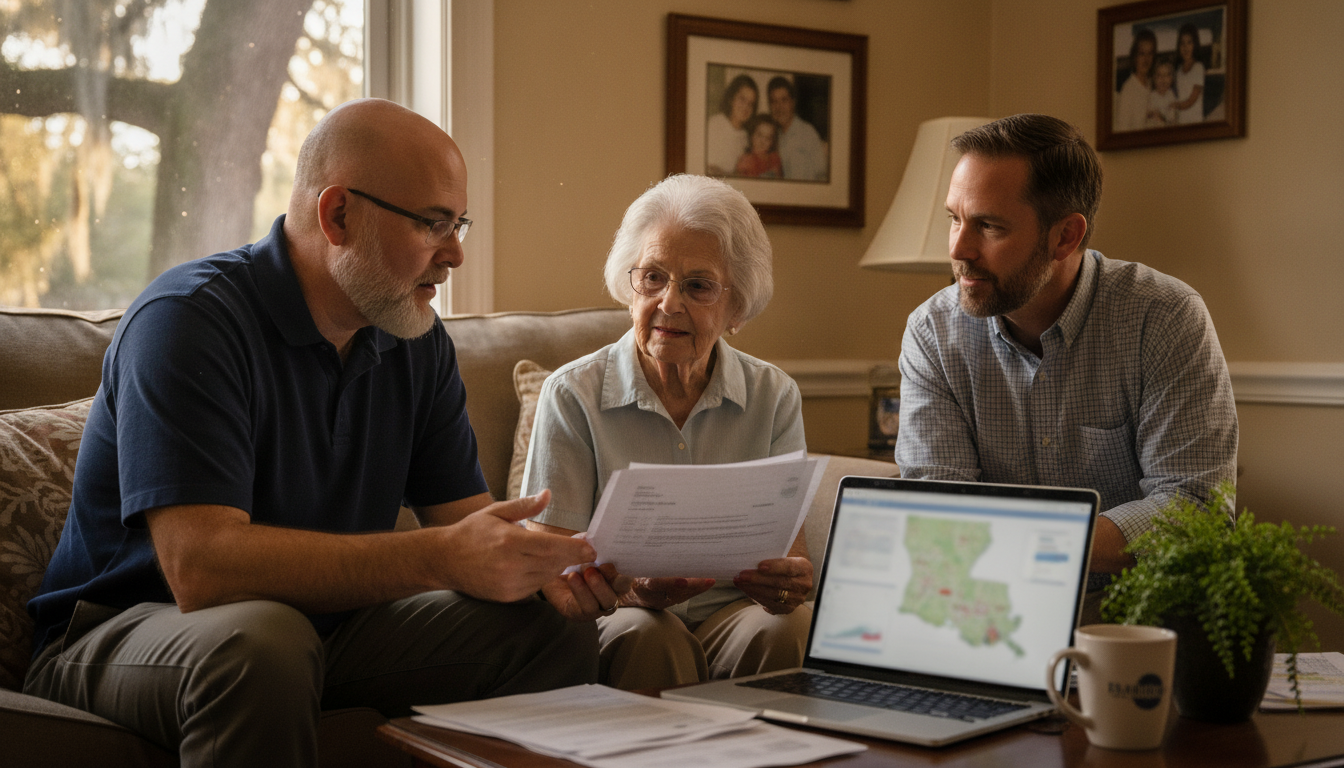
    Parish Spotlight: Each parish assessor in Greater Baton Rouge administers the Special Assessment Level independently. The Ascension Parish Assessor, Livingston Parish Assessor, West Baton Rouge Parish Assessor, and East Baton Rouge Parish Assessor all maintain dedicated resources on their websites for this program. Deadlines and supporting documentation requirements can vary slightly by parish, so homeowners should contact their specific assessor's office rather than relying on a neighboring parish's process.

    Beyond the Homestead Exemption: Property Tax Relief in Greater Baton Rouge for Seniors, Disabled Veterans, and First Responders in 2026 - supporting image

    Tiered Disabled Veteran Exemptions and the First Responder Benefit

    Disabled veterans in Louisiana receive additional property tax exemptions beyond the standard Homestead Exemption based on their VA service-connected disability rating—ranging from an additional $2,500 of assessed value exempt at 50–69% disability to full ad valorem exemption at 100% disability. Eligible first responders who live and work in the same parish may claim an additional $2,500 of assessed value exempt where their parish governing authority has approved the exemption, under a constitutional amendment effective January 1, 2024.

    Louisiana's tiered disabled veteran exemptions, which became effective January 1, 2023, are structured around the VA service-connected disability rating and stack on top of the standard Homestead Exemption. According to the West Baton Rouge Parish Assessor and confirmed by the Louisiana Constitution, the tiers work as follows: veterans with a 50–69% VA disability rating receive an additional $2,500 of assessed value exempt from property taxes (equivalent to $25,000 of market value at the 10% residential assessment ratio); veterans with a 70–99% rating receive an additional $4,500 of assessed value exempt (equivalent to $45,000 of market value); and veterans with a 100% rating—including those granted individual unemployability—receive a full exemption from all ad valorem property taxes on their primary residence. Municipal taxes and fees may still apply even at the 100% level.

    Surviving spouses of qualifying disabled veterans may also be eligible for these exemptions, provided they continue to own and reside on the property. Eligibility details for surviving spouses can vary, so contact your parish assessor's office for the specific requirements that apply to your situation. To claim the benefit, veterans must obtain a Disabled Veterans Property Tax Benefits Certification letter (Form A25) from the Louisiana Department of Veterans Affairs and present it to their local parish assessor's office.

    The first responder exemption was authorized by Louisiana Amendment 3, approved by voters on November 18, 2023, and became effective January 1, 2024. It provides an additional $2,500 of assessed value exempt for qualifying first responders—including full-time law enforcement, fire protection, EMS, emergency response dispatchers, and certain volunteer firefighters—who both live and work in the same parish. Importantly, the constitutional amendment authorizes each parish governing authority to approve the exemption; it is not automatic in every parish. Homeowners should confirm with their specific parish assessor whether the exemption has been adopted locally. Annual employer documentation is required to maintain the benefit.

    What the November 2026 Ballot Measures Could Mean—and Why Their Outcome Is Still Pending

    Louisiana voters are scheduled to consider constitutional amendments on November 3, 2026, that could expand property tax relief for seniors and adjust assessment and millage rules. Because the vote has not yet occurred as of the research date, none of these proposed changes are current law, and homeowners should not plan around them until results are confirmed.

    The research identifies constitutional amendments scheduled for the November 3, 2026, Louisiana ballot that are directly relevant to property tax relief in Greater Baton Rouge. It is critical to understand that these are proposed changes—they require voter approval to take effect, and their outcome is pending as of the research compilation date.

    The first, authorized by Act 274 of the 2026 legislative session and introduced as House Bill 514 (HB 514), is described as the Property Tax Exemption for Seniors Amendment. If approved by voters and adopted by local parishes and municipalities, it would authorize an additional, age-graduated property tax exemption for qualifying senior homeowners aged 65 and older who also qualify for the Special Assessment Level freeze. The additional exemption would be tiered by age, ranging from $6,000 of assessed value at age 65 up to $30,000 of assessed value at higher age thresholds. If approved, this provision would take effect January 1, 2028, and would require local parish or municipal adoption before applying in any given jurisdiction.

    The second, introduced as House Bill 300 (HB 300), would raise the household income cap for the Special Assessment Level freeze from its current threshold to $150,000—potentially making the freeze available to a significantly broader group of senior and disabled homeowners. If approved by voters, this change would take effect for the 2027 tax year.

    A third amendment, introduced as House Bill 521 (HB 521), would adjust how millage rate limits are calculated, authorizing taxing authorities to levy rates above the prior year's appraisal-adjusted rate but below the maximum voter-approved rate.

    Because none of these amendments have been voted on yet, they carry no legal effect at this time. Homeowners who might benefit from an expanded income cap or a new senior exemption should monitor official Louisiana election results after November 3, 2026, and then consult their parish assessor's office to understand whether and when any newly approved provisions take effect. A tax professional can help you evaluate the financial implications for your specific situation.

    Practical Steps: Documents to Gather, Questions to Ask, and Professionals to Contact

    Homeowners who believe they may qualify for any of these additional exemptions should contact their parish assessor's office directly to confirm eligibility requirements, current deadlines, and required documentation. Veterans should also contact the Louisiana Department of Veterans Affairs for the Form A25 certification letter required to claim disability-based exemptions.

    Understanding that a benefit exists is only the first step—actually securing it requires timely action through the right channels. Here is a practical framework for Greater Baton Rouge homeowners exploring these programs.

    For the Special Assessment Level freeze, contact your parish assessor's office (East Baton Rouge, Ascension, Livingston, or West Baton Rouge) and ask specifically about the application deadline for the current tax year, what income documentation is required, and whether your disability certification—if applicable—meets the parish's standards. Income limits and procedural details can shift, so verify directly rather than relying on prior-year information.

    For disabled veteran exemptions, the starting point is the Louisiana Department of Veterans Affairs, which issues the Form A25 certification letter that your parish assessor requires. The VA disability rating on your official VA documentation will determine which tier of exemption applies. Surviving spouses should ask the assessor's office specifically about spousal eligibility and any additional documentation needed.

    For the first responder exemption, confirm first with your parish assessor's office that the exemption has been adopted in your parish, since the constitutional amendment authorizes but does not require each parish to offer it. If it has been adopted, your employer must complete annual documentation confirming your employment status and parish of employment. Ask your HR or payroll department whether they are familiar with the process, and bring that documentation to your assessor's office.

    From a real estate perspective, these exemptions are tied to the owner-occupant and do not automatically transfer when a home is sold. If you are buying a home in Greater Baton Rouge, the seller's exemptions will not carry over to you—you will need to apply for any exemptions you qualify for after closing. If you are selling, be aware that a buyer cannot assume your assessment freeze; their assessed value will reset at the time of sale. For questions about how these exemptions affect your tax basis, estate planning, or financial planning, consult a licensed tax professional or attorney.

    $75,000Homestead Exemption Value
    $102,7002026 Freeze Income Cap
    100% ExemptTotal Disability Benefit
    Nov. 3, 2026Senior Amendment Vote

    Considering a home sale in Greater Baton Rouge?

    Request a Local Home Value Discussion

    Kevin Young, REALTOR business card

    Baton Rouge Home Seller FAQ

    Seller FAQ

    Does the Special Assessment Level freeze eliminate my property tax bill entirely?

    No. The Special Assessment Level freezes your home's assessed value so future reassessments cannot increase it, but it does not eliminate your tax bill. Millage rates set by your parish and taxing districts can still change, which means your total tax bill can still rise or fall even with the freeze in place. The standard Homestead Exemption continues to apply on top of the frozen assessed value. Contact your parish assessor's office for a full explanation of how the freeze interacts with your current assessment.

    Seller FAQ

    Can a 100% disabled veteran in Greater Baton Rouge avoid all property taxes on their home?

    According to the Louisiana Constitution and confirmed by the West Baton Rouge Parish Assessor, veterans with a 100% VA service-connected disability rating—including those granted individual unemployability—qualify for a full exemption from ad valorem property taxes on their primary residence in Louisiana. However, municipal taxes and certain fees may still apply even at the 100% exemption level. Veterans must obtain a Form A25 certification letter from the Louisiana Department of Veterans Affairs and present it to their local parish assessor's office to claim this benefit. Consult your assessor and a tax professional for your specific situation.

    Seller FAQ

    If I buy a home from a senior who had the assessment freeze, do I inherit their frozen value?

    No. Louisiana's Special Assessment Level freeze is tied to the qualifying owner-occupant, not the property itself. When a home is sold, the freeze does not transfer to the new owner. The assessed value will reset based on the property's market value at the time of the sale or the next reassessment cycle. If you are a buyer who qualifies for the freeze in your own right—as a senior, disabled homeowner, or qualifying disabled veteran—you would need to apply through your parish assessor's office after taking ownership.

    Seller FAQ

    Are the November 2026 constitutional amendments already in effect for my 2026 tax bill?

    No. The constitutional amendments scheduled for the November 3, 2026, Louisiana ballot—including the proposed age-graduated senior property tax exemption (HB 514) and the proposed increase in the Special Assessment Level income cap to $150,000 (HB 300)—are pending voter approval as of the research date. They are not current law and have no effect on 2026 tax bills. If voters approve any of these amendments, homeowners should contact their parish assessor's office to understand when and how any newly enacted provisions would take effect.

    Seller FAQ

    Does the first responder exemption apply if I work in one parish but live in another?

    Based on the Louisiana Constitution and confirmed by local parish assessors, the first responder exemption requires that the eligible employee both live and work in the same parish. If you are employed as a first responder in one Greater Baton Rouge area parish but your primary residence is in a different parish, you may not qualify under the current eligibility rules. Additionally, the exemption must be approved by your parish governing authority before it is available locally—not all parishes have adopted it. Contact your parish assessor's office directly to confirm whether the exemption has been adopted in your parish and what the specific residency, employment, and annual documentation requirements are.

    Market Intelligence Note: This article draws from the sources listed below and explains general real estate considerations for Greater Baton Rouge consumers.


  • Common Contingencies in a Greater Baton Rouge Purchase Agreement: What Buyers and Sellers Need to Know in 2026

    Common Contingencies in a Greater Baton Rouge Purchase Agreement: What Buyers and Sellers Need to Know in 2026

    Common Contingencies in a Greater Baton Rouge Purchase Agreement: What Buyers and Sellers Need to Know in 2026

    TLDR: Executive Briefing

    Real estate contingencies are contractual safeguards built into Louisiana purchase agreements that protect both buyers and sellers by defining the conditions under which a deal can proceed, be renegotiated, or be cancelled. The Louisiana Real Estate Commission mandated a revised Residential Agreement to Buy or Sell effective January 1, 2026, introducing new requirements for cash buyer proof of funds and buyer broker compensation disclosures. Understanding how these clauses work—and when they apply—can help Greater Baton Rouge buyers protect their earnest money and help sellers evaluate the true strength of any offer they receive.

    What Are Real Estate Contingencies and Why Do They Matter in Greater Baton Rouge?

    Contingencies are contractual provisions in a Louisiana purchase agreement that make the sale conditional on specific events—such as a satisfactory inspection, secured financing, or a clear title. If those conditions are not met within the agreed timeframe, either party may have the right to cancel without penalty.

    In Greater Baton Rouge, contingencies are standard components of nearly every residential transaction. They are not loopholes or signs of a weak offer—they are the structured framework that defines each party's rights and obligations from the moment a contract is signed to the day of closing. The governing document in Louisiana is the Residential Agreement to Buy or Sell, which the Louisiana Real Estate Commission (LREC) oversees and periodically revises. Effective January 1, 2026, the LREC mandated updates to this form, reinforcing the importance of understanding not just what contingencies exist, but how the specific language of the current agreement shapes them.

    For buyers, contingencies are primarily a financial safety net. They define the circumstances under which earnest money—the good-faith deposit submitted with an offer—can be returned if the deal falls apart for a covered reason. For sellers, contingencies establish clear timelines and conditions, giving them a structured path toward closing and, in some cases, the ability to continue marketing the property if a buyer's conditions are not satisfied. In a market where contingent listings are common, both sides benefit from knowing exactly what each clause requires and what happens when a deadline passes.

    Parish Spotlight: Contingency dynamics can vary across Greater Baton Rouge's sub-markets. In communities like Prairieville, Gonzales, and Denham Springs—where move-up buyers are prevalent—home sale contingencies appear frequently because buyers often need proceeds from their current home to fund the next purchase. In older neighborhoods such as the Garden District, Mid-City Baton Rouge, and Broadmoor, inspection contingencies carry particular weight given the potential for deferred maintenance in aging housing stock. Knowing which contingencies are most common in a specific area helps both buyers and sellers set realistic expectations before an offer is made.

    Common Contingencies in a Greater Baton Rouge Purchase Agreement: What Buyers and Sellers Need to Know in 2026 - supporting image

    The Five Most Common Contingencies—and How Each One Protects You

    The most common contingencies in a Greater Baton Rouge purchase agreement are inspection, financing, appraisal, home sale, and title contingencies. Each clause defines a specific condition the transaction must satisfy, and each gives the protected party a defined exit right if that condition is not met within the agreed timeframe.

    **Inspection Contingency:** Typically grants the buyer a set period—often cited in Louisiana practice as roughly 10 to 14 days, though the specific number of days is negotiated and written into the contract—to have the property professionally inspected. If serious issues are discovered, the buyer may request repairs, negotiate a price reduction, or exit the contract and recover their earnest money. Sellers benefit from a structured process: once the buyer accepts the property's condition or the deadline passes without action, the contingency is removed and the transaction moves forward. Waiving this contingency, particularly for older homes, carries meaningful financial exposure for buyers.

    **Financing Contingency:** Protects buyers who are using a mortgage by specifying loan type, terms, and a deadline to secure approval. If the buyer cannot obtain financing for a covered reason within the agreed period, they can exit without forfeiting their deposit. For sellers, it sets a firm deadline that confirms the buyer's financial capability.

    **Appraisal Contingency:** If the lender's appraiser values the property below the purchase price, the buyer may renegotiate, bring additional cash to closing, or terminate the contract and recover their deposit. Lenders generally require an appraisal before funding a loan, making this contingency closely linked to the financing contingency in practice.

    **Home Sale Contingency:** Makes the purchase conditional on the buyer's existing home selling first. Many of these include a kick-out clause—sometimes called a 72-hour clause—allowing the seller to continue marketing and accept a competing offer, giving the original buyer a short window to remove the contingency or walk away.

    **Title Contingency:** Conditions the sale on the seller delivering a clear, merchantable title free of undisclosed liens, encumbrances, or ownership disputes. Under the Louisiana Residential Agreement to Buy or Sell, all costs and fees required to make title merchantable are the seller's responsibility. If title issues cannot be resolved, the buyer can demand return of their deposit. Sellers bear the obligation to clear title before closing.

    2026 LREC Form Updates: What's New and Why It Matters at the Contract Table

    Effective January 1, 2026, the LREC mandated revisions to the Louisiana Residential Agreement to Buy or Sell. Key changes include explicit cash buyer proof-of-funds requirements with seller termination rights if documentation is not provided, and a dedicated buyer broker compensation disclosure section clarifying how that amount is disbursed from seller proceeds.

    The 2026 updates to the Louisiana Residential Agreement to Buy or Sell do not add new contingencies in the traditional sense, but they do strengthen the protective framework around two areas that had previously been handled less formally.

    **Cash Buyer Proof of Funds:** The revised form explicitly requires cash buyers to provide documentation of their financial capability—such as a bank statement or letter of financial capability—within a specified number of days stated in the contract. If that documentation is not delivered on time, the seller has an explicit contractual right to terminate the agreement. The new language also grants the seller and their agent permission to contact the financial institution to verify the authenticity of the documentation provided. This change directly addresses a practical risk sellers face when accepting cash offers: the possibility that a buyer's claimed funds do not actually exist or are not accessible. Sellers evaluating cash offers in 2026 should confirm that the proof-of-funds deadline and verification language are properly included in the agreement.

    **Buyer Broker Compensation Disclosure:** The 2026 agreement includes a dedicated section—new as of this form version—disclosing the amount the seller agrees to contribute toward the buyer's broker compensation at closing, with clarification that this amount is disbursed from the seller's proceeds. This change increases transparency for all parties and reflects broader industry shifts in how buyer agent compensation is documented in purchase agreements.

    Buyers and sellers should review the current LREC-mandated form with their agent and, where appropriate, with a licensed Louisiana real estate attorney, to understand how these provisions apply to their specific transaction.

    Practical Decision Points: Questions to Ask, Documents to Gather, and Professionals to Involve

    Before signing a purchase agreement in Greater Baton Rouge, buyers should understand every contingency deadline, confirm their earnest money is protected under each clause, and work with a knowledgeable agent. Sellers should evaluate whether contingent offers include kick-out clauses and verify that cash offers include the 2026-required proof-of-funds documentation.

    **For Buyers — Key Decision Points:**

    – *Know your deadlines.* Every contingency has a contractual timeframe. Missing a deadline—even by a day—can cost you your right to exit without penalty. Your agent should track these dates and prompt you well in advance.
    – *Understand what you're waiving.* In competitive situations, buyers sometimes consider waiving inspection or appraisal contingencies to strengthen an offer. This is a significant financial decision. Discuss the specific risks with your agent before agreeing to waive any protection, particularly for older properties where undisclosed issues are more likely.
    – *Protect your earnest money.* If you exit a contract under a valid, properly documented contingency within the allowed window, you are generally entitled to a full return of your deposit. Exiting outside a contingency window or for a reason not covered by the contract may result in forfeiture.
    – *Cash buyers: prepare your documentation.* The 2026 LREC form requires proof of funds within a specified number of days. Have your bank statement or financial capability letter ready before you make an offer.

    **For Sellers — Key Decision Points:**

    – *Evaluate offer strength beyond price.* A higher offer with multiple contingencies may carry more risk than a slightly lower offer with fewer conditions. Your agent can help you compare offers on a risk-adjusted basis.
    – *Insist on kick-out clauses.* If you accept a home sale contingency, ensure the agreement includes a kick-out clause so you retain the right to continue marketing and respond to competing offers.
    – *Verify cash offer documentation.* Under the 2026 form, you have the right to request and verify proof of funds. Use it.

    **Professionals to Involve:** A licensed Louisiana real estate attorney can review contract language, advise on your rights under specific contingency clauses, and assist if a dispute arises. Your lender should be engaged early to confirm financing timelines align with contract deadlines. A licensed home inspector should be scheduled promptly once a contract is signed so the inspection contingency window is not wasted.

    5Common Contingency Types
    Jan 1, 2026LREC Form Effective Date
    24–72 hrsNegotiated Kick-Out Window (Typical Range)
    10–14 daysInspection Period Range (Negotiated)

    Considering a home sale in Greater Baton Rouge?

    Request a Local Home Value Discussion

    Kevin Young, REALTOR business card

    Baton Rouge Home Seller FAQ

    Seller FAQ

    What happens to my earnest money if a contingency is not met in Louisiana?

    If a buyer exits a Louisiana purchase agreement under a valid, properly documented contingency within the contractually specified timeframe, they are generally entitled to a full return of their earnest money deposit. However, if a buyer attempts to cancel outside a contingency window or for a reason not covered by the contract, the seller may have grounds to retain the deposit. The specific terms governing earnest money are defined in the Residential Agreement to Buy or Sell, so reviewing that language carefully with your agent—and a real estate attorney if needed—is important before signing.

    Seller FAQ

    What is a kick-out clause, and should sellers in Greater Baton Rouge require one?

    A kick-out clause (sometimes called a 72-hour clause or bump clause) allows a seller who has accepted a home sale contingency to continue marketing the property and accept a competing non-contingent offer. When a new offer comes in, the original buyer typically has a short window—often ranging from 24 to 72 hours, as negotiated in the contract—to either remove their home sale contingency and proceed or walk away. For sellers in move-up buyer communities like Prairieville, Gonzales, and Denham Springs, where home sale contingencies are common, including a kick-out clause is a practical way to limit the risk of having a property tied up indefinitely.

    Seller FAQ

    What are the new cash buyer proof-of-funds requirements under the 2026 Louisiana purchase agreement?

    Effective January 1, 2026, the LREC-mandated Residential Agreement to Buy or Sell explicitly requires cash buyers to provide documentation of their financial capability—such as a bank statement or letter of financial capability—within a number of days specified in the contract. If the documentation is not provided on time, the seller has an explicit right to terminate the agreement. The revised form also grants the seller and their agent permission to contact the financial institution to verify the authenticity of the documentation. Cash buyers should have these materials ready before submitting an offer.

    Seller FAQ

    Should a buyer ever consider waiving a contingency in Greater Baton Rouge?

    In competitive market conditions, some buyers consider waiving inspection or appraisal contingencies to make their offer more attractive to sellers. However, waiving these protections carries real financial risk: without an inspection contingency, a buyer who discovers serious defects after closing has limited recourse; without an appraisal contingency, a buyer may be obligated to cover the gap between the appraised value and the purchase price out of pocket. This decision deserves a thorough conversation with your agent about the specific property, its age, condition, and the current competitive environment—particularly for older homes in neighborhoods like the Garden District or Mid-City Baton Rouge.

    Seller FAQ

    How does the appraisal contingency interact with the financing contingency in a Louisiana purchase agreement?

    These two contingencies are closely related in practice. Lenders generally require an appraisal before funding a mortgage to confirm the property is worth the amount being borrowed. If the appraisal comes in below the purchase price, it can trigger both contingencies: the financing contingency may be affected if the lender will not fund the full loan amount, and the appraisal contingency gives the buyer the option to renegotiate the price, bring additional cash to closing to cover the gap, or exit the contract and recover their deposit. Buyers relying on mortgage financing should understand how both clauses work together before signing.

    Market Intelligence Note: This article draws from the sources listed below and explains general real estate considerations for Greater Baton Rouge consumers.


  • Kevin’s Corner: What Are the Best School Districts in Greater Baton Rouge, and How Do School Ratings Impact Home Values in 2026?

    Kevin’s Corner: What Are the Best School Districts in Greater Baton Rouge, and How Do School Ratings Impact Home Values in 2026?

    Kevin's Corner: What Are the Best School Districts in Greater Baton Rouge, and How Do School Ratings Impact Home Values in 2026?

    TLDR: Executive Briefing

    Greater Baton Rouge is home to some of Louisiana's highest-performing public school districts — and where you buy matters for both your family and your investment. Zachary Community School District ranks #1 in Louisiana on Niche's 2026 list, followed by Ascension Parish at #3 and Central Community at #5. Research consistently shows that homes in top-rated school districts command meaningful price premiums. Here's what buyers need to know before choosing a neighborhood.

    The Top-Performing School Districts in Greater Baton Rouge

    Greater Baton Rouge is served by several distinct school systems — some of the best in Louisiana. Zachary Community School District, Central Community School District, Ascension Parish Public Schools, and Livingston Parish Public Schools all rank among the state's top performers on Niche's 2026 Best School Districts list. East Baton Rouge Parish Public Schools, the region's largest system, includes standout magnet and laboratory schools within a larger, more varied district.

    Understanding how these districts differ — and what that means for home prices — is one of the most practical things a buyer can do before starting a home search in the Greater Baton Rouge area.

    **Zachary Community School District — #1 in Louisiana**

    Zachary Community School District earns the top spot on Niche's 2026 Best School Districts in Louisiana ranking, with an overall A+ grade from Niche. Zachary High School ranks #11 among Best Public High Schools in Louisiana and #2 in the Baton Rouge metro area on Niche's 2026 list. Homes.com reports a 98% graduation rate for Zachary High. According to Niche's 2024–25 LEAP-based data, 47% of Zachary district students are proficient in math and 59% in reading — well above Louisiana state averages.

    Zachary and Central operate as independent city school systems within East Baton Rouge Parish, meaning a home's address in the broader parish does not automatically place a child in either district. Buyers should verify school zone assignments for any specific property before making decisions.

    **Ascension Parish Public Schools — #3 in Louisiana**

    Ascension Parish Public Schools ranks #3 in Louisiana on Niche's 2026 list, earning an overall A grade. According to Niche's 2024–25 data, 53% of Ascension Parish students are proficient in math and 60% in reading. The district has one of the highest concentrations of A-rated individual schools in the region, with Dutchtown High School consistently cited as a top-performing high school in the state. Ascension Parish has grown significantly in recent years, with new schools built to serve communities like Prairieville and Gonzales.

    **Central Community School District — #5 in Louisiana**

    Central Community School District ranks #5 among 70 Louisiana school districts on Niche's 2026 list, with an overall A- grade from Niche and an A rating from the Louisiana Department of Education. According to Niche's 2024–25 data, 52% of Central students are proficient in math and 53% in reading. A third-party construction industry source notes that more than half of Central students score at Mastery or above on state tests — a level reached by only a handful of districts statewide, though buyers should verify current LDOE data directly.

    Like Zachary, Central operates as an independent city school system within East Baton Rouge Parish. Living in the broader parish does not guarantee enrollment in Central schools.

    **Livingston Parish Public Schools — #14 in Louisiana**

    Livingston Parish Public Schools ranks #14 among 70 Louisiana school districts on Niche's 2026 list, with an overall B+ grade. According to Niche's 2024–25 data, 40% of students are proficient in math and 53% in reading. The district has shown meaningful improvement in recent years. Top-cited schools within the district include Live Oak High School, which ranks #22 among Best Public High Schools in Louisiana on Niche's 2026 list.

    Livingston Parish generally offers more affordable housing options than the Zachary, Central, or Ascension Parish markets, though buyers should research current pricing independently. The tradeoff is typically a longer commute into Baton Rouge, depending on the specific community.

    **East Baton Rouge Parish Public Schools**

    East Baton Rouge Parish is the region's largest and most complex school system. The parish's overall proficiency scores are lower than the independent city systems, but it is home to several highly regarded magnet and laboratory schools. Top-cited public schools in EBR Parish include Baton Rouge Magnet High School, Westdale Heights Academic Magnet School, and Mayfair Laboratory School. Admission to magnet programs typically involves an application process; buyers interested in these schools should contact EBR Parish Schools directly for current eligibility and enrollment procedures.

    Importantly, Zachary and Central operate independently of EBR Parish Schools. A home address in East Baton Rouge Parish does not place a child in either of those systems.

    Kevin's Corner: What Are the Best School Districts in Greater Baton Rouge, and How Do School Ratings Impact Home Values in 2026? - supporting image

    How School Ratings Affect Home Values — and What It Means for Buyers

    School district quality is one of the most consistent drivers of home values in Greater Baton Rouge. Homes in top-rated districts typically command meaningful price premiums, attract more buyer competition, and tend to hold their value more reliably over time.

    **The Price Premium Is Real**

    Multiple national studies and real estate data sources consistently find that homes in highly rated school districts sell for 10% to 20% more than comparable homes in average-performing areas. In some markets, that premium reaches 49% or higher, according to Opendoor's analysis of school rating and home price data. Research from the National Bureau of Economic Research has found a direct correlation between school spending and home values.

    In Greater Baton Rouge, this dynamic plays out clearly. Zachary and Central are specifically noted by local real estate observers as commanding premium prices relative to surrounding areas, driven by sustained buyer demand from families prioritizing school quality. Ascension Parish similarly attracts buyers who want strong schools, and that demand supports home values across communities like Prairieville and Gonzales.

    **Why the Premium Persists**

    The school-value connection is driven by a few reinforcing factors:

    – **Sustained demand:** Families with children — and buyers planning for the future — actively seek top-performing districts and compete for limited inventory, pushing prices up.
    – **Community signals:** Strong schools tend to reflect broader community investment, including infrastructure, engaged neighbors, and stable neighborhood conditions.
    – **Resale value:** Even buyers without children recognize that a home in a desirable school district will be easier to sell later. That built-in demand supports long-term appreciation.

    **A New Accountability Framework to Watch**

    The Louisiana Department of Education launched a revised school accountability system — called *Grow. Achieve. Thrive.* — effective with the 2025–2026 school year. The system evaluates schools across three pillars: Grow (student academic growth), Achieve (proficiency in core subjects), and Thrive (graduation readiness and post-secondary preparation). It uses a 100-point School Performance Score.

    According to the LDOE, the 2026 LEAP results are the first that will contribute to School Performance Scores under this revised system, with official scores expected to be released later in 2026. Because the new system uses different measures and a higher bar, some school and district ratings may look different when the first official scores are published. Buyers relying on LDOE letter grades should check the LDOE website directly for the most current published scores once they are released.

    **Practical Steps for Buyers**

    – **Verify school zone assignments.** School boundaries can shift, and performance varies significantly even within parishes. Always confirm the specific school zone for any property address using each parish's official zone lookup tool before making decisions.
    – **Use multiple rating sources.** Niche, GreatSchools, and the Louisiana Department of Education each measure school performance differently. Cross-referencing them gives a more complete picture.
    – **Budget for the premium.** If Zachary, Central, or Ascension Parish schools are a priority, expect to pay a premium relative to comparable homes in other parts of the metro. That premium should be factored into your overall budget.
    – **Consider the full tradeoff.** Livingston Parish offers a combination of improving schools and generally more affordable housing, though commute times and specific school performance should be researched for the communities you're considering.
    – **Think long-term.** Even if you don't have children, buying in a strong school district is widely recognized as a factor that supports resale value and buyer demand over time.

    School district research is one area where working with a local REALTOR® who knows the specific neighborhoods, boundaries, and market dynamics can make a real difference. I'm happy to walk you through how school zones map to specific neighborhoods and what that means for your search.

    #1Zachary Community SD — Niche 2026 Best in Louisiana
    #3Ascension Parish Public Schools — Niche 2026 Louisiana Ranking
    #5Central Community SD — Niche 2026 Louisiana Ranking (of 70)
    10–20%Typical home price premium in top-rated school districts (national research)

    Considering a home sale in Greater Baton Rouge?

    Request a Local Home Value Discussion

    Kevin Young, REALTOR business card

    Baton Rouge Home Seller FAQ

    Seller FAQ

    Are Zachary and Central schools part of East Baton Rouge Parish Schools?

    No. Zachary Community School District and Central Community School District are independent city school systems that operate separately from East Baton Rouge Parish Public Schools, even though they are geographically located within East Baton Rouge Parish. A home address in EBR Parish does not automatically place a child in Zachary or Central schools. Buyers should verify the specific school zone for any property address using the district's official zone lookup tool.

    Seller FAQ

    How do I verify which school district a specific home is zoned for?

    Each parish and independent city school system maintains an official school zone lookup tool on its website. Because boundaries can change, always verify the zone assignment for a specific property address directly with the school district — not just by neighborhood name or ZIP code. Your REALTOR® can help you identify the right resource for each district you're considering.

    Seller FAQ

    Does buying in a top-rated school district matter if I don't have children?

    It often does, from a resale perspective. Homes in highly rated school districts consistently attract more buyer demand, which supports both pricing and the speed of future sales. Even buyers without children frequently prioritize strong school districts because they recognize the long-term investment value. That said, individual outcomes depend on many factors, and no specific appreciation can be guaranteed.

    Seller FAQ

    How does Louisiana's new 'Grow. Achieve. Thrive.' accountability system affect school ratings?

    The Louisiana Department of Education's revised accountability system — Grow. Achieve. Thrive. — took effect in the 2025–2026 school year and uses a new 100-point School Performance Score. The LDOE has indicated that official scores under the new system are expected to be released later in 2026. Because the new system uses different measures and a higher bar, some school and district ratings may look different from prior years. Buyers should check the LDOE website directly for the most current published scores.

    Seller FAQ

    Which Greater Baton Rouge parish offers the best combination of school quality and housing affordability?

    That depends on your priorities and budget. Zachary and Central offer the highest-ranked public schools in the region but typically command premium home prices. Ascension Parish ranks #3 in Louisiana and offers a range of price points across communities like Prairieville and Gonzales. Livingston Parish ranks #14 in Louisiana and generally offers more affordable housing options, though buyers should research current pricing and commute times for specific communities. A local REALTOR® familiar with all four markets can help you compare options based on your specific situation.

    Market Intelligence Note: This article draws from the sources listed below and explains general real estate considerations for Greater Baton Rouge consumers.

    Sources


  • Kevin’s Corner: What Are the Typical Real Estate Agent Commission Rates in Greater Baton Rouge in 2026, and Who Pays Them After the NAR Settlement?

    Kevin’s Corner: What Are the Typical Real Estate Agent Commission Rates in Greater Baton Rouge in 2026, and Who Pays Them After the NAR Settlement?

    Kevin's Corner: What Are the Typical Real Estate Agent Commission Rates in Greater Baton Rouge in 2026, and Who Pays Them After the NAR Settlement?

    TLDR: Executive Briefing

    A February 2026 survey found the average total real estate commission in Baton Rouge is approximately 5.66% of the sale price — slightly below the national average of 5.70%. Since August 17, 2024, NAR settlement practice changes have reshaped how buyer's agent compensation is handled: it can no longer be advertised on the MLS, buyers must sign a written agreement with their agent before touring homes, and sellers are no longer required to cover the buyer's agent fee. Here's what Greater Baton Rouge buyers need to understand heading into a transaction.

    What Are Typical Commission Rates in Greater Baton Rouge?

    According to a February 2026 survey of local real estate agents conducted by Clever Real Estate, the average total real estate commission in Baton Rouge is approximately 5.66% of the home's sale price. That figure is slightly below the national average of 5.70% reported in the same survey.

    The 5.66% Baton Rouge average typically breaks down to roughly 2.82% for the listing (seller's) agent and 2.84% for the buyer's agent, based on the same February 2026 survey data. Nationally, the survey found listing agents averaging 2.88% and buyer's agents averaging 2.82%.

    These are averages, not fixed rates. Real estate commissions are always negotiable and are not set by law. Listing commissions in Louisiana have been found to range from as low as 1.00% to as high as 4.00% depending on the agent, brokerage, property, and market conditions. Discount and flat-fee brokerages may offer lower listing fees, though the scope of services can vary — a tradeoff worth discussing with any agent you interview.

    It's also worth noting that different surveys produce somewhat different figures. Another industry source places the Louisiana statewide average closer to 5.65%, with a 2.83% listing side and 2.82% buyer's side. The practical takeaway is the same: rates cluster in the mid-5% range locally, they vary by transaction, and they are open to negotiation.

    Kevin's Corner: What Are the Typical Real Estate Agent Commission Rates in Greater Baton Rouge in 2026, and Who Pays Them After the NAR Settlement? - supporting image

    Who Pays the Commission After the NAR Settlement?

    The NAR settlement practice changes took effect on August 17, 2024, and received final court approval on November 26, 2024. These changes fundamentally shifted how buyer's agent compensation is structured and disclosed — though sellers can still choose to cover it.

    **What changed on August 17, 2024:**

    Two major practice changes went into effect that day for REALTOR®-affiliated MLSs:

    1. **Offers of compensation to buyer's agents can no longer be published on the MLS.** Before the settlement, it was standard practice for a listing agent to post the buyer's agent commission offer directly in the MLS. That is now prohibited. Sellers and listing agents can still offer to cover the buyer's agent fee, but that offer must be communicated off-MLS — for example, through direct negotiation or as a seller concession in the purchase contract.

    2. **Buyers must sign a written buyer representation agreement before touring a home.** This agreement must clearly state the amount or rate of compensation the buyer's agent will receive, how it will be determined, and that commissions are negotiable and not set by law. The buyer's agent cannot accept more than the amount specified in that agreement, even if the seller offers more.

    **Who actually pays?**

    Post-settlement, the buyer's agent fee is negotiated separately between the buyer and their agent. Sellers are no longer required to cover it, but many still choose to — and there are practical reasons why.

    When a seller agrees to contribute toward the buyer's agent fee as part of the transaction, that contribution comes out of the sale proceeds at closing. According to guidance from Fannie Mae, Freddie Mac, FHA, and the VA, seller-paid buyer's agent commissions are generally not counted against standard seller concession caps when paid in accordance with local custom — but how this is treated in any specific transaction depends on the loan type, lender, and how the payment is structured. Buyers should confirm the specifics with their lender before making an offer.

    If a seller does not offer to cover the buyer's agent fee, the buyer would need to pay their agent directly — typically in cash at closing, on top of their down payment and other closing costs. That can be a meaningful financial hurdle, particularly for buyers with limited cash reserves.

    **A note for VA buyers:** The VA made permanent in April 2026 a rule allowing veterans, active-duty service members, and surviving spouses using VA loans to pay their buyer's agent commission directly — a restriction that had previously put VA buyers at a competitive disadvantage. Previously, VA borrowers were generally prohibited from paying real estate agent commissions directly. Buyers using VA financing should discuss the current rules and how commission payment will be structured with their lender and agent.

    **What this means in practice for Greater Baton Rouge buyers:**

    Many sellers in the Greater Baton Rouge market may still choose to offer a buyer's agent concession, because doing so can make their home accessible to a broader pool of buyers — particularly those who cannot easily come up with an additional 2–3% in cash at closing. Whether a given seller will offer that concession, and how much, is now a matter of negotiation rather than a standard MLS disclosure.

    As a buyer, you should:
    – **Expect to sign a written buyer representation agreement** before your agent shows you any home. Read it carefully. It will specify what your agent will be paid and who is responsible for that payment.
    – **Ask about seller concessions early.** Your agent can inquire whether a seller is willing to contribute toward your agent's fee as part of the offer negotiation.
    – **Budget for the possibility of paying your agent directly.** Even if many sellers still offer concessions, it is no longer guaranteed or advertised on the MLS. Factor potential buyer's agent costs into your overall home-buying budget.
    – **Talk to your lender.** How buyer's agent compensation interacts with your loan type, concession limits, and closing costs is a lender-specific question. Your lender can clarify what your loan program permits and how to structure the offer accordingly.

    Commission structures, seller concession practices, and the broader market response to these changes are still evolving. The guidance above reflects conditions as of mid-2026, but individual transactions will vary. Your buyer's agent and lender are your best resources for navigating the specifics of your situation.

    ~5.66%Avg. Total Commission in Baton Rouge (Feb. 2026 Survey)
    ~5.70%National Average Commission (Feb. 2026 Survey)
    Aug. 17, 2024NAR Practice Changes Effective Date
    NegotiableCommission Rates — Always, by Law

    Considering a home sale in Greater Baton Rouge?

    Request a Local Home Value Discussion

    Kevin Young, REALTOR business card

    Baton Rouge Home Seller FAQ

    Seller FAQ

    Are real estate commissions in Baton Rouge fixed by law?

    No. Real estate commissions are always negotiable and are not set by law. The 5.66% average reported in a February 2026 survey is a market average, not a required rate. Listing commissions in Louisiana have been found to range from approximately 1% to 4% depending on the agent, brokerage, and transaction. You should discuss fees, services, and payment terms directly with any agent you consider working with.

    Seller FAQ

    Do I have to sign a contract with a buyer's agent before I can tour homes?

    Yes, under the NAR settlement practice changes that took effect August 17, 2024, agents working with buyers through an MLS-affiliated brokerage are required to have a written buyer representation agreement in place before showing you a home. That agreement must specify the agent's compensation — the amount or rate, how it's determined, and that it's negotiable. Read the agreement carefully before signing, and ask questions about anything that isn't clear.

    Seller FAQ

    Will the seller pay my buyer's agent commission?

    It depends on the transaction. Sellers are no longer required to cover the buyer's agent fee, and they can no longer advertise that offer on the MLS. However, many sellers still choose to contribute toward the buyer's agent fee as part of the negotiation, because it can make their home accessible to more buyers. Whether a seller will offer this — and how much — is now negotiated deal by deal. Your agent can help you understand what's typical in the current local market and how to approach this in your offer.

    Seller FAQ

    If the seller pays my buyer's agent fee, does it count against seller concession limits?

    This is a lender- and loan-type-specific question. According to guidance from Fannie Mae, Freddie Mac, FHA, and the VA, seller-paid buyer's agent commissions are generally not counted against standard seller concession caps when paid in accordance with local custom — but the treatment can vary depending on how the payment is structured and your specific loan program. Ask your lender how this applies to your situation before you make an offer.

    Seller FAQ

    What if I'm a veteran using a VA loan — can I pay my buyer's agent directly?

    Yes. The VA made permanent in April 2026 a rule allowing veterans, active-duty service members, and surviving spouses using VA loans to pay their buyer's agent commission directly. Previously, VA borrowers were generally prohibited from doing so. The fee can be paid out of pocket at closing, negotiated as a seller concession, or in some cases handled through other means — subject to VA guidelines. Discuss the specifics with your VA-approved lender.

    Market Intelligence Note: This article draws from the sources listed below and explains general real estate considerations for Greater Baton Rouge consumers.

    Sources


  • How to Buy a Home in Greater Baton Rouge in 2026: Every Step from Pre-Approval to the Act of Sale

    How to Buy a Home in Greater Baton Rouge in 2026: Every Step from Pre-Approval to the Act of Sale

    How to Buy a Home in Greater Baton Rouge in 2026: Every Step from Pre-Approval to the Act of Sale

    TLDR: Executive Briefing

    Buying a home in Greater Baton Rouge follows a structured path shaped by Louisiana's unique civil law system, from mortgage pre-approval through a notary-conducted act of sale. According to market data available at the time of this writing, median sale prices across the Greater Baton Rouge area reached approximately $281,515 in June 2026, though conditions vary by parish and shift over time—verify current figures with your agent. First-time buyers may qualify for Louisiana Housing Corporation assistance programs that can reduce upfront costs significantly; contact the LHC or a participating lender to confirm current availability and terms.

    How to Buy a Home in Greater Baton Rouge in 2026: Every Step from Pre-Approval to the Act of Sale - supporting image

    Step 1: Financial Preparation and Mortgage Pre-Approval

    Before searching for homes in Greater Baton Rouge, buyers should assess their credit, income, and debt-to-income ratio, then obtain a mortgage pre-approval letter. Many lenders process pre-approval within a few business days once documentation is submitted, and pre-approval letters are commonly valid for 60 to 90 days, though terms vary by lender.

    The home-buying process begins well before you tour a single property. Lenders will evaluate your credit score, employment history, income, assets, and existing debts to determine how much they are willing to lend. Many loan programs look for a debt-to-income ratio below 43%, though specific thresholds vary by loan type and lender—your lender can tell you exactly where you stand based on your financial profile.

    Documents you will typically need to gather include recent pay stubs, W-2s from the past two years, federal tax returns, bank and investment account statements, and a government-issued ID. Having these organized before you contact a lender speeds the process considerably.

    Once documentation is submitted, many lenders complete pre-approval within a few business days. The resulting pre-approval letter is commonly valid for 60 to 90 days, and some lenders may extend that window—ask your lender about their specific policy. A pre-approval letter signals to sellers that you are a financially vetted buyer, which can strengthen your position when making an offer.

    Working with a lender who is familiar with Louisiana-specific loan programs, including those offered through the Louisiana Housing Corporation, can also open doors to down payment and closing cost assistance that a national lender may not proactively surface. Ask your lender early about program eligibility so you are not leaving money on the table.

    Parish Spotlight: Buyers targeting Ascension Parish communities like Prairieville and Gonzales, or school-district-driven markets like Zachary and Central in East Baton Rouge Parish, often find that homes move quickly and at higher price points than the broader metro median. Getting pre-approved before you begin touring in these areas is especially important, as competitive listings can attract multiple offers. Livingston Parish buyers should also factor flood zone status into their financing conversations early, since lender-required flood insurance can affect monthly payment calculations and overall affordability.

    Step 2: Engaging a Local Agent, Searching for Homes, and Making an Offer

    After pre-approval, buyers work with a Louisiana Real Estate Commission-licensed agent to search the MLS, evaluate neighborhoods, and submit an offer using the Louisiana Residential Agreement to Buy or Sell. Effective January 1, 2026, LREC-mandated revisions to that agreement introduced new requirements for cash buyers and buyer broker compensation disclosures.

    A licensed real estate agent brings local market knowledge that is difficult to replicate on your own. In Greater Baton Rouge, that means understanding how East Baton Rouge, Ascension, and Livingston Parishes differ in price, inventory, school districts, and flood exposure—all of which shape your strategy. Agents licensed by the Louisiana Real Estate Commission (LREC) are your guide through the MLS, negotiations, and Louisiana's distinctive legal framework.

    Once you identify a property, your agent will help you prepare an offer using the Louisiana Residential Agreement to Buy or Sell. This is a legally binding contract, so understanding its terms matters. Effective January 1, 2026, the LREC mandated significant revisions to this agreement. Cash buyers are now explicitly required to provide proof of funds—such as a bank statement—within a specified timeframe, and sellers have the right to terminate if that documentation is not delivered. The updated agreement also includes a dedicated section addressing buyer's broker compensation, clarifying how and from whom that compensation is paid. Buyers and sellers should review the current LREC-approved form with their agent to understand all applicable terms.

    Earnest money in Louisiana is governed by Civil Code Article 2624's forfeiture and double-return rule, which differs from how deposits work in common-law states. Earnest money in Greater Baton Rouge transactions is typically in the range of 1–3% of the purchase price, though the amount is negotiable. Your agent can help you calibrate an offer that is competitive without overexposing you.

    According to market data available at the time of this writing, median sale prices across the Greater Baton Rouge area reached approximately $281,515 in June 2026, with mid-2026 data for East Baton Rouge Parish showing a median around $280,000. These figures shift month to month—verify current conditions with your agent before making pricing decisions.

    Step 3: Inspections, Appraisal, and Securing Your Financing

    After an accepted offer, buyers typically have a contractually specified window—often several days—to complete a home inspection and negotiate any repair requests. The lender then orders an appraisal to confirm the property's value before underwriting the loan. Sellers are legally required to provide a Property Disclosure Document detailing known material defects.

    With a signed purchase agreement in hand, the due diligence phase begins. A licensed home inspector will evaluate the property's structural integrity, roof, electrical system, plumbing, HVAC, and other major components. Louisiana relies on private inspections by licensed professionals rather than government-administered inspections, so choosing a qualified inspector is your responsibility. Your agent can provide referrals, but you are free to select your own.

    Buyers typically have a contractually specified inspection window—the exact timeframe is set in your purchase agreement and often falls in a range of several days—to complete inspections and submit any repair requests or negotiate a price adjustment. Do not waive this contingency lightly; the inspection period is one of your most important consumer protections in a Louisiana transaction.

    Sellers are legally required to provide a Property Disclosure Document identifying known material defects. Federal law has historically required a lead-based paint disclosure for homes built before 1978; confirm the current disclosure requirements with your agent or a real estate attorney. Review all disclosure documents carefully with your agent.

    Simultaneously, your lender will order an independent appraisal to confirm the home's market value supports the loan amount. If the appraisal comes in below the purchase price, you will need to negotiate with the seller, make up the difference in cash, or exercise any appraisal contingency in your contract. Once the appraisal is satisfactory, your file moves to underwriting, where the lender's team reviews all financial documents, the appraisal, and the title report before issuing a final loan approval. Respond promptly to any underwriter requests for additional documentation—delays here can push your closing date.

    Flood zone status deserves special attention during this phase. If the property is in a designated flood zone, your lender will typically require flood insurance as a condition of the loan, and the cost can be substantial. Investigate the property's flood zone designation early and get an insurance quote before you are too far into the process to reconsider.

    Step 4: The Louisiana Act of Sale, Closing Costs, and First-Time Buyer Programs

    Louisiana closings are called the 'act of sale' and are conducted by a notary public or attorney who oversees document signing and fund transfer. Closing costs typically range from 2–5% of the purchase price. First-time buyers may qualify for Louisiana Housing Corporation programs that, as of the research date, offered significant down payment and closing cost assistance—contact the LHC or a participating lender to confirm current program availability and terms.

    Louisiana is the only U.S. state operating under a civil law system, and that distinction is most visible at closing. Rather than a standard deed transfer, Louisiana uses an 'act of sale'—a formal legal instrument passed by a notary public or attorney. For an authentic act, the signing requires the notary, the parties, and two witnesses. The notary oversees the execution of all documents and the transfer of funds, then the act of sale is recorded in the Clerk of Court office for the parish where the property is located.

    Closings in Greater Baton Rouge typically occur 30 to 60 days after the purchase agreement is executed, depending on financing type and lender timelines. Closing costs generally run 2–5% of the purchase price, covering lender origination fees, title insurance, appraisal fees, recording fees, and prepaid items such as homeowner's insurance and property taxes. In Louisiana, the buyer typically pays for both the owner's and lender's title insurance policies, though in many Baton Rouge-area transactions sellers have commonly contributed to the owner's policy—this is negotiable and should be addressed in your offer.

    For first-time buyers, the Louisiana Housing Corporation (LHC) offers several programs worth exploring. As of the research date, the LHC Soft Second Program provided up to $55,000 in down payment assistance and $5,000 in closing cost assistance at 0% interest, forgivable after 10 years. The LHC Resilience Soft Second Program offered up to $60,000 in hurricane-affected parishes, including East Baton Rouge, Ascension, and Livingston, with an annual household income limit at or below $125,000. The Market Rate GNMA Program paired competitive interest rates on FHA, VA, and USDA loans with up to 4% in down payment help. Program terms, income limits, and eligibility requirements are subject to change—contact the LHC directly at lhc.la.gov or ask a participating lender about current availability and terms before counting on any specific benefit.

    VA and USDA loans remain zero-down-payment options for eligible buyers, and conventional programs like HomeReady and Home Possible have offered 3% down for income-qualifying borrowers—confirm current eligibility requirements with your lender. Your lender is the right professional to determine which programs you qualify for based on your specific financial profile.

    ~$281,515Greater BR Median Price (June 2026, per available data — verify current figures)
    Up to $55,000LHC Soft Second Max (as of research date — confirm with LHC)
    Up to $5,000LHC Closing Cost Assistance (as of research date — confirm with LHC)
    2–5%Typical Closing Cost Range (varies by transaction)

    Considering a home sale in Greater Baton Rouge?

    Request a Local Home Value Discussion

    Kevin Young, REALTOR business card

    Baton Rouge Home Seller FAQ

    Seller FAQ

    How long does it take to buy a home in Greater Baton Rouge from pre-approval to closing?

    From the time a purchase agreement is signed, closings in Greater Baton Rouge typically take 30 to 60 days, depending on financing type, lender timelines, and how quickly inspections and appraisals are completed. Add the time needed to obtain pre-approval—which many lenders complete within a few business days once documentation is submitted—and the home search itself, and most buyers should plan for a process of several weeks to a few months from start to finish.

    Seller FAQ

    What makes Louisiana's closing process different from other states?

    Louisiana operates under a civil law system rather than the common law used in every other U.S. state. Real estate closings are called the 'act of sale' rather than a standard deed transfer, and they are conducted by a notary public or attorney who formally passes the act, oversees document execution, and manages the transfer of funds. An authentic act requires two witnesses in addition to the notary and the signing parties. The completed act of sale is then recorded in the Clerk of Court office for the parish where the property is located.

    Seller FAQ

    What are the 2026 changes to the Louisiana Residential Agreement to Buy or Sell?

    Effective January 1, 2026, the Louisiana Real Estate Commission mandated revisions to the standard purchase agreement. Cash buyers are now explicitly required to provide proof of funds—such as a bank statement—within a specified timeframe after the agreement is executed, and sellers have the right to terminate the contract if that documentation is not delivered. The updated agreement also includes a dedicated section addressing buyer's broker compensation, clarifying how seller-paid compensation is disclosed and sourced. Buyers and sellers should review the current LREC-approved form with their agent to understand all applicable terms.

    Seller FAQ

    What first-time homebuyer assistance programs are available in Greater Baton Rouge in 2026?

    The Louisiana Housing Corporation (LHC) offers several programs. As of the research date, these included the Soft Second Program (up to $55,000 in down payment assistance and $5,000 in closing cost assistance, 0% interest, forgivable after 10 years) and the Resilience Soft Second Program (up to $60,000 in hurricane-affected parishes including East Baton Rouge, Ascension, and Livingston, with a household income limit at or below $125,000). Income limits and eligibility rules apply to all programs and are subject to change—contact the LHC directly at lhc.la.gov or a participating lender to confirm current availability and terms before relying on any specific benefit.

    Seller FAQ

    How does flood zone status affect a home purchase in Greater Baton Rouge?

    Parts of Greater Baton Rouge—including areas in East Baton Rouge, Ascension, and Livingston Parishes—fall within designated flood zones. If a property is in a flood zone, your lender will typically require flood insurance as a condition of the loan, and that cost can be substantial. Flood zone status can also affect eligibility for certain LHC assistance programs. Buyers should ask their agent to identify the flood zone designation of any property under consideration and obtain an insurance quote early in the process, before the inspection period closes.

    Market Intelligence Note: This article draws from the sources listed below and explains general real estate considerations for Greater Baton Rouge consumers.


  • Greater Baton Rouge Property Taxes Explained: How They’re Calculated and 2026 Parish Rates by Location

    Greater Baton Rouge Property Taxes Explained: How They’re Calculated and 2026 Parish Rates by Location

    Greater Baton Rouge Property Taxes Explained: How They're Calculated and 2026 Parish Rates by Location

    TLDR: Executive Briefing

    Property taxes in Greater Baton Rouge are calculated using Louisiana's 10% residential assessment ratio, a $7,500 homestead exemption on assessed value for qualifying owner-occupied primary residences, and locally set millage rates that vary by parish and taxing district. For 2026, total millage rates range from roughly 96 mills in parts of unincorporated East Baton Rouge to over 134 mills in some incorporated communities, producing meaningfully different annual tax bills even for similarly priced homes. Relocating buyers should verify the exact millage composite for any specific address with the relevant parish assessor before finalizing their housing budget.

    How Louisiana Calculates Residential Property Taxes

    Louisiana assesses residential property at 10% of fair market value, subtracts a $7,500 homestead exemption on assessed value for qualifying owner-occupied primary residences, then multiplies the remaining net taxable assessed value by the local millage rate, where one mill equals $1 per $1,000 of assessed value.

    The Louisiana property tax formula has three distinct steps, and understanding each one helps relocating buyers make more informed budget comparisons. First, the parish assessor determines a property's fair market value by analyzing recent comparable sales—this is the same market value figure you see in a listing or appraisal. Second, that market value is multiplied by 10% to produce the assessed value. A home with a market value of $300,000, for example, carries an assessed value of $30,000. Third, if the property will be your primary residence and you qualify, Louisiana's Homestead Exemption reduces that assessed value by $7,500—the equivalent of shielding $75,000 of market value from most ad valorem taxes. The remaining figure is your net taxable assessed value, and that is what the millage rate is applied to.

    Using the same $300,000 example: $30,000 assessed value minus $7,500 exemption equals $22,500 net taxable assessed value. At a total millage rate of 108.80 mills, the estimated annual tax bill would be approximately $2,448. At 100.10 mills, it would be closer to $2,252. These are illustrative estimates; your actual bill will depend on the precise millage composite for your address, which the parish assessor can provide. The difference in millage rates between parishes—and between locations within the same parish—is why two homes with identical purchase prices can carry noticeably different tax obligations.

    Louisiana reassesses residential property every four years; the most recent cycle was completed in 2024, meaning current assessed values reflect that update. The next general reassessment is expected in 2028, though millage rates themselves can still change between reassessment years through voter-approved measures and budget decisions.

    Parish Spotlight: East Baton Rouge Parish illustrates how dramatically location within a single parish can affect the tax bill. The City of Baton Rouge carries a total millage of approximately 108.80 mills, while the City of Zachary reaches roughly 134.41 mills and the City of Central approximately 132.06 mills, based on figures available as of March 2026. Unincorporated areas of the parish start at a base of about 96.18 mills before fire district levies—which can range from 9 to more than 43 mills—are added. Buyers comparing a home inside Zachary city limits to one in an unincorporated area of the parish should ask the East Baton Rouge Parish Assessor's office for the precise composite millage for each address before drawing budget conclusions.

    2026 Millage Rates Across Greater Baton Rouge Parishes

    For 2026, East Baton Rouge Parish total millage rates range from roughly 96 to 134 mills depending on municipality; Ascension Parish averages near 115 mills with a range of approximately 102 to 125 mills; and Livingston Parish carries a default total of about 100.10 mills—generally the lowest of the three core parishes based on available data.

    Each Greater Baton Rouge parish sets its own composite millage by layering levies from multiple taxing bodies: the parish government, the school board, fire protection districts, levee boards, library systems, and in some cases transit or crime prevention districts. The figures below reflect the most current information available as of late August 2026, but individual district levies remain subject to voter-approved renewals and budget adjustments throughout the year. Buyers should treat these as planning benchmarks and confirm current rates with the relevant parish assessor for any specific address.

    **East Baton Rouge Parish** reported a default total millage of 108.80 mills as of March 2026 for the City of Baton Rouge. Other incorporated areas within the parish carry different totals: Baker at approximately 101.69 mills, Central at approximately 132.06 mills, and Zachary at approximately 134.41 mills. Unincorporated areas begin at roughly 96.18 mills before fire district millages are added. Two millage renewals—the EBR Library at 9.5 mills and the Council on Aging at 2 mills—were on the June 27, 2026 ballot; final adopted rates for those districts should be confirmed with the assessor.

    **Ascension Parish** carries an average parish-wide millage near 115 mills, with a range of approximately 102 to 125 mills depending on the specific taxing district combination at a given address. The Ascension Parish School Board adopted an amended 2026 millage schedule in August 2026, and three school board district millage renewals were also on a 2026 ballot. The parish assessor's public exposure of the 2026 assessment roll was scheduled for August 17, 2026. Because several components of the Ascension millage picture were still being finalized near the date of this writing, buyers should contact the Ascension Parish Assessor's office for the most current figures.

    **Livingston Parish** reported a total default millage of 100.10 mills as of March 2026, making it generally the lowest-millage parish in the core Greater Baton Rouge market based on available data. Note that the Livingston Parish Library Board voted in July 2026 to increase its levy from 7.53 to 8.2 mills, and Denham Springs adopted its own 2026 city millage of 2.898 mills in June 2026—both of which affect totals for properties in those specific areas.

    **West Baton Rouge Parish** does not publish a single consolidated parish-wide millage total; rates vary by taxing jurisdiction within the parish. Median effective tax rate estimates for the parish range from approximately 0.55% to 0.67% depending on the source and reference period, with Port Allen carrying the highest effective rate among measured communities at roughly 0.69%. The West Baton Rouge Parish Assessor's office is the appropriate contact for current millage information for a specific address.

    Practical Preparation for Relocating Buyers

    Relocating buyers should use parish assessor tools to estimate taxes for any specific address, plan to apply for the homestead exemption after closing if the home will be their primary residence, and account for the possibility that millage rates may shift before year-end due to pending voter approvals.

    Louisiana's property tax structure offers meaningful advantages for owner-occupants, but those advantages generally require action on the buyer's part. Here are the most important preparation steps for anyone relocating to Greater Baton Rouge.

    **Use address-specific tools.** Each parish assessor maintains an online tax estimator or millage schedule. The East Baton Rouge Parish Assessor (ebrpa.org), Ascension Parish Assessor (ascensionassessor.com), Livingston Parish Assessor (livingstonassessor.com), and West Baton Rouge Parish Assessor (wbrassessor.org) all publish resources that allow buyers to look up assessed values and applicable millage rates by property address. A general parish average is a useful starting point, but the only reliable figure for budgeting is the composite millage for the exact parcel.

    **Apply for the Homestead Exemption promptly after closing.** The exemption is not automatic—it must be applied for at the parish assessor's office, typically by a deadline in the year following purchase. The application is generally free and can often be completed online or in person. Missing the filing window means waiting another year for the benefit, which can represent several hundred dollars in additional taxes depending on the millage rate.

    **Understand what the exemption does and does not cover.** The $7,500 assessed-value reduction generally applies to state, parish, and most special ad valorem taxes. Certain municipal taxes and some special district fees may not be reduced by the exemption. Buyers purchasing within city limits should ask the assessor which millages are exempt-eligible for their specific address.

    **Ask about the Special Assessment Level Freeze.** Homeowners who are 65 or older, or who meet certain disability criteria, and whose household income falls below a qualifying threshold may be eligible to have their home's assessed value frozen. Eligibility requirements, income limits, and application procedures are set by state law and can change; the parish assessor's office or a Louisiana-licensed tax professional can explain current requirements.

    **Monitor local election calendars.** Millage rates can change when voters approve bond measures or renewals. Staying aware of upcoming parish and school board elections helps buyers anticipate whether their tax bill may increase in future years.

    Questions to Ask and Professionals to Consult

    Before closing, ask the parish assessor for the current assessed value and composite millage for the specific address and confirm which millages are reduced by the homestead exemption. For questions about exemption eligibility, assessment appeals, or the tax treatment of investment or rental property, consult a Louisiana-licensed tax professional.

    A real estate agent can help you locate properties, compare neighborhoods, and understand how tax differences factor into overall affordability—but the determination of your actual tax liability, exemption eligibility, or appeal rights belongs to qualified professionals and official sources. Here is a practical checklist of questions and contacts for relocating buyers.

    **Questions for the parish assessor's office:**
    – What is the current assessed value of this property, and when was it last reassessed?
    – What is the total composite millage rate for this specific address, broken down by taxing district?
    – Which of those millages are reduced by the Louisiana Homestead Exemption?
    – What is the deadline to file for the homestead exemption after closing?
    – Does this property currently have any exemptions or special assessment levels in place that would change after a sale?

    **Questions for a Louisiana-licensed tax professional or CPA:**
    – How does the homestead exemption interact with my specific ownership structure (trust, LLC, joint ownership)?
    – If I am purchasing investment or rental property, how is it assessed and taxed differently?
    – Am I or a household member potentially eligible for the Special Assessment Level Freeze?
    – What is the process and timeline for appealing an assessed value I believe is inaccurate?

    **Questions for your lender:**
    – How will my estimated property tax be calculated for escrow purposes, and will it reflect the homestead exemption?
    – What happens to my escrow account if the millage rate changes after closing?

    **Documents to gather:**
    – The parish assessor's property record for any home you are seriously considering, showing current assessed value and millage schedule
    – Recent tax bills for the property if the seller can provide them
    – The parish assessor's homestead exemption application form for your target parish

    Your REALTOR® can help you identify which parish assessor's office to contact, point you toward online estimator tools, and flag neighborhoods where tax rates differ meaningfully—so you can bring the right questions to the right professionals before you commit.

    10%Residential Assessment Ratio
    $7,500Homestead Exemption on Assessed Value
    ~96–1342026 Mills Range (EBR Parish)
    Every 4 YrsReassessment Cycle

    Considering a home sale in Greater Baton Rouge?

    Request a Local Home Value Discussion

    Kevin Young, REALTOR business card

    Baton Rouge Home Seller FAQ

    Seller FAQ

    What is the Louisiana Homestead Exemption and how much can it save on property taxes?

    The Louisiana Homestead Exemption reduces the assessed value of a qualifying owner-occupied primary residence by $7,500, which is the equivalent of shielding $75,000 of market value from most ad valorem taxes. For a home assessed at $30,000 (a $300,000 market-value property), the exemption brings the net taxable assessed value down to $22,500. At a millage rate of 108.80 mills, that reduction represents an estimated savings of roughly $816 per year compared to paying taxes on the full assessed value—though your actual savings will depend on the millage rate for your specific address. The exemption must be applied for at the parish assessor's office after closing and does not apply automatically.

    Seller FAQ

    How do I find the exact property tax rate for a specific address in Greater Baton Rouge?

    The most reliable method is to contact the parish assessor's office directly or use their online property search tool. Each parish—East Baton Rouge (ebrpa.org), Ascension (ascensionassessor.com), Livingston (livingstonassessor.com), and West Baton Rouge (wbrassessor.org)—publishes millage schedules and, in many cases, online tax estimators. Because the total millage is a composite of multiple taxing districts, the rate can differ by several mills even between neighboring streets, making address-level verification essential for accurate budgeting.

    Seller FAQ

    Which Greater Baton Rouge parish has the lowest property tax rate in 2026?

    Based on available 2026 data, Livingston Parish generally carries the lowest total millage among the core Greater Baton Rouge parishes, with a default composite rate of approximately 100.10 mills as of March 2026. Its median effective tax rate has been estimated at around 0.46% in recent data. However, specific locations within Livingston Parish—such as properties within Denham Springs city limits or areas served by higher-millage fire districts—will carry different totals. Buyers should verify the composite rate for any specific address with the Livingston Parish Assessor's office.

    Seller FAQ

    How often are properties reassessed in Louisiana, and could my tax bill change before the next reassessment?

    Louisiana law requires parish assessors to reassess all property every four years. The most recent reassessment cycle was completed in 2024, so the next general reassessment is expected in 2028. However, your tax bill can still change between reassessment years if local taxing authorities adjust millage rates through voter-approved bond measures, renewals, or budget decisions. Several millage renewals and adjustments were on Greater Baton Rouge ballots in 2026, so buyers should monitor local election results and confirm current rates with the relevant parish assessor.

    Seller FAQ

    Are there property tax exemptions in Louisiana beyond the standard Homestead Exemption?

    Yes. Louisiana offers a Special Assessment Level Freeze that may prevent a qualifying homeowner's assessed value from increasing due to rising property values. Eligibility generally requires the homeowner to be age 65 or older, or to meet certain disability criteria—including veterans with a qualifying service-connected disability rating—and to have household income below a threshold set by state law. Because eligibility rules, income limits, and application procedures can change, buyers who may qualify should contact their parish assessor's office or a Louisiana-licensed tax professional for current requirements and application deadlines.

    Market Intelligence Note: This article draws from the sources listed below and explains general real estate considerations for Greater Baton Rouge consumers.


  • Selling Your Home in Greater Baton Rouge: 2026 Property Disclosure Requirements for Flood, Termites, and Defects

    Selling Your Home in Greater Baton Rouge: 2026 Property Disclosure Requirements for Flood, Termites, and Defects

    Selling Your Home in Greater Baton Rouge: 2026 Property Disclosure Requirements for Flood, Termites, and Defects

    TLDR: Executive Briefing

    Louisiana law requires sellers of residential property in Greater Baton Rouge to complete the LREC Property Disclosure Document covering flood history, termite damage, and all known material defects before or at the time a buyer makes an offer. The 2026 updates to LREC forms introduced a continuous disclosure obligation, meaning sellers must provide written updates if new information surfaces before closing. Understanding what to disclose—and when—can help sellers avoid liability, build buyer confidence, and keep transactions on track in a market where flood and termite exposure are everyday realities.

    What Louisiana Law Requires Sellers to Disclose in 2026

    Louisiana's Residential Property Disclosure Act (La. R.S. 9:3198) requires most sellers of 1–4 unit residential property to complete the LREC Property Disclosure Document covering all known material defects, flood history, termite damage, and environmental hazards—regardless of whether an agent is involved. Sellers should consult a licensed Louisiana real estate attorney for questions about how the law applies to their specific circumstances.

    The foundation of seller disclosure in Louisiana is the Property Disclosure Document (PDD), a standardized form prescribed by the Louisiana Real Estate Commission (LREC). The law applies to most residential sales of one-to-four-unit properties and does not disappear simply because a seller chooses to sell without an agent. Sellers are generally required to disclose known material defects—meaning conditions that may have a substantial adverse effect on the property's value, significantly impair the health or safety of future occupants, or would shorten the property's expected useful life if left unaddressed. What qualifies as a material defect in a specific situation is a legal question best directed to a licensed Louisiana real estate attorney.

    Importantly, the PDD reflects the seller's actual knowledge, not the findings of a professional inspection. Sellers are not expected to hire an inspector before completing the form, but they are expected to answer honestly based on what they know. Leaving sections blank when the seller has relevant knowledge is not a safe approach.

    A significant 2026 update reinforced the seller's continuous disclosure obligation. If any information in the PDD becomes inaccurate or materially changes between the time the form is delivered and the act of sale, the seller must notify all parties in writing immediately. This is an enforceable duty that can affect a transaction's outcome if ignored. Sellers with questions about what triggers this obligation in their specific situation should consult a licensed Louisiana real estate attorney.

    For homes built before 1978, federal law adds a separate layer: sellers must disclose known lead-based paint hazards, provide an EPA-approved informational pamphlet, include a Lead Warning Statement in the sales contract, and allow buyers a 10-day window for a lead-based paint inspection. This federal requirement exists alongside—not instead of—the state PDD.

    Parish Spotlight: Greater Baton Rouge spans East Baton Rouge, Ascension, Livingston, and West Baton Rouge Parishes. Research indicates that disclosure requirements in all four parishes are governed by the same statewide Louisiana law and LREC forms. No parish-specific disclosure ordinances beyond the state mandate were identified for residential sales. Sellers in Ascension and Livingston Parishes—areas that experienced significant flooding in 2016—may find that buyer scrutiny of the flood history sections of the PDD is especially thorough, given those communities' direct experience with flood events.

    Flood History, Termites, and Specific Defect Categories on the LREC Form

    The LREC Property Disclosure Document includes dedicated sections for flood history and water intrusion, termites and wood-destroying organisms, structural conditions, HVAC and plumbing systems, environmental hazards, code violations, and HOA obligations—all based on the seller's actual knowledge.

    Greater Baton Rouge's geography makes two disclosure categories especially consequential: flood history and termite activity. The LREC PDD addresses both with specific, targeted questions.

    **Flood and Water Intrusion:** Sellers must disclose any history of flooding, recurring leaks, water intrusion, or prior storm damage. The form asks whether the property is located in a federally designated flood hazard zone, whether flood damage has occurred, whether flood insurance claims have been filed, and whether the seller has received federal disaster assistance that might carry a future flood insurance requirement. Sellers who have elevation certificates, flood insurance declarations, or FEMA documentation should gather those records before completing this section, as buyers and their lenders will likely request them.

    **Termites and Wood-Destroying Organisms:** Louisiana's climate creates persistent termite pressure, and the PDD includes a dedicated section covering known infestations, damage, and whether repairs were made. Sellers must disclose if the property has ever had termites and the status of any treatment or repair work. Buyers routinely request a separate termite inspection report (often called a WDO inspection) as part of their due diligence, so sellers who have current treatment contracts or prior inspection reports should have those documents accessible.

    **Other Required Disclosure Categories:** Beyond flood and termites, the PDD covers structural conditions (foundation, roof, walls, ceilings, floors), HVAC and plumbing systems, electrical systems, environmental hazards such as mold, asbestos, and radon, code violations or unpermitted work, and HOA membership obligations including dues and assessments. Sellers are expected to disclose significant repairs and ongoing maintenance issues—not just current problems, but patterns of recurring issues such as repeated roof repairs or drainage fixes. Whether a particular condition rises to the level of a required disclosure is a legal determination; sellers with questions about specific situations should consult a licensed Louisiana real estate attorney.

    Practical Preparation Steps for Greater Baton Rouge Sellers

    Sellers should gather repair records, termite treatment contracts, flood insurance documents, and elevation certificates before completing the PDD; use only the current 2026 LREC form; deliver it to buyers before an offer is made; and update it in writing immediately if new information arises before closing.

    Preparation before completing the PDD can reduce the risk of omissions and may position the transaction for a smoother closing. Here are practical steps sellers in Greater Baton Rouge should consider:

    **Use the Current Form:** The LREC updates its forms periodically, and using an outdated version can create complications. Sellers should confirm they are working with the current 2026 LREC Property Disclosure Document. A licensed real estate agent can provide the correct form and walk through each section.

    **Deliver Early:** If the PDD is delivered after a buyer submits an offer, Louisiana law generally gives the buyer 72 hours (excluding weekends and state and federal holidays) to terminate the contract or withdraw the offer without penalty and receive their deposit back. Delivering the PDD before an offer is made eliminates that window and keeps the transaction moving forward.

    **Gather Supporting Documents:** Flood insurance declarations, elevation certificates, FEMA correspondence, termite treatment contracts, prior WDO inspection reports, permits for additions or repairs, and HOA governing documents are all items buyers or their lenders may request. Having them organized in advance can avoid delays.

    **Consider a Pre-Listing Inspection:** While not legally required, a pre-listing inspection by a licensed home inspector can surface issues the seller may not be aware of. Discovering a problem before listing allows the seller to either repair it or disclose it proactively—both of which are generally preferable to a buyer discovering it during their own inspection and renegotiating the contract.

    **Update the PDD When Necessary:** If a pipe bursts, a roof leak develops, or any other material change occurs between the time the PDD is delivered and the act of sale, the seller must provide a written update immediately. This is not optional under the 2026 continuous disclosure obligation. Sellers uncertain whether a new development triggers an update obligation should consult a licensed Louisiana real estate attorney promptly.

    Questions to Ask and Professionals to Consult Before You List

    Sellers should consult a licensed Louisiana real estate agent for current LREC forms and transaction guidance, a licensed Louisiana real estate attorney for questions about disclosure liability or complex property histories, and qualified licensed inspectors for termite and general property assessments before listing.

    The PDD is a legal document, and the consequences of incomplete or inaccurate disclosure can extend well beyond a failed transaction. Louisiana's redhibition laws—which may allow buyers to seek rescission of a sale or a reduction in price for hidden defects—make accurate disclosure a meaningful concern for sellers. Questions about what those laws mean for a specific property or transaction history are best directed to a licensed Louisiana real estate attorney.

    **Questions worth discussing with a licensed Louisiana real estate attorney:**
    – Does my property's history of flood damage, prior insurance claims, or federal disaster assistance create any disclosure obligations I might not be aware of?
    – How does an 'as-is' clause in a purchase agreement interact with my disclosure obligations under Louisiana law?
    – Are there any exemptions to the Louisiana Residential Property Disclosure Act that might apply to my sale?
    – What are the potential legal consequences if a buyer later claims I failed to disclose a known defect?

    **Questions worth discussing with a licensed real estate agent:**
    – Which version of the LREC PDD is current for 2026, and how do I obtain it?
    – What documents should I gather before completing the flood and termite sections?
    – How early in the listing process should I deliver the PDD to prospective buyers?
    – What should I do if I discover a new issue after the PDD has already been delivered?

    **Professionals to engage before listing:**
    – A licensed termite and pest control company for a current WDO inspection and treatment documentation
    – A licensed home inspector for a pre-listing general inspection if the property has a complex history
    – A licensed insurance agent to clarify current flood insurance status and whether an elevation certificate is on file
    – A licensed Louisiana real estate attorney for any transaction involving unpermitted work, estate circumstances, foreclosure history, or prior litigation related to the property

    72 hrsBuyer Termination Window
    1978Lead Paint Threshold Year
    1–4Units Covered by PDD
    2026Continuous Duty Effective

    Considering a home sale in Greater Baton Rouge?

    Request a Local Home Value Discussion

    Kevin Young, REALTOR business card

    Baton Rouge Home Seller FAQ

    Seller FAQ

    Do I have to complete a Property Disclosure Document if I'm selling my Baton Rouge home without a real estate agent?

    Yes, in most cases. Louisiana's Residential Property Disclosure Act applies to most sellers of 1–4 unit residential property regardless of whether a real estate agent is involved. The requirement to complete and deliver the LREC Property Disclosure Document is a statutory obligation, not an agent-imposed one. Sellers going the for-sale-by-owner route should obtain the current 2026 LREC form and consult a licensed Louisiana real estate attorney if they have questions about compliance or whether any exemptions apply to their situation.

    Seller FAQ

    What happens if I deliver the Property Disclosure Document after a buyer has already made an offer?

    If the PDD is delivered after the buyer submits an offer, Louisiana law generally gives the buyer 72 hours—excluding weekends and state and federal holidays—to terminate the contract or withdraw the offer without penalty and receive a return of their earnest money deposit. Delivering the PDD before an offer is made eliminates this window. Sellers working with a licensed agent should discuss timing early in the listing process to avoid this situation. For questions about how this applies to a specific contract, consult a licensed Louisiana real estate attorney.

    Seller FAQ

    Am I required to disclose flood damage that was fully repaired before I listed the home?

    Generally, yes. The LREC Property Disclosure Document asks about the history of flooding, water intrusion, and prior storm damage—not just current conditions. Sellers are typically required to disclose past flood events, insurance claims, and federal disaster assistance received, even if repairs were completed. Buyers and their lenders frequently request supporting documentation such as flood insurance declarations, elevation certificates, and FEMA correspondence, so gathering those records before listing is advisable. For questions about how specific past events should be characterized on the form, consult a licensed Louisiana real estate attorney.

    Seller FAQ

    What does the 2026 continuous disclosure obligation mean for sellers in Greater Baton Rouge?

    Effective January 1, 2026, sellers have an ongoing duty to notify all parties in writing immediately if any information in the PDD becomes inaccurate or materially changes before the act of sale. For example, if a roof leak develops after the PDD is delivered but before closing, the seller must provide a written update right away. Failing to do so could expose the seller to legal liability. Sellers should discuss this obligation with their real estate agent and, for complex situations or questions about what triggers an update requirement, with a licensed Louisiana real estate attorney.

    Seller FAQ

    Does disclosing termite history hurt my chances of selling my home in Greater Baton Rouge?

    Accurate disclosure of termite history—including past infestations, treatment, and repairs—is a legal requirement, not an optional marketing decision. In practice, buyers in Greater Baton Rouge routinely expect some termite history given the region's climate, and documented treatment records with a current contract can provide reassurance. Attempting to conceal known termite damage creates significant legal exposure under Louisiana's redhibition laws. Sellers should consult a licensed pest control company for current documentation and discuss presentation strategy with their real estate agent.

    Market Intelligence Note: This article draws from the sources listed below and explains general real estate considerations for Greater Baton Rouge consumers.


  • Relocating to Greater Baton Rouge With a Pet? What Dog Owners Should Know Before They Move

    Relocating to Greater Baton Rouge With a Pet? What Dog Owners Should Know Before They Move

    Relocating to Greater Baton Rouge With a Pet? What Dog Owners Should Know Before They Move

    Relocating to Greater Baton Rouge With a Pet? What Dog Owners Should Know Before They Move

    TLDR: Executive Briefing

    Families relocating to Greater Baton Rouge with dogs will find a well-distributed network of veterinary clinics and animal hospitals across East Baton Rouge Parish and surrounding areas. Pet ownership can indirectly affect real estate decisions—from choosing pet-friendly neighborhoods to managing property condition before a sale. Understanding how pets intersect with housing choices, HOA rules, and home presentation can help relocating pet owners plan a smoother transition.

    How Pet Ownership Shapes Housing Decisions for Relocating Families

    Pet ownership influences relocation housing searches in practical ways—renters prioritize pet-friendly policies, buyers weigh yard size and proximity to parks, and all pet owners benefit from knowing where quality veterinary care is available before they arrive.

    When a family relocates to Greater Baton Rouge with a dog, the housing search often looks different than it does for households without pets. Yard size, fencing, proximity to green space, and neighborhood walkability tend to move up the priority list. For renters, the search narrows further because not every landlord or property management company accepts pets, and those that do may require a pet deposit or monthly pet fee to offset potential wear and tear.

    Buyers have more flexibility, but pet-related considerations still shape decisions. A home with a large, fenced backyard in a neighborhood near a dog park or walking trail may feel more practical than a comparable home without those features. These preferences are real, even if they are difficult to quantify in appraisal terms.

    Greater Baton Rouge's suburban parishes—East Baton Rouge, Ascension, Livingston, and others—offer a range of housing types and lot sizes that can accommodate dogs of varying sizes and energy levels. Neighborhoods closer to the urban core tend to have smaller lots, while communities farther out often offer more outdoor space. A local REALTOR® familiar with the area can help narrow the search based on the specific needs of a relocating pet owner.

    Parish Spotlight: East Baton Rouge Parish contains a notable concentration of veterinary services in the metro area, with clinics distributed across neighborhoods including Goodwood, Sherwood Forest, and areas near Joor Road and Airline Highway. Ascension Parish, one of the faster-growing areas in the region, has seen significant residential development, and pet owners relocating to communities like Prairieville or Gonzales will generally find veterinary access within a reasonable drive of most new subdivisions.

    Veterinary Access in Greater Baton Rouge: What Relocating Pet Owners Can Expect

    Greater Baton Rouge has multiple veterinary clinics and animal hospitals distributed across the metro area, including general practice facilities and at least one specialty provider offering surgical and diagnostic services, giving relocating pet owners a range of care options.

    One of the first practical questions a relocating pet owner asks is whether quality veterinary care will be accessible in the new community. Greater Baton Rouge supports a well-developed network of animal health providers. General practice clinics such as Azalea Lakes Veterinary Clinic, Goodwood Veterinary Care, and Joor Road Veterinary Hospital serve everyday wellness and routine care needs. For more complex cases, Capital Area Veterinary Specialists (CAVS) offers specialty and referral services including surgery and advanced diagnostics.

    These facilities are distributed across the metro area with access from major corridors, which matters for families choosing between neighborhoods. A relocating family settling in the Sherwood Forest area, for example, will find multiple clinics within a short drive. Families choosing communities farther east along the I-12 corridor or south toward Ascension Parish should factor drive time to specialty care into their planning, particularly if their pet has an ongoing health condition that may require specialist visits.

    Relocating pet owners are encouraged to research clinic availability, hours, and whether emergency or after-hours care is accessible before finalizing a neighborhood decision. Proximity to veterinary services is a legitimate lifestyle consideration that a knowledgeable local REALTOR® can help factor into the home search alongside schools, commute routes, and other priorities.

    Protecting Your Home's Value: What Pet Owners Should Address Before Selling

    Pet-related wear and tear—including scratched flooring, stained carpets, and lingering odors—can negatively affect a home's presentation and perceived value. Addressing these issues before listing is one of the most practical steps a pet-owning seller can take.

    For homeowners who are selling a Greater Baton Rouge property before or after a relocation, pet ownership introduces a specific set of preparation considerations. General real estate guidance is consistent on this point: visible pet damage and detectable odors are among the most common reasons buyers form a negative first impression of a home, and that impression can affect both the offers received and the time a property spends on the market.

    Common issues include scratched hardwood or laminate flooring near doors and feeding areas, carpet staining or odor absorption in rooms where pets sleep, and yard damage such as worn grass or landscaping disruption. In more significant cases, pet-related damage has been cited in real estate literature as a factor in reduced sale prices, depending on the extent of the damage and the buyer pool. The actual impact on any specific property will vary and is best assessed by a listing agent who can evaluate the home's condition in the context of current local market conditions.

    Sellers with pets are generally advised to have carpets professionally cleaned or replaced if staining is significant, address flooring scratches through refinishing or replacement where warranted, and ensure the home is thoroughly aired out and cleaned before showings. Removing pets and their belongings—bowls, beds, crates, and toys—during showings helps buyers focus on the home rather than its current occupants.

    A listing agent can walk through the property and identify areas where pet-related condition issues may affect buyer perception, helping the seller prioritize repairs and presentation improvements before going to market.

    Questions to Ask and Professionals to Consult When Relocating With a Pet

    Relocating pet owners should ask about HOA pet rules, local ordinances, rental pet policies, and neighborhood proximity to veterinary care and green space. A local REALTOR® can help identify pet-friendly communities; an attorney or review of HOA documents can clarify restrictions.

    Relocating with a pet involves a layer of due diligence that goes beyond the standard home search. Before committing to a neighborhood or community, pet owners benefit from asking specific questions and reviewing relevant documents.

    For buyers considering communities governed by a homeowners association, the HOA's governing documents—covenants, conditions, and restrictions—should be reviewed carefully. Some HOAs include breed restrictions, weight limits, or limits on the number of pets allowed per household. These provisions vary by community, and a Louisiana attorney familiar with HOA law is the appropriate professional to consult if any provision is unclear or potentially restrictive for your situation.

    For renters, pet policies vary significantly by property and landlord. Pet deposits, monthly pet fees, breed restrictions, and weight limits are all common. Reviewing the lease carefully and asking questions before signing protects both the tenant and the landlord.

    Local ordinances in East Baton Rouge Parish and surrounding municipalities may govern leash requirements, licensing, and in some cases other pet-related regulations. Because these rules can change and vary by jurisdiction, the relevant parish or municipal animal control office is the appropriate source for current requirements.

    Finally, relocating pet owners with animals that have ongoing health needs—chronic conditions, post-surgical recovery, or specialist-dependent care—should identify a veterinary provider and, if needed, a specialty clinic before the move is complete. Continuity of care is easier to arrange in advance than to scramble for after arrival. A local REALTOR® can point relocating families toward community resources and help prioritize neighborhoods that align with their lifestyle, including pet-related needs.

    5+Baton Rouge Vet Clinics
    $20K–$30KCited Pet Damage Price Impact
    4Metro Parishes Covered
    1Regional Specialty Hospital

    Considering a home sale in Greater Baton Rouge?

    Request a Local Home Value Discussion

    Baton Rouge Home Seller FAQ

    Seller FAQ

    Which neighborhoods in Greater Baton Rouge are considered most pet-friendly?

    No single neighborhood is officially ranked as the most pet-friendly in Greater Baton Rouge, but relocating pet owners often prioritize areas with larger lots, fenced yards, nearby parks, and walkable streets. Communities in Ascension and Livingston parishes tend to offer more outdoor space, while established Baton Rouge neighborhoods like Goodwood and Sherwood Forest provide convenient access to veterinary clinics. A local REALTOR® can help match your pet's needs with available inventory.

    Seller FAQ

    Can pet-related damage reduce the sale price of a home in Baton Rouge?

    Pet-related damage can negatively affect a home's presentation and buyer perception, which may in turn influence offers. Scratched flooring, stained or odor-saturated carpets, and visible yard damage are among the most commonly cited issues in real estate guidance on this topic. The actual impact on a specific property will depend on the extent of the damage, current market conditions, and the buyer pool. Sellers are generally advised to address these issues—through cleaning, repair, or replacement—before listing. A listing agent can help assess which improvements are most likely to matter in your specific situation.

    Seller FAQ

    Are there HOA rules about pets in Greater Baton Rouge communities?

    Many planned communities and subdivisions in Greater Baton Rouge are governed by HOAs that include pet-related provisions in their covenants and restrictions. These may include breed restrictions, weight limits, or caps on the number of pets per household. Rules vary by community. Buyers should request and review HOA governing documents before closing, and consult a Louisiana attorney if any provisions are unclear or potentially restrictive for their situation.

    Seller FAQ

    What veterinary specialty services are available in Greater Baton Rouge?

    Greater Baton Rouge has both general practice veterinary clinics and at least one specialty referral provider. Capital Area Veterinary Specialists (CAVS) offers advanced surgical and diagnostic services for cases that exceed the scope of a general practice clinic. General practice options include Azalea Lakes Veterinary Clinic, Goodwood Veterinary Care, Joor Road Veterinary Hospital, and others distributed across East Baton Rouge Parish. Relocating pet owners with animals requiring specialist care should confirm provider availability and hours before finalizing their move.

    Seller FAQ

    What should I do to prepare my home for sale if I have a dog?

    Pet-owning sellers should address visible damage and odor before listing. Commonly recommended steps include professional carpet cleaning or replacement if staining is significant, refinishing or replacing scratched flooring, repairing any yard damage, and thoroughly airing out the home. During showings, removing pets, their bedding, food bowls, and toys helps buyers focus on the property. A listing agent can walk through the home and identify specific areas where pet-related condition issues may affect buyer perception.

    Market Intelligence Note: This article draws from the sources listed below and explains general real estate considerations for Greater Baton Rouge consumers.


  • Working From Home in Greater Baton Rouge: What Investors Need to Know About the Real Estate Shift

    Working From Home in Greater Baton Rouge: What Investors Need to Know About the Real Estate Shift

    Working From Home in Greater Baton Rouge: What Investors Need to Know About the Real Estate Shift

    Working From Home in Greater Baton Rouge: What Investors Need to Know About the Real Estate Shift

    TLDR: Executive Briefing

    Remote work adoption in the Baton Rouge Metro more than doubled between 2019 and 2021, pushing office vacancy rates to 31% by mid-2024 while simultaneously driving suburban residential demand for homes with dedicated office space. Investors face a bifurcated market: distressed commercial office assets in certain submarkets and strong buyer competition for well-configured single-family homes in communities like Prairieville, Zachary, and Denham Springs. Understanding where these two trends intersect—and where local infrastructure challenges create risk—is worth examining carefully before committing capital in either sector.

    How Remote Work Reshaped the Baton Rouge Metro Market

    The share of Baton Rouge Metro workers primarily working from home rose from 3.5% in 2019 to 8.3% in 2021—more than 31,000 individuals—accelerating demand for home office-ready residential properties while contributing to elevated commercial office vacancies.

    The pandemic compressed years of gradual change into a single cycle. Between 2011 and 2019, the Baton Rouge Metro's work-from-home share had already grown from 2.5% to 3.5%—a meaningful but measured shift. Then, between 2019 and 2021, that figure more than doubled to 8.3%, representing over 31,000 workers who no longer commuted daily. For context, New Orleans reached 12.2% in the same period, and certain Baton Rouge census tracts—such as Shenandoah CDP—recorded rates as high as 23% based on 2019–2023 American Community Survey estimates.

    For investors, the significance is not just the headline number but the durability of the trend. Remote and hybrid arrangements have persisted well beyond the acute phase of the pandemic. Louisiana as a whole ranked among the least remote-friendly states as of 2025, with only about 13% of the population working at least one day from home—yet Baton Rouge's office utilization rate still hovered around 60% as of available 2025 data, above the 50% national average. That figure suggests a hybrid model has taken hold rather than a full return to the office, which has lasting implications for both commercial and residential portfolios. Investors evaluating either sector may find it useful to treat the hybrid work model as a structural feature of the local labor market rather than a temporary condition, though how any individual market or property is affected will depend on factors that warrant independent analysis.

    Parish Spotlight: Suburban parishes are capturing a disproportionate share of remote-worker residential demand. Ascension Parish communities—particularly Prairieville—along with Zachary in East Baton Rouge, Central, and Denham Springs in Livingston Parish are projected to lead new construction activity in 2026. These areas offer larger lots, newer builds, and the kind of flexible floor plans that can accommodate dedicated home office space, making them worth examining for investors focused on long-term rental demand or build-to-sell strategies oriented toward remote-worker households.

    Commercial Office Vacancies: Risk, Opportunity, and Submarket Variation

    Baton Rouge office vacancy reached 31% in June 2024 and averaged 17.59% across the market in 2025—well above Louisiana's statewide average of 13.79%—with sharp variation by submarket: Downtown at 11.40% versus Baton Rouge North at 25.46%.

    The commercial office sector tells the clearest story of remote work's real estate impact. Baton Rouge's overall office vacancy rate of 17.59% in 2025 exceeded the Louisiana statewide average of 13.79%, and the June 2024 peak of 31% reflected the ongoing tension between employee preferences for flexible arrangements and employer efforts to reclaim office footprints. These are not uniform conditions across the city, however, and submarket selection matters considerably for investors.

    Downtown Baton Rouge recorded the lowest vacancy at 11.40% in 2025, suggesting that well-located, amenity-rich urban office product retains relative demand—likely from professional services firms, government-adjacent tenants, and hybrid workers who value proximity to clients. By contrast, Baton Rouge North's 25.46% vacancy rate signals a more structurally challenged submarket where repositioning or conversion may be a more realistic path to value recovery.

    On the pricing side, average office rents reached $20.62 per square foot in 2025—a 14.33% year-over-year increase—while the average sale price was $87.34 per square foot, up 3.98% from 2024. Rising rents alongside high vacancies can reflect a flight-to-quality dynamic: tenants consolidating into better space while leaving older, less functional product behind. Investors considering office acquisitions should weigh whether a given asset is positioned to capture that flight-to-quality demand or whether it sits in the category of space being vacated. Conversion to residential or mixed-use is a strategy being explored in many markets, but local feasibility depends on zoning, building configuration, and financing—factors that require consultation with a local real estate attorney, architect, and lender familiar with Baton Rouge's regulatory environment before any conclusions can be drawn.

    Residential Investment: What Remote Workers Are Actually Buying

    Baton Rouge residential buyers increasingly treat a dedicated home office as a non-negotiable feature. Suburban communities with flexible floor plans, reliable internet infrastructure, and outdoor space are seeing sustained demand, with the March 2026 median sales price reaching $267,000—up 4.7% year-over-year.

    The residential side of the remote-work equation presents a more straightforward opportunity for investors, though it requires attention to the specific features that remote-worker households prioritize. A dedicated home office—ideally a separate room with natural light and hard-wired internet capability—has moved from a marketing amenity to a baseline expectation for a meaningful segment of buyers and renters. Multi-use layouts that can serve as office, guest room, or flex space are particularly appealing to households balancing professional and family demands under one roof.

    Neighborhoods such as Settlement at Willow Grove and University Club Plantation have been specifically noted for designs that naturally incorporate home office functionality, which has been associated with resale value in local market commentary. For investors evaluating acquisitions or new construction, this points toward a clear product consideration: how square footage is configured may matter as much as the total amount.

    The broader market data supports continued residential demand. The March 2026 median sales price in Greater Baton Rouge was $267,000, a 4.7% increase year-over-year, with sellers receiving 98.0% of list price on average. Homes spent an average of 82 days on market—a figure that reflects both the affordability constraints buyers face and the relative balance between supply and demand. A housing deficit of 7,473 units was documented as of April 2023, and new construction has not fully closed that gap, which is a factor worth considering when evaluating well-positioned residential assets in high-demand suburban corridors. Investors should verify current inventory and absorption data with a local market professional before drawing conclusions about specific submarkets or making acquisition decisions.

    Infrastructure Risk, Due Diligence, and Professionals to Engage

    Louisiana ranked 9th worst for remote workers in a September 2024 report, primarily due to frequent and extended power outages—a material consideration for investors developing or repositioning properties marketed to remote-worker households in Greater Baton Rouge.

    Infrastructure reliability is a dimension of remote-work real estate that investors in Greater Baton Rouge cannot overlook. Louisiana's power grid vulnerability—reflected in its ranking as the 9th worst state for remote workers as of a September 2024 report—creates a real competitive disadvantage for properties that cannot offer reliable uptime for remote professionals. Extended outages are not merely inconvenient; for a household dependent on consistent connectivity for income, they represent a functional deficiency that can affect both rental desirability and resale appeal.

    For investors, this creates both a risk and a potential differentiation opportunity. Properties in areas with more reliable utility infrastructure, or those equipped with backup power solutions such as whole-home generators or battery systems, may be more attractive to remote-worker tenants and buyers. Whether a specific backup power configuration is appropriate for a given property is a question for a licensed electrician or contractor familiar with local utility conditions—not a determination a real estate licensee can make.

    Beyond infrastructure, investors evaluating Greater Baton Rouge opportunities should consider assembling a team that includes: a local real estate attorney to review zoning, title, and any conversion-related regulatory requirements; a CPA or tax advisor to address depreciation, cost segregation, and applicable Louisiana tax considerations; a licensed commercial or residential inspector to assess building systems; and a lender experienced with investment property financing in Louisiana. Market conditions, vacancy rates, and submarket dynamics shift—working with professionals who actively track the Greater Baton Rouge market is the most reliable way to translate the trends described here into sound acquisition decisions. The employment backdrop is supportive context: Baton Rouge led Louisiana metros in job growth between May 2025 and May 2026, reaching an all-time high of approximately 440,800 jobs in April 2026, which underpins both residential and commercial demand over the medium term.

    31%Office Vacancy Peak
    8.3%Metro WFH Rate
    $267KMarch 2026 Median Price
    440,800Baton Rouge Jobs

    Considering a home sale in Greater Baton Rouge?

    Request a Local Home Value Discussion

    Baton Rouge Home Seller FAQ

    Seller FAQ

    What is the current office vacancy rate in Baton Rouge, and does it vary by submarket?

    Baton Rouge's average office vacancy rate was 17.59% in 2025, above Louisiana's statewide average of 13.79%. Vacancy peaked at 31% in June 2024. Submarket conditions vary significantly: Downtown Baton Rouge recorded the lowest vacancy at 11.40%, while Baton Rouge North reached 25.46%. Investors should evaluate specific submarkets rather than relying on metro-wide averages, as the risk and opportunity profile differs considerably depending on location and asset class. A commercial real estate professional with active Baton Rouge market experience can provide current submarket data.

    Seller FAQ

    Which Greater Baton Rouge residential areas are most attractive to remote-worker households?

    Suburban communities including Prairieville (Ascension Parish), Zachary and Central (East Baton Rouge Parish), and Denham Springs (Livingston Parish) are projected to lead residential market activity in 2026, driven in part by remote workers seeking larger homes, newer construction, and suburban amenities. Specific neighborhoods such as Settlement at Willow Grove and University Club Plantation have been noted in local market commentary for floor plans that naturally accommodate home office use. Investors should verify current absorption and inventory conditions in any target submarket before making acquisition decisions.

    Seller FAQ

    How does Louisiana's power reliability affect real estate investment for remote-worker-focused properties?

    Louisiana ranked 9th worst for remote workers in a September 2024 report, with frequent and extended power outages cited as the primary factor. For investors, this is a material due diligence consideration: properties marketed to remote-worker households that lack backup power infrastructure may face reduced rental demand or resale appeal in some segments. Consulting a licensed electrician or contractor about backup power options—and researching utility reliability in specific neighborhoods—is advisable before acquisition or renovation decisions. A local real estate attorney can help identify any zoning or permitting considerations related to generator or battery installations.

    Seller FAQ

    Is the remote work trend in Baton Rouge expected to be permanent, or will office demand recover?

    Available evidence suggests hybrid work has become a structural feature of the Baton Rouge labor market rather than a temporary condition. Office utilization rates in Baton Rouge hovered around 60% as of 2025 data—above the 50% national average—indicating that many employers have settled into hybrid models rather than full return-to-office. While Governor Landry indicated readiness to mandate state employee office returns in early 2025, the broader private-sector trend toward hybrid arrangements has shown durability in available data. How these dynamics ultimately affect any specific asset or submarket is a question investors should explore with a commercial real estate professional and, where lease or contract terms are involved, a local real estate attorney.

    Seller FAQ

    What residential property features should investors prioritize to capture remote-worker demand in Greater Baton Rouge?

    Buyers and renters who work from home in Greater Baton Rouge increasingly prioritize a dedicated home office room with natural light and hard-wired internet capability, flexible multi-use layouts, outdoor space, and quieter suburban settings. Reliable internet infrastructure and backup power capability are also emerging considerations given Louisiana's utility reliability challenges. Investors acquiring or developing residential properties for this segment may find it useful to evaluate floor plan configuration, connectivity infrastructure, and proximity to suburban amenities—not just square footage or price point alone. A licensed inspector can assess existing building systems, and a contractor can advise on renovation feasibility.

    Market Intelligence Note: This article draws from the sources listed below and explains general real estate considerations for Greater Baton Rouge consumers.


Text Kevin Young