Baton Rouge Job Growth and the Housing Market in 2026
Baton Rouge job growth, led by a historic surge in construction employment, is driving increased housing demand and pushing median home prices higher across East Baton Rouge, Ascension, and Livingston Parishes in late 2026. The metro area's record employment levels and relative affordability compared to other Southern cities are attracting relocating buyers, particularly to suburban communities like Prairieville, Zachary, and Denham Springs. Relocating buyers entering this market should expect competition for move-in-ready homes, prioritize mortgage pre-approval, and budget carefully for insurance and carrying costs that vary significantly by parish.
Baton Rouge Job Growth Is Breaking Records in 2026
The employment picture in Greater Baton Rouge in late 2026 is exceptional by almost any measure. According to the Greater Baton Rouge Economic Partnership's third-quarter 2026 State of the Regional Economy report, the Capital Area added approximately 13,700 nonfarm jobs over the year leading into fall 2026, representing a 3.2% year-over-year gain—well above the national average for the same period. The regional unemployment rate fell to 3.5% in August 2026—described in the report as a record low—and East Baton Rouge Parish's unemployment rate stood at 3.7% in September 2026, down 0.6 percentage points from the prior year, according to the research.
Economist Loren Scott's October 2026 Louisiana Economic Forecast, presented at the Baton Rouge Business Report's Louisiana Business Symposium, projects the Baton Rouge metro to add approximately 16,500 additional jobs over the following two years, positioning it as Louisiana's fastest-growing metro by absolute job gain. For anyone considering a relocation to the area, this employment foundation matters: job stability and wage growth are the primary drivers of household formation, purchasing power, and sustained housing demand. A market where employers are actively hiring across multiple sectors is a market where housing demand is unlikely to soften quickly.
Construction Employment Is the Standout Story—and What It Means for Housing
The construction sector is the defining economic story in Greater Baton Rouge in 2026. According to the Associated General Contractors of America, Baton Rouge ranked first nationally among all 360 U.S. metro areas in percentage construction employment growth between June 2025 and June 2026, with approximately a 22% increase adding roughly 10,200 jobs. A subsequent measurement from August 2025 to August 2026 showed an even larger gain of approximately 13,300 construction jobs added, and for the period September 2025 to September 2026, AGC data showed Baton Rouge again posting the largest percentage gain nationally at approximately 27%, adding 12,300 jobs. The sector reached a record approximately 58,700 jobs as of October 2026, per the Greater Baton Rouge Economic Partnership's Q3 2026 report.
Major projects cited in the Q3 2026 report as fueling this growth include Hut 8's $10 billion AI data center campus in West Feliciana Parish and Hyundai's $5.8 billion steel mill project in Ascension Parish. These are not small-scale developments—they represent multi-year construction pipelines that bring thousands of workers into the region, many of whom need housing.
For the housing market, this matters in two distinct ways. First, construction workers relocating to the area become renters and buyers, adding directly to housing demand. Second, the wages associated with skilled industrial construction—electricians, pipefitters, welders—represent meaningful purchasing power. Workers earning competitive wages in a market where median home prices remain well below national averages for comparable Southern metros are well-positioned to enter homeownership. That combination of income growth and relative affordability is a significant driver of the buyer demand currently visible in the market data.
What the Housing Market Data Shows for Relocating Buyers
The housing market data reflects a market that is active but not uniformly competitive. Several median price figures appear from different sources and time periods, and they vary in methodology, so it is worth understanding the range rather than anchoring to a single number. The Greater Baton Rouge regional median sale price was approximately $274,900 in August 2026 per GBRAR data released September 16, 2026, while a separate measure over the twelve months ending September 2026 showed a metro median of $265,000, per W Group calculations from GBRAR MLS data. The September 2026 single-month metro median was approximately $260,000, roughly flat year-over-year, per the same source. One source in the research cited an East Baton Rouge Parish-specific September 2026 median of approximately $266,500, up about 4.5% year-over-year, though figures vary by source and geographic scope; buyers should verify current parish-level data against the most recent GBRAR market report. Ascension Parish's year-to-date median sales price through September 2026 increased 1.3% to $314,065, per the Greater Baton Rouge Business Report citing GBRAR data, while the September single-month median in Ascension was $295,000, down 1.7% from a year earlier.
Inventory data from the research shows approximately 3,281 active listings in the Baton Rouge metro as of late September 2026, with approximately 4.4 months of supply recorded for that month, per W Group/GBRAR data. Pending sales were up year-over-year through mid-2026, per the research, a sign of sustained buyer activity. At the same time, 35.2% of sold listings in September 2026 had carried price reductions at some point—a meaningful reminder that the market is not uniformly competitive. Homes that are well-maintained and move-in ready tend to attract offers quickly; properties needing work or priced above market may sit longer and offer negotiating room.
For relocating buyers, the practical takeaway is that Greater Baton Rouge remains more affordable than comparable Southern metros like Dallas, Austin, or Atlanta—the metro median of $265,000 sits roughly 38% below the national existing-home median reported by NAR for the same period—but that affordability advantage is narrowing as demand grows. Acting with preparation—not urgency—is the right posture.
Preparation Steps and Professionals to Engage Before You Relocate
Relocating to a market you don't know well requires more preparation than a local move, and Greater Baton Rouge's parish structure adds a layer of complexity that surprises many out-of-state buyers. Here are the key preparation steps and professionals to engage before you begin your search in earnest.
**Get pre-approved, not just pre-qualified.** As of mid-November 2026, 30-year fixed mortgage rates in Louisiana were generally running in the mid-to-upper 6% to mid-7% range depending on the lender and loan type, based on rate data from multiple sources. Major institutions have projected rates to remain elevated through 2027, though forecasts are subject to change based on broader economic conditions. At current rate levels, your pre-approval amount and monthly payment calculation need to be precise before you make offers. Work with a licensed lender for a current rate quote specific to your financial profile, and ask about Louisiana-specific programs and closing cost structures.
**Research parishes, not just zip codes.** Property tax millage rates, homestead exemption rules, school district boundaries, and flood zone designations all vary by parish and sometimes by subdivision within a parish. These factors can meaningfully affect your monthly carrying costs and long-term satisfaction. Your REALTOR® can help you understand the differences, but a Louisiana real estate attorney and your lender should be part of the conversation on title, taxes, and financing specifics.
**Budget for insurance carefully.** Homeowners insurance costs in Baton Rouge are significantly above the national average. Insurify's 2026 data places the Baton Rouge average at approximately $5,133 per year for $300,000 of dwelling coverage, though estimates vary considerably by source, carrier, deductible, and property characteristics—get quotes for specific properties before making offers, not after. Flood insurance is a separate cost that applies in many areas and is not included in homeowners insurance figures. Consult a licensed insurance professional for coverage specific to any property you are considering.
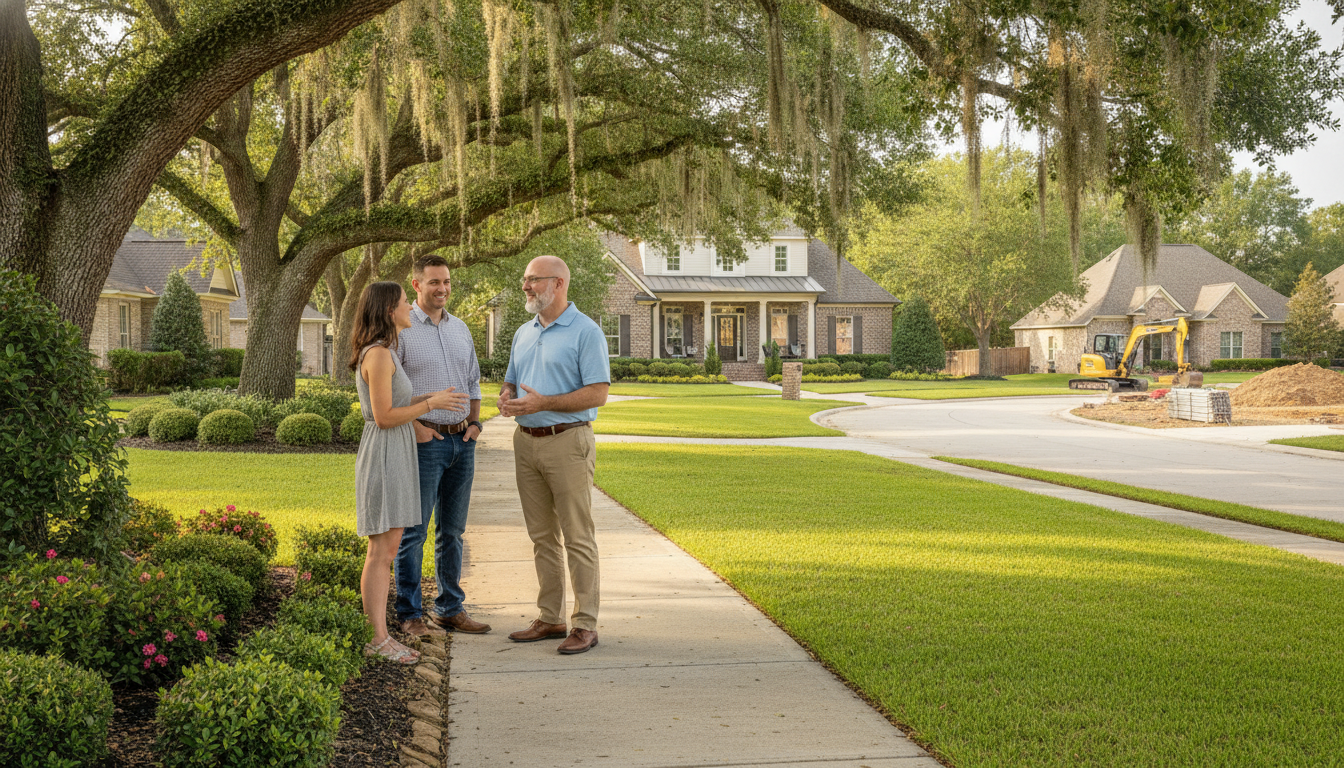
**Consider suburban communities for new construction.** Prairieville, Zachary, and Denham Springs are identified in the research as among the most active areas for new home construction in the region. New construction can offer modern floor plans and builder warranties, but it also involves its own contract review process—have a real estate attorney review builder contracts before signing.
**Work with a local REALTOR® who knows the market.** Baton Rouge job growth is reshaping neighborhoods and price points faster than national data sources can track. Local expertise matters.

Baton Rouge Home Seller FAQ
How is Baton Rouge job growth affecting home prices in late 2026?
Research compiled from GBRAR data and local market reports shows Greater Baton Rouge median home prices rising modestly year-over-year in late 2026. The regional median sale price was approximately $274,900 in August 2026 per GBRAR data, while the twelve-month metro median through September 2026 was approximately $265,000. The September 2026 single-month metro median was approximately $260,000, roughly flat year-over-year, per W Group/GBRAR data. Ascension Parish's year-to-date median through September 2026 rose 1.3% to $314,065. Prices vary by parish, time period, and data source, so verify current figures against the most recent GBRAR market report when actively searching.
Why is construction employment so high in Baton Rouge right now?
The Greater Baton Rouge Economic Partnership's Q3 2026 report attributes the region's record construction employment—approximately 58,700 jobs as of October 2026—primarily to major industrial projects underway in the region, including Hut 8's $10 billion AI data center campus in West Feliciana Parish and Hyundai's $5.8 billion steel mill project in Ascension Parish. These multi-year projects require large skilled workforces, driving demand for electricians, pipefitters, welders, and other craft labor. According to the Associated General Contractors of America, Baton Rouge ranked first among all 360 U.S. metro areas in construction employment growth for multiple measurement periods in 2025–2026.
Which parishes are most popular for relocating buyers near Baton Rouge?
The research identifies Ascension, Livingston, and East Baton Rouge Parishes as the primary destinations for relocating buyers in Greater Baton Rouge. Suburban communities like Prairieville and Gonzales in Ascension Parish, Denham Springs in Livingston Parish, and Zachary in East Baton Rouge Parish are noted as particularly active for new construction. Ascension Parish grew approximately 6.8% between 2020 and 2025 per census estimates, and Livingston Parish has also seen consistent population growth, reflecting sustained in-migration to these areas.
Is Greater Baton Rouge still affordable compared to other Southern cities?
According to Payscale data cited in the research, Greater Baton Rouge's overall cost of living is approximately 10% below the national average, and the metro median home price of approximately $265,000 (twelve months ending September 2026, per W Group/GBRAR) sits roughly 38% below the national existing-home median. However, homeowners insurance costs in Baton Rouge are significantly above the national average—Insurify's 2026 data places the average at approximately $5,133 per year for $300,000 of dwelling coverage, though estimates vary by source and property. Flood insurance is an additional cost in many areas. Buyers should factor total carrying costs, not just purchase price, into affordability calculations, and consult a licensed insurance professional for property-specific quotes.
What should relocating buyers know about mortgage rates in Louisiana in late 2026?
As of mid-November 2026, 30-year fixed mortgage rates in Louisiana were generally running in the mid-to-upper 6% to mid-7% range depending on the lender and loan type, based on rate data from multiple sources. Major institutions have projected rates to remain elevated through 2027, though forecasts are subject to change based on broader economic conditions. Buyers should work with a licensed lender to obtain a current rate quote and pre-approval specific to their financial profile, as rates and available programs vary by lender and borrower circumstances.
Sources
- Baton Rouge Leads Louisiana Metros in Job Growth – Business Report
- Capital Area Has Record High Employment – WBRZ
- Greater Baton Rouge Outpaces the Nation: Q3 Economic Boom – Talk 107.3
- Baton Rouge Leads 360 U.S. Metro Areas in Construction Employment Growth – WBRZ
- Construction Jobs Metro Areas September – AGC via tED Magazine
- Loren Scott: Baton Rouge to Add 16,500 Jobs Over Next Two Years – The Advocate
- Ascension Parish Housing Market – Business Report
- Baton Rouge Housing Market Report, October 2026 – W Group Real Estate
- East Baton Rouge Parish Unemployment Rate – USAFacts
- Baton Rouge Home Insurance Rates – Insurify
- Louisiana Mortgage Rates – MonitorBankRates